The Road Back to Mile Marker 142
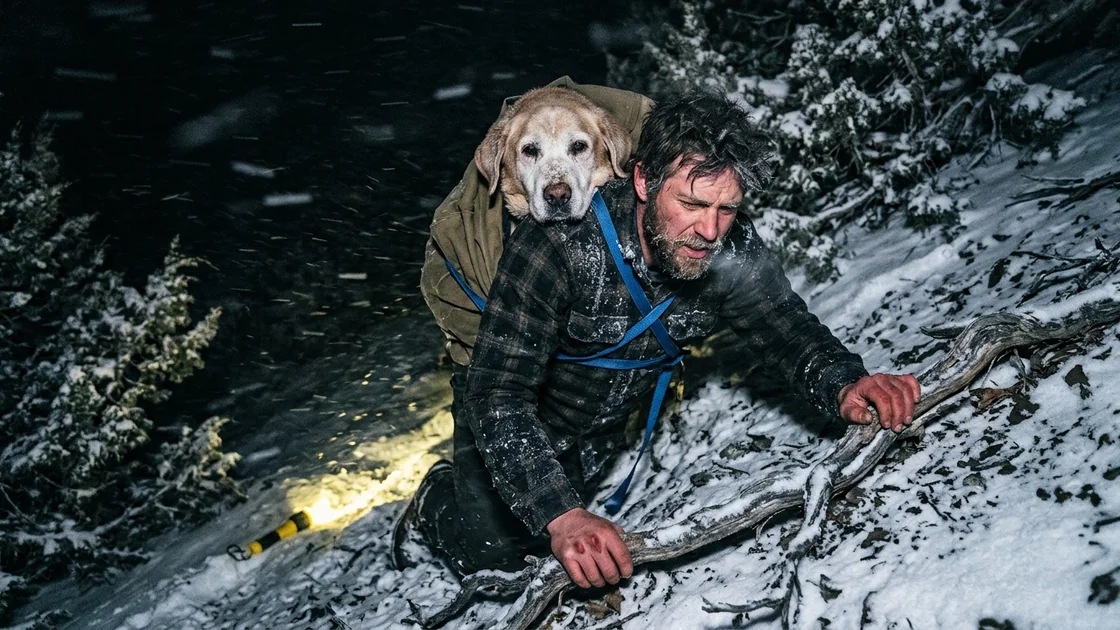
Arthur Miller abandons his elderly childhood dog at a desolate highway rest stop in western Nebraska during a cross-country relocation to start a demanding corporate career. Weeks later, consumed by paralyzing guilt and psychological ruin, he abandons his new life in North Carolina to drive back across the continent into the bitter autumn plains, determined to search the unforgiving scrublands and track down the animal he betrayed before winter and the coyotes finish what his cowardice began.
I. The Echo in the Floorboards
The apartment on the fourth floor of the glass-and-steel midrise in Raleigh smelled of fresh eggshell paint, synthetic carpet adhesives, and the ozone tang of a brand-new heating unit cycling on for the first time. It was an immaculate space, entirely devoid of history. Arthur had paid two months’ rent in advance, signed a eighteen-month lease with a gold-nibbed pen handed to him by a leasing agent whose smile was as polished as the quartz countertops, and arranged his minimalist furniture precisely as the catalog thumbnails suggested.
For nineteen days, he lived inside that sterile silence. He woke at five-thirty every morning, ironed his pale blue shirts, knotted his silk ties, and drove four miles through humid southern mist to an office park where men and women discussed regional logistics, inventory turns, and supply-chain redundancies until the daylight died behind tinted windows. He was thirty-two years old, his career had finally slipped its moorings from the stagnant dust of eastern Oregon, and he was, by every metric his father had ever taught him to respect, on his way up.
Yet every evening, when he returned to the fourth floor and turned the brass lock, the quiet did not welcome him; it struck him like an open palm.
In his childhood home in the foothills outside of Baker City, silence had never been empty. It had always been filled with the low, steady respiration of a living creature. For fourteen years, there had been the scuffle of blunt black toenails across linoleum, the dry thump of a heavy tail striking the base of a pantry cabinet, the raspy, whistling exhale of an old golden-labrador mix curling onto an unwashed braided rug. When Jasper had been young, he was a creature of kinetic exuberance, a muscular blur of butter-yellow fur barreling through wild wheat and splashing into irrigation canals. In his later years, his muzzle had frosted over into the color of salt pork, his hips had begun to click with a dry, arthritic rhythm, and a cloudy ring had formed around the deep walnut brown of his irises. But he had remained. He was the anchor that kept the erratic, grief-haunted house of Arthur’s youth tied to the earth after his mother’s sudden death and his father’s long, slow surrender to bourbon.
And then, on a Tuesday afternoon three weeks ago, beside an interstate highway that carved through the pale yellow sea of the Nebraska Sandhills, Arthur had cut that anchor loose.
The memory did not come back to him in fragments; it came as a single, immutable slab of shame that pinned him to his mattress in the Raleigh dark. He saw the salt-crusted bumper of his hatchback. He saw the low, concrete pavilion of the rest area—Mile Marker 142—its brown paint peeling beneath the sun, its pair of chemical vault toilets smelling of disinfectant and despair. He remembered the heavy, dead heat of midday, the way the semitrucks howled past on Interstate 80 with a sound like tearing canvas, their drafts shaking the stunted Russian olive trees planted along the perimeter fence.
He had walked Jasper out toward the edge of the scrub, past the sign that warned travelers of rattlesnakes. The dog had been stiff from eleven hours in the passenger footwell, his hind legs trembling as he sniffed at a dry cluster of cheatgrass. Arthur had looked at the animal, looked at the gray hairs around his whiskers, looked at the white foam of exhaustion dried at the corners of his jowls. The new life in North Carolina would have no yard. The midrise had strict covenants: pet deposits, weight limits, breed restrictions, a landscape of manicured Bermuda grass where an incontinent, shedding, eighty-pound relic of a broken past had no place. Taking Jasper to a shelter in Lincoln or Omaha had felt impossible—it would have required looking another human being in the eye, signing a surrender form, declaring aloud that he was disposing of his brother.
So Arthur had committed a coward’s murder.
He had unclipped the worn nylon leash, coiled it into his jacket pocket, and walked back toward the car under the pretense of fetching a bottle of water. Jasper had turned back to the grass, his nose buried deep in the scent of prairie soil, confident, utterly and horrifyingly certain, that the boy who had pulled him out of a flooded irrigation culvert in 2010 would never leave him behind. Arthur had opened the driver’s side door, slipped behind the steering wheel, turned the key, and thrown the car into reverse.
In the rearview mirror, he had seen the moment the world broke.
Jasper had lifted his head, his ears pitching forward. He had taken three uncertain, shuffling steps toward the pavement, his tail drooping into a question mark. As the car accelerated down the on-ramp, the dog had tried to run. He had launched into that clumsy, stiff-legged gallop of his old age, his arthritic hips swiveling awkwardly, his mouth open in an agony of confusion. He had pursued the red taillights until his breath failed him, shrinking in the glass until he was nothing more than a yellow dot against the vast, indifferent brown of the plains, swallowed by the horizon and the roar of a westbound Peterbilt.
Arthur had driven for four hours without turning on the radio, his hands clamped to the steering wheel with such violence that the skin over his knuckles split. He had told himself that someone would pick the dog up. A family in an RV. A kind-hearted trucker. A local rancher who needed a porch dog. He had repeated these lies across Iowa, across Illinois, through the toll booths of Indiana, down through the green valleys of Virginia, until they took on the cadence of a frantic, demonic prayer.
Now, sitting in the Raleigh darkness, the lies dissolved like salt in water.
Arthur rose from his bed at two o'clock on a Saturday morning. He did not turn on the overhead lights. He walked into the kitchen, opened the refrigerator, and stared into its pale, fluorescent gut. There was nothing inside but sparkling water, a carton of almond milk, and three pre-packaged salads. He closed the door. He walked into the bathroom, leaned his weight against the cold ceramic sink, and stared at his own face in the mirror. His eyes were bloodshot, circled with bruises of insomnia; his jaw was slack, his stubble greasy. He looked like an intruder in his own life.
"You left him," he whispered to the glass.
The sentence did not bounce off the walls; it sank straight into his chest, cold and iron-tipped.
He went to the bedroom closet, reached past the dry-cleaned wool suits, and pulled down a battered duffel bag he hadn’t fully unpacked. He shoved three pairs of jeans into it, four flannel shirts, a heavy canvas hunting coat he had owned since college, his insulated boots, and a flashlight. He walked to his desk, took his work laptop, opened it, and drafted a four-line email to his director of operations, stating that an urgent, catastrophic family emergency required his immediate and indefinite absence. He did not wait for an approval or a response. He closed the laptop, set his security badge on the kitchen counter beside the unread mail, took his car keys, and walked out the door.
Down in the subterranean parking garage, his hatchback sat covered in a fine skin of parking garage dust. He threw the duffel into the back. As he did, his hand struck something buried beneath the spare tire cover: a hard, circular piece of blue plastic. He pulled it out. It was Jasper’s water bowl, the plastic scarred with old teeth marks around the rim, a dusting of dry sand still clinging to the bottom.
Arthur held the bowl to his chest, slumped against the cold concrete pillar of the parking deck, and wept until his throat tasted of copper. Then he climbed into the car, started the engine, and turned the nose of the vehicle toward the West.
II. The Blue Highway
The continent does not shrink simply because a man is desperate.
To drive from central North Carolina to western Nebraska is to experience the slow, geological unwinding of the American landscape. You cross the ancient, rumpled spine of the Blue Ridge, where the trees cling to the hillsides like old green moss; you drop down into the great river systems of Kentucky and Indiana, where the world flattens into an endless succession of corn stalks, grain silos, and rusted water towers bearing the names of dead factory towns; you bridge the Mississippi at St. Louis, where the river rolls past beneath the steel arches like molten lead; and then you enter the shelf.
Arthur drove with a mania that bypassed physical fatigue. He stopped only for gasoline and black coffee poured from the scorched glass carafes of twenty-four-hour truck stops. He did not eat. The thought of chewing food turned his stomach into a knot of dry rope. He kept the driver’s side window cracked three inches, letting the cold October air tear at his hair and whistle against the pillar of the door frame, using the sting of the wind to pry his eyelids open when the road began to weave and shimmer in the high-beam light.
By Sunday evening, he was across the Missouri River, climbing the long, imperceptible grade that leads up toward the high plains. The world was changing. The humidity of the East Coast had evaporated, replaced by a thin, razor-sharp air that smelled of cattle manure, burning sugar beets, and the dry, alkaline dust of the shortgrass prairie. The road signs became sparser, the distances between towns swelling from five miles to fifteen, then to thirty.
He knew, with the cold, statistical logic that had once made him a successful logistics coordinator, that his quest was deranged.
Twenty-two days had passed. Three weeks and one day.
A domesticated dog of fourteen years—half-blind, stiff with arthritis, accustomed to twice-daily rations of kibble and soft carpets—could not survive three weeks in the Nebraska Sandhills. October on the plains was not a gentle season. The days could be eighty degrees and blindingly bright; the nights dropped into the twenties, freezing the shallow stock ponds and frosting the prairie grass. There were coyotes that ran the fence lines in packs of five and six, lean and hungry for anything that lagged behind. There were cattle trucks traveling at eighty-five miles per hour with iron brush guards that could pulverize a deer without denting the radiator. There were farmers with high-powered rifles who shot any stray dog that ventured within fifty yards of their calving pastures.
"He's dead," Arthur said aloud to the humming dashboard somewhere west of Grand Island. "You know he’s dead. You’re driving twenty-five hundred miles to find a pile of bones in a culvert."
He looked at his reflection in the dark side glass. His face was gray.
"Then I’ll find the bones," he told himself. "I will pick them up with my hands, and I will carry them home."
The moon was nearly full, a cold bone chip hanging in an ink-black sky, when he saw the green-and-white overhead sign loom out of the prairie darkness:
REST AREA - 2 MILES MILE MARKER 142
His heart struck his ribs with such violence that his foot spasmed on the accelerator. The car surged forward, its headlights carving through the dust that drifted across the asphalt. He saw the blue sign beneath the green one: No Services. Next Rest Area 48 Miles.
He signaled, drifted into the deceleration lane, and pulled off the interstate.
The rest area was empty. At two-fifteen on a Monday morning, no long-haul truckers had pulled in to sleep. The loop of asphalt was dark save for a single mercury-vapor lamp that buzzed like an angry hornet on a tall wooden pole near the brick restroom pavilion. The light it cast was sickly, a pale, greenish-white pool that seemed to swallow color rather than reveal it.
Arthur killed the engine. The car clicked as the manifold cooled, the metal contracting in the sudden, biting cold of the plains night.
He sat for five minutes, afraid to open the door.
When he finally stepped out, the silence hit him like deep water. The wind was coming from the northwest, blowing steady across miles of barbed-wire fences and sandhills, carrying with it the dry, paper-like rattle of dead sunflowers. It was thirty-four degrees. His breath plumed white in the green glare of the lamp.
He walked toward the patch of scrub where he had unhooked the leash.
The grass was flattened in places, scarred by wind and time. There were empty soda cans, a shredded strip of semi-truck retread tire, and an empty cellophane cigarette wrapper that rustled against a fence post. There was no sign that an animal had ever stood there. No prints in the hard-packed, gravelly loam; no tuft of yellow fur caught on the barbs of the lower wire.
Arthur dropped to his knees. The frozen ground bit through the denim of his jeans, sending a sharp shock of pain through his kneecaps. He reached out and touched the earth where he had left him.
"Jasper," he croaked.
The sound was pathetic, swallowed instantly by the vast, yawning bowl of the sky.
He cleared his throat, stood up, and cupped his hands around his mouth.
"Jasper!" he screamed.
He yelled it until his voice cracked, until the name became an ugly, frantic bark that echoed off the brick walls of the restroom building and died out among the hills. He turned in a full circle, scanning the perimeter with the high-powered beam of his flashlight. The cone of light cut through the dark, picking out the pale, ghostly limbs of sagebrush, the rusted posts of the right-of-way fence, the glittering eyes of a field mouse thirty feet away—and then nothing. Only the black, rolling swells of the earth, stretching away under the indifferent stars toward the Platte River.
He was alone. He had always been alone.
Arthur walked back to his car, sat down on the front bumper, pulled his coat tight around his shoulders, and waited for the sun to rise.
III. The Man with the Plastic Rake
Dawn on the high plains does not arrive with warmth; it arrives with clarity. The sky turned from charcoal to a thin, bruised lavender, then to a pale, blinding azure that had no depth. The frost on the roofs of the concrete picnic tables began to sublimate into thin, white vapors as the sun cleared the horizon.
At seven o'clock, the low, grinding whine of a two-stroke engine announced the arrival of the state maintenance truck. It was an old orange pickup with a dented tailgate and a flashing amber beacon on the cab. It rattled around the loop, pulled up beside the dumpsters, and cut its engine.
A man climbed out. He was sixty or sixty-five, wearing quilted brown Carhartt overalls, a blaze-orange watch cap, and heavy leather work gloves. His face looked like it had been cured in smoke and salted by forty winters of prairie wind. He grabbed a plastic leaf rake and a black garbage bag from the truck bed and began working his way around the perimeter of the asphalt, spearing discarded styrofoam cups and chip bags with mechanical efficiency.
Arthur stood up from the bumper. His joints were stiff, his back aching from the long hours behind the wheel and the frozen vigil. He approached the man slowly, his hands held visible at his waist, not wanting to spook him in the isolation of the morning.
"Good morning," Arthur said.
The man didn't stop raking. He speared an empty energy-drink can, flipped it neatly into the mouth of the garbage bag, and glanced at Arthur with pale, watery eyes that had seen every variety of highway lunatic.
"Cold one," the man said. His voice sounded like two flat stones being rubbed together.
"Yes. It is." Arthur swallowed. The shame was a physical obstruction in his throat, like a dry golf ball he could neither spit out nor force down. "I’m looking for something. I was hoping... I was hoping you might have seen it."
The man leaned on the handle of his rake, crossing his booted ankles. He spat a dark brown stream of tobacco juice into the dirt near a clump of thistles. "People lose a lot of things out here. Hubcaps. Wallets. Gallon jugs of piss the long-haulers throw out the window so they don't have to stop their logs. I pick up what’s trash. If it’s a wallet, I turn it into the sheriff in Ogallala."
"It’s not a wallet," Arthur said. He pulled his phone from his pocket, his thumb trembling as he scrolled back through four years of photos to find a clear picture of Jasper. He held the screen out toward the man. "It’s a dog."
The man squinted at the screen, not leaning closer, maintaining the professional distance of an inspector examining a dubious bill of lading.
"Golden mix," Arthur said, the words tumbling out of him now, fast and thin. "Big. About eighty pounds, though he might be thinner now. Much thinner. White around the muzzle. Brown eyes. He has an old scar across the bridge of his nose where he caught a barbed-wire fence when he was a pup. He answers to Jasper."
The man looked up from the screen and met Arthur’s eyes. The stare was flat, piercing, and entirely devoid of illusion.
"When’d you lose him?" the man asked.
Arthur looked down at his own boots. The leather was scuffed, the laces frayed. "September twenty-fourth. Around noon."
The maintenance worker did the math silently. Arthur could see the calculation behind the man’s eyes: the number of nights, the frost dates, the three-hundred-mile stretch of four-lane highway.
"You lose him?" the man asked. "Or’d you dump him?"
The word hit Arthur like a hammer to the solar plexus. The air left his lungs in a sharp, shuddering gasp. He wanted to lie; every instinct of social preservation he had honed in thirty-two years of suburban survival screamed at him to manufacture an excuse. He jumped out of the window while I was using the restroom. He broke his lead while I was checking the oil.
"I dumped him," Arthur whispered.
The plains wind caught the words and carried them away over the sage.
The man didn't flinch. He didn't look angry; he looked exhausted, with the bone-deep weariness of an old soldier who has seen every manifestation of human smallness and no longer possesses the energy for outrage.
"Happens twice a month," the man said, looking out toward the interstate where a livestock hauler was thundering east, its slatted sides packed with yearling cattle. "People moving from California to Chicago. People moving from Denver to Omaha. Dog gets old. Dog gets sick. Dog pukes in the car. They pull in here, let 'em out to take a leak, and then they drop the hammer and take off. They think because there’s grass out here, it’s a farm. They think some kindly old grandfather in bib overalls is gonna come by and take 'em home to sit by the woodstove."
He shook his head, spat again, and drove the tines of his rake into the ground.
"Coyotes get most of 'em," he said plainly. "They run 'em down into the draws toward the river. If they don't, the trucks get 'em when they try to cross the median to chase after cars that look like the one that left 'em. Seen three this summer. Cleaned two of 'em off the westbound lane myself."
Arthur felt his knees go soft. He had to reach out and brace his palm against the rough bark of a Russian olive tree to keep from falling. "Did you... did you clean him off?"
The man looked back at the photo on the phone, then back at Arthur. He took off his orange watch cap, scratched his bald, freckled scalp, and put the cap back on.
"Big yellow one," he muttered. "Muzzle like salt."
"Yes," Arthur choked.
"Saw him three weeks ago. Wednesday after the twenty-fourth. I come in here to clean the vaults. He was sitting right by that fence post there." The man pointed with the rake handle toward a corner where the chain link met the prairie wire. "Sitting upright. Wind blowing right through him. Looked like an old sentinel whose army got wiped out fifty years ago and nobody told him to leave his post."
"He was alive?"
"He was then. Ribs showing like an accordion. Wouldn't let me get within thirty feet of him. I tried to toss him half a ham sandwich from my lunchbox. He just backed off into the sagebrush, growling low down in his chest. Not mean—just terrified. Like he thought if he took food from me, he’d miss you when you came back."
The man paused, looking Arthur up and down with something that wasn't quite pity, but rather a cold, clinical recognition of an incurable disease.
"I called the county shelter in North Platte," the man continued. "Told 'em we had a stray out here. Animal control guy came out two days later with a catch-pole. Said he spent two hours crawling through the brush, but the dog took off south, toward the bluffs. That was sixteen days ago."
"South?" Arthur pointed toward the horizon where the land rose into a series of jagged, buff-colored limestone ridges dissected by deep, shadowed arroyos.
"South," the man said. "Ain't nothing out there but five thousand acres of scrub, cedar breaks, and cattle country. Most of it’s owned by the Henderson spread. Old man Henderson doesn't like trespassers, and he likes stray dogs running his heifers even less. If that dog went south, mister, you’re looking for a ghost."
"I have to look," Arthur said.
The maintenance worker picked up his black trash bag, untied the neck, and dropped the rake handle against his shoulder.
"Then you’d better start walking," he said, turning his back to the wind. "Cold front’s coming out of the Dakotas tonight. If we get the snow they’re calling for, anything out there that ain't got a warm barn is gonna freeze solid before Wednesday."
IV. The Architecture of the Draws
Arthur did not return to his car. He went to the hatchback, pulled out his heavy canvas coat, laced his insulated boots until the leather pinched his shins, and filled his pockets with bottles of water and three protein bars he bought from the vending machine inside the restroom pavilion. He took Jasper’s blue leash and looped it diagonally across his chest, the rusted brass snap hook dangling over his hip like an empty scabbard.
He stepped over the bottom strand of the barbed-wire fence and entered the Sandhills.
The high plains are deceptive. From the window of a car traveling seventy-five miles per hour, they appear flat, a featureless yellow parchment unrolled between the horizon lines. But on foot, the world fractures into an infinite, labyrinthine complexity. The earth is carved by wind and water into thousands of miniature canyons—draws and arroyos, some no wider than a ditch, others sixty feet deep and choked with thickets of wild plum, chokecherry, and stunted juniper.
The ground was treacherous. Beneath the dry bunchgrass lay loose, sugary sand that gave way under every step, forcing Arthur’s calves to work twice as hard to maintain balance. Cacti—the low, prickly pear variety with flat, spine-studded pads—hid beneath the brown grass, their needles piercing the sides of his boots and stabbing through his denim trousers.
"Jasper!" he called.
The wind took his voice and shredded it.
He walked south, away from the interstate. Within half a mile, the steady, rhythmic drone of the highway traffic began to fade, replaced by the dry hiss of the prairie. It was the sound of millions of individual grass stems brushing against one another, a vast, indifferent whisper that seemed to mock the insignificance of his voice.
Every hundred yards, he stopped. He pulled a brass whistle from his pocket—an old duck call his father had given him when they used to hunt the sloughs of the Snake River—and blew three sharp blasts. It was the signal that had always brought Jasper bounding through the alfalfa at home, ears flopping, tongue trailing like a pink ribbon.
Tweet. Tweet. Tweet.
Nothing.
A red-tailed hawk banked on a thermal three hundred feet above him, its white breast feathers gleaming against the azure sky. It turned its head to look at him, then slid sideways down the wind, unconcerned with the two-legged animal stumbling through the brush below.
By noon, the heat had risen. The temperature hovered near seventy, but the sun was thin and fierce, beating down through the cloudless sky with a dry, dehydrating intensity. Arthur’s tongue felt swollen in his mouth. His lips were chapped, cracked open at the corners and tasting of salt. He drank one of his water bottles, rationing the liquid in small, careful swallows, remembering that Jasper had no canteen, no bottles, no credit card to slip into a vending machine.
Where would an old dog find water out here?
Arthur dropped down into the bottom of a dry wash. The gravel bed was white, sun-bleached, littered with the tracks of mule deer and the small, five-toed paw prints of raccoons. He walked the wash for two miles, his eyes glued to the dust, looking for a track that was rounded, heavy, with the blunt, non-retractile claw marks of a large canid.
He found coyote tracks everywhere. They were small, narrow, delicate as the prints of a fox, moving in straight, purposeful lines along the base of the cutbanks. In one place, he found where a pack had brought down an old jackrabbit: a circle of churned sand, three tufts of white fur, and a single, yellow femur cracked open for the marrow.
Arthur stared at that splintered bone until his vision blurred.
"He knew how to find water," Arthur whispered to himself, trying to steady the frantic tremor in his hands. "He was a bird dog. He knows how to smell a creek."
Two miles further south, the draw terminated in a stock dam—a low, crescent-shaped berm of earth pushed up by a bulldozer decades ago to catch the seasonal runoff. The pond behind the dam was small, shrinking rapidly before the coming winter, its surface covered in a skin of green algae and bordered by a wide margin of cracked, dried mud.
Arthur scrambled down the steep embankment, his boots sliding through the shale.
He approached the water’s edge. The mud had preserved a catalog of everything that had visited the reservoir over the last fortnight: the cloverleaf hooves of range cattle, the delicate needles of killdeer, the broad pads of a badger.
And then, half-submerged beneath a fallen cottonwood branch, he saw it.
It was an impression in the mud—wide, heavy, the outer toes splayed slightly to the left, the characteristic print of an animal whose left hip was worn with degenerative joint disease.
Arthur fell to his knees in the mud. He didn't care about the black, foul-smelling mire that soaked through his jeans. He laid his own hand beside the print. The pad was twice the size of a coyote's. The claw marks were blunt, worn down from fourteen years of walking on gravel roads and hardwood floors.
"Jasper," he breathed.
The print was old. The edges were dried, cracked by the sun, filled with wind-blown silt. It could have been made ten days ago. It could have been made twelve.
Arthur looked up at the rim of the canyon above the pond. The cutbanks were sheer, ten feet of crumbling yellow sandstone topped with overhanging sod. If an old dog had come down here to drink, how had he gotten out?
Arthur rose, his heart hammering against his ribs like a bird in a cage. He circled the pond, his eyes scanning every foot of the shoreline. On the southern side, where the cattle had beaten a narrow, diagonal trail through the shale to reach the water, he found another sign.
Caught on the low, thorny branch of a wild rose bush was a tuft of fur.
It was not the pale, coarse hair of a deer, nor the gray-brown wool of a coyote. It was long, soft, golden-yellow at the base and bleached white at the tips.
Arthur untangled the fur from the thorns with trembling fingers. He brought it to his nose.
Beneath the smell of dust, mud, and stagnant pond water, there was a faint, indelible trace of something else—the scent of woodsmoke, old wool, and the cedar shavings Arthur had used to bed the dog's crate when they had packed the truck in Oregon. It was the smell of home. It was the smell of his childhood.
He pressed the hair against his lips, closed his eyes, and let out a sound that was half sob, half battle cry.
He was here. He had survived the first week. The ghost was made of blood and bone.
V. The Old Man on the Red Tractor
The track led south, up out of the draws and onto a vast, high tableland where the wind was stronger and the grass was cropped short by cattle. In the distance, three miles away across the undulating swells, Arthur could see the corrugated tin roof of a hay barn and the silver blade of a windmill spinning frantically against the blue sky.
He climbed through a four-strand barbed wire fence, ignoring the red-and-white sign that read: POSTED - NO TRESPASSING - HUNTING BY WRITTEN PERMISSION ONLY.
He walked along the two-track road that led toward the buildings. The afternoon was dying fast now, the shadows of the fence posts stretching across the gravel like long, black fingers. The air had turned sharply cold; the wind from the north was picking up speed, smelling of snow, carrying with it a bitter, metallic chill that cut through his canvas coat.
He had walked nearly twenty miles since dawn. His feet were blistered, the skin over his heels rubbed raw by the stiff leather of his boots. Every muscle in his thighs was locked in a dull, throbbing spasm, but he did not slow down. He couldn't. With every minute that passed, the thermometer dropped another degree.
A quarter-mile from the barn, the sound of a diesel engine rumbled over the ridge.
Arthur stopped.
An old red International Harvester tractor came over the rise, pulling a flatbed wagon loaded high with square bales of alfalfa. At the wheel sat a man as ancient as the soil he worked—stooped, wearing a grease-stained canvas cap with ear flaps tied down, his face hidden behind a pair of thick, wire-rimmed glasses that caught the amber glare of the setting sun.
The tractor slowed, its air brakes hissing, and stopped twenty feet from Arthur. The engine idled with a heavy, deafening chug-chug-chug that vibrated the ground beneath Arthur’s boots.
The old man didn't get down. He leaned over the large, horizontal steering wheel and peered down at Arthur with a mixture of irritation and disbelief.
"You lost, son?" the man hollered over the diesel rumble.
Arthur walked toward the cab, shouting back: "I’m looking for my dog!"
The old man reached down and pulled a red knob on the dash. The tractor’s engine died with a shuddering gasp, the silence of the prairie rushing back in to fill the void like water into an open hull.
"What’d you say?" the man asked.
"I’m looking for my dog," Arthur repeated, his voice raspy from dust and shouting. He stepped closer to the tire, looking up into the tractor's cab. "A golden retriever. Old. Very thin. I found his tracks down at the stock pond two miles north."
The old man pushed his glasses up the bridge of his crooked nose with a thumb that was missing its top joint. He looked at Arthur’s clean canvas coat, his city haircut, the blue leash dangling across his chest, and the exhausted, frantic desperation in his eyes.
"You the fellow that left him at the rest area?" the old man asked.
Arthur felt his face burn with a sudden, humiliating heat. "How does everyone know that?"
"Nothing happens within thirty miles of the interstate that don't get talked about over coffee at the elevator," the rancher said. He reached into his coat pocket, pulled out a plug of tobacco, and used a pocketknife to carve off a corner. "Frank—the fellow who takes care of the rest area—he told my boy about you this morning. Said some fellow in a little car come back looking for his ghost."
"Have you seen him?" Arthur asked, his voice cracking. "Please. If you shot him... if he’s dead, just tell me. I just need to know."
The old man chewed slowly, his jaw working with a rhythmic, sideways grind. He looked out across the pastures toward the bluffs that bordered the North Platte River.
"Didn't shoot him," he said. "Though I ought to have. Four days ago, I was down by the south calving shed. Had a heifer that was having trouble with a breach calf. I was in the pen with the chains on the feet when I heard a commotion outside the gate."
Arthur held his breath.
"Old dog was there," the rancher continued. "Looked like a bag of antlers wrapped in a yellow rug. He was eating the afterbirth out of the manure pile. Starving to death. I come out with an axe handle to run him off—I don't need strays carrying sickness to my stock. He didn't even have the juice to run. He just fell down in the dirt, curled himself into a knot, and looked at me like he was waiting for the hit."
"Where is he?" Arthur cried, taking a step toward the tractor fender. "Where did he go?"
The rancher pointed with the blade of his pocketknife toward the southwest, where the land fell away into a dark, jagged break known as Cedar Canyon.
"Ran him off toward the canyon," the man said. "He could barely walk on his hind quarters. Left hip looked knocked out of joint or ate up with the rot. I threw an ear of dried corn at him to keep him moving. He crawled under the south line fence."
The man looked up at the sky. A low, gray wall of cloud was rolling in from the north, swallowing the stars, its leading edge ragged and dark with the weight of winter.
"That was Tuesday," the old man said softly. "It went down to eighteen degrees night before last. And this storm coming in... it ain't gonna be a flurrying kind of thing, son. It’s an Alberta clipper. We’re gonna have four inches of ice and wind that’ll peel the hide off a heifer by midnight."
"Is there any shelter down there?" Arthur asked. "In the canyon?"
"Old homesteader’s shack about three miles down the creek," the rancher said, closing his knife with a sharp snap. "Roof fell in back during the fifties, but the stone root cellar’s still dug into the bank. Coyotes den in there sometimes. If that old dog had any sense left in that gray head of his, he might have crawled into that hole to get out of the wind. But I’ll tell you something, boy."
The old man leaned down from the tractor seat, his face stern, his watery eyes hard as creek pebbles.
"You walk down into that canyon in the dark with a blizzard coming, you might not come out yourself. There ain't no cell service down there. There ain't no roads. If you break an ankle in the breaks, you’ll freeze to death before I finish feeding my yearlings tomorrow morning. You think that dog is worth your life?"
Arthur reached down and gripped the brass snap of Jasper’s leash. The cold metal felt like a brand against his fingers.
"He thought I was worth his," Arthur said.
The old man looked at him for a long moment, then spat into the dust beside the tractor wheel. He reached behind his seat, pulled out an old, dented galvanized flashlight, and handed it down to Arthur.
"Batteries are good," the rancher said. "Keep the creek to your right shoulder going down. If you hit the fence with the blue ribbons, you’ve gone too far west. And don't stay down there past dawn if the wind shifts to the northeast. That’s when the drift starts."
Arthur took the heavy light. "Thank you."
"Don't thank me," the old man said, reaching for the red starter knob. "I didn't do nothing for you. And if you find him dead, don't leave him where my dogs can smell the rot. Bury him deep."
VI. The Descent into Cedar Canyon
The world lost all color at six o'clock.
The twilight was not gold or red; it was a bruised, slate-gray that collapsed rapidly into an absolute, suffocating blackness. By seven, the first pellets of graupel—small, hard beads of snow that sounded like buckshot—were striking the shoulders of Arthur’s canvas coat and rattling against the dead grass.
The descent into Cedar Canyon was a nightmare of vertical loose shale and twisted juniper roots.
Arthur moved by the yellow, fluttering beam of the rancher’s flashlight. The ground was steep, dropping two hundred feet in less than a quarter-mile. He slipped repeatedly, the gravel sliding out from under his heels, sending him skidding down the slopes on his hips until he could wedge his boots against the trunk of a cedar tree. The sharp, aromatic needles of the junipers whipped across his face, scratching his cheeks and tearing at his eyes.
At the bottom of the canyon, the temperature was noticeably colder. The cold air, heavy and dense, had drained off the high tableland and pooled in the creek bed like water in a trench. A small, seasonal spring ran through the center of the draw, its surface already crusted with a lattice of fragile black ice that shattered with a sound like broken windowpanes whenever he stepped too close.
"Jasper!" he called.
His voice was gone. It had deteriorated into a low, rasping whistle that carried no more than twenty feet before being drowned out by the roar of the wind above the canyon rim. Up on the flats, the storm was raging, but down here in the cut, the wind was an erratic, twisting thing that blew in violent gusts, swirling the falling snow in blinding, white eddies.
The beam of his light was failing. The batteries the rancher had promised were good were dying in the bitter cold, the yellow cone shrinking until it illuminated only five feet of ground in front of his boots.
He walked along the creek bed, keeping the water to his right shoulder just as the old man had commanded.
His hands were numb. He had forgotten to bring heavy gloves, and his fingers were swollen, red, and stiff, unable to bend at the knuckles. He tried to tuck them into his coat pockets, but he needed them to balance against the boulders and the thorn bushes that choked the banks.
Three miles, he thought. He said three miles to the homesteader's shack.
Every shadow looked like a crouching animal. A dead cottonwood stump, half-rotted and covered in pale shelf fungi, made his heart stop; he fell toward it on his knees, his hands reaching for fur, only to find the cold, pulpy wood of a dead tree. A discarded roll of rusted sheep wire, half-buried in the silt, looked in the dying light like the ribcage of a large animal.
He checked his watch. It was nine-forty-five.
The blizzard had arrived in full force. The graupel had turned to fine, needle-like snow that blew horizontally, stinging his bare ears and plastering his eyebrows with ice. The cold was no longer something outside of him; it had penetrated his clothes, his skin, his muscles, and had taken up residence in his bones. His shivering was violent now, an uncontrollable, rhythmic shuddering that made his teeth click together until his jaw ached.
He knew the signs of hypothermia. He had read about them in Boy Scouts, twenty years ago. The violent shivering was the first stage; next would come the apathy, the confusion, the terrible desire to simply sit down in the snow, close his eyes, and rest for a few minutes.
"You can't sit," he told himself through blue lips. "If you sit down, you’re dead."
He climbed out of the creek bed and onto a low terrace of earth where the cedars grew thick and dense, their interlaced boughs providing a meager umbrella against the falling snow.
And there, half-buried in the bank, he saw the stones.
They were fieldstones, laid up without mortar in a rough, rectangular wall that had long since buckled inward. The roof of the old homestead had collapsed decades ago, leaving only a few charred, rotting cedar rafters that poked out of the snow like broken fingers. But behind the main foundation, dug deep into the limestone bluff to escape the prairie summers, was a low, arched opening framed by heavy oak timbers.
The root cellar.
Arthur stumbled toward it. The entrance was half-choked with drifted tumbleweeds and a bank of fresh snow, but near the center, there was a hole—a dark, narrow tunnel cleared through the brush, its edges polished smooth as if a heavy body had dragged itself through the dirt.
Arthur dropped to his stomach.
The flashlight beam flickered, died, and then, when he struck the casing against his forearm, flared back to life with a weak, dying amber glow.
He thrust the light into the hole.
VII. The Root Cellar
The smell that came out of the earth was ancient: the odor of damp limestone, rotting potato sacks, wet mold, and the unmistakable, sweetish musk of a wild predator’s den.
The cellar was small, perhaps eight feet square, its ceiling so low that a grown man could not kneel without his shoulders brushing the hanging cobwebs and the damp earth. The floor was covered in a deep layer of dried oak leaves, blown in through the collapsed doorway over forty autumns.
In the farthest corner, curled into a tight, defensive knot between two limestone boulders, lay a shape.
It was covered in yellow fur, matted with mud, burrs, and dried blood.
Arthur’s heart stopped. The world around him—the howling wind in the canyon, the sting of the snow on his neck, the agonizing pain in his frozen fingers—simply ceased to exist. There was only that corner. Only that yellow circle in the dirt.
"Jasper?" he whispered.
The shape did not move.
Arthur crawled into the cellar on his belly, his elbows dragging through the leaves. The air inside was warmer than the canyon, protected from the wind, but it was thick with the scent of endings. He reached out with his right hand, his fingers shaking so violently he could barely hold the flashlight.
He laid his hand on the dog’s hip.
The skin was like parchment stretched over iron bars. Every individual vertebra of the spine stood out like the teeth of a saw. The dog’s coat was ice-cold to the touch, wet with melted snow that had refrozen into small, hard beads along the tips of the fur.
Arthur felt no movement. No breath.
"No," Arthur whimpered. He pulled himself closer, dragging his chest across the dead leaves until his face was inches from the dog’s head. "No, no, no. Jasper. Please. Please, God, no."
He laid his cheek against the dog’s sunken ribs.
He waited.
One second. Two seconds. Three.
And then, beneath the cold layer of hide and the wasted muscle, he felt it.
Thump.
It was faint, so slow and weak that it felt like the tick of a watch buried beneath ten feet of sand. But it was there. A heartbeat.
Thump.
Arthur let out a ragged, howling cry that tore the lining of his throat. He wrapped his arms around the dog’s neck, pulling that heavy, skeletal head into the hollow of his shoulder. The dog’s fur was full of cockleburs that tore at Arthur’s neck, but he pressed closer, sobbing into the matted, filthy ear, his tears running down through the dirt on the dog’s muzzle.
"I’m here," Arthur wept. "I’m sorry. I’m so sorry. I came back. Jasper, I came back."
For a long moment, the dog did not react. He was suspended in that deep, metabolic stupor that precedes death by hypothermia, his nervous system conserving the last drops of chemical energy to keep his core alive.
Then, slowly, with an effort that seemed to vibrate through his entire frame, the old dog opened his eyes.
The eyes were milky, half-blind with cataracts and crusted with yellow mucus, but as they focused on Arthur’s face in the dim, dying light of the flashlight, something shifted in the cloudy brown depths. The pupils dilated.
The dog did not growl. He did not snap.
With the last reserve of strength in his dying body, Jasper lifted his chin half an inch from the dirt. His tongue—dry, gray, rough as sandpaper—emerged and feebly rasped across the salt-stained skin of Arthur’s cheek.
And then, beneath the leaves, his tail moved.
It was not the joyous, thumping wag of his youth. It was a single, hesitant flutter—a dry, rustling scrape of bone against oak leaves. A greeting. A recognition. A total, unhesitating, and absolute absolution.
Arthur broke.
He lay in the dirt of that root cellar and cried for the boy he had been, for the man he had become, for the terrible, monstrous thing he had done, and for the grace he did not deserve and could never earn. The dog did not know about the midrise apartment in Raleigh. He did not know about the eighteen-month lease or the supply-chain redundancies. He knew only that the boy had returned. The pack was restored. The universe was righted.
"We have to go," Arthur said, his voice trembling as he wiped his eyes with a frozen sleeve. "We can't stay here, boy. The snow’s coming in. We’ll freeze."
He tried to coax the dog up, but Jasper’s hind legs were dead. The left hip was horribly swollen, dislocated at the socket, the joint clicking sickeningly beneath the hide when Arthur touched it. The dog gave a small, breathless whimper of agony, his teeth clicking together, but he did not pull away.
He could not walk. He would never walk three miles up through Cedar Canyon in a blizzard.
Arthur sat back on his heels.
He looked at his own boots. He looked at his hands, which were beginning to lose all sensation. He was three miles from the rancher’s road, five miles from his car, in the middle of a November blizzard on the high plains, carrying an eighty-pound dog that could not stand.
The logic of his life—the careful, risk-averse calculation that had governed his education, his career, his relationships—told him that this was impossible. A man cannot carry eighty pounds of dead weight up a two-hundred-foot vertical shale bluff through an Alberta clipper in the middle of the night. If he tried, he would exhaust his reserves within forty minutes, collapse in the drifts, and both of them would be discovered by the rancher’s son on a tractor three days later, frozen into a single, grotesque ice sculpture.
The logic told him to make the dog comfortable, leave him in the cellar, climb out alone while he still had the strength, and return with help in the morning.
"No," Arthur said aloud to the empty stones.
He knew that lie. He had lived with that lie for twenty-two days. If he left this cellar alone, he would never come back. If he left Jasper tonight, the dog would be dead by sunrise, and Arthur would spend the rest of his life walking through the immaculate silence of his glass apartments, a living corpse whose soul had been left behind in a hole in Nebraska.
"We go together," Arthur whispered. "Or we stay together."
VIII. The Ascent
Arthur took off his canvas coat.
The immediate shock of the air was terrifying—thirty-below wind chill striking his flannel shirt like an ocean wave of ice water. His teeth chattered with such violence that he bit the inside of his lip, the metallic taste of blood spreading over his tongue.
He spread the coat on the floor of the cellar, lining up the fleece interior. He gently lifted Jasper’s body, sliding his arms under the dog's chest and belly. The animal was shockingly light—not eighty pounds anymore, but fifty, perhaps forty-five, a bundle of dry sticks wrapped in parchment. He laid the dog on the coat, folded the heavy canvas flaps over his back, and used the blue nylon leash to bind the bundle securely, looping the strap around the coat and through the sleeves until he had fashioned a crude, heavy sling.
He hoisted the sling onto his back.
He ran the leash straps over his shoulders and crossed them over his chest, holding the ends with his numb, claw-like hands. The dog’s head rested beside Arthur’s left ear, the faint, warm puffs of Jasper’s breath striking his neck with every agonizing step.
Arthur crawled out of the root cellar.
The world outside was white madness.
The blizzard had erased the canyon. There was no sky, no ground, no bluffs—only a shrieking, horizontal vortex of white that scoured the skin and blinded the eyes. The snow was already knee-deep in the draws, drifted into vast, soft dunes that gave way under Arthur’s weight, plunging him to his groin in freezing powder.
He took his first step up the creek bed.
The weight on his back was immense. It was not merely the physical mass of the dog; it was the accumulated weight of fourteen years of loyalty, of every meal he had forgotten to give him, of every walk he had cut short to answer an email, of the terrible, unforgivable betrayal at Mile Marker 142. It pressed down on his spine, driving his boots deep into the shale, forcing his lungs to labor for every thimbleful of thin, freezing oxygen.
Left foot. Right foot.
He could not see the creek. He could only feel for the cutbank with the toe of his boot, keeping the resistance of the earth to his left now, reversing the path he had taken down.
Within twenty minutes, his sweat had soaked through his flannel shirt. It was the most dangerous thing that could happen in a blizzard. The moisture against his skin began to cool, turning his back into a sheet of ice beneath the dog’s body. His toes had gone completely numb; he could no longer feel his boots striking the ground, moving only by the visual confirmation of his legs churning through the drifts.
"Jasper," he croaked into the wind. "Stay with me. Stay with me, boy."
Beside his ear, a faint, dry nose pressed into the hollow of his jaw.
He reached the base of the bluff—the two-hundred-foot wall of shale and juniper that led back to the high tableland.
In the daylight, it had been a difficult scramble. In the blackness of a blizzard, it was an impossibility. The slope was a sheet of loose rock covered in six inches of fresh powder. Every time he tried to plant his foot, the entire hillside seemed to slide away beneath him, sending him crashing to his knees, his hands tearing into the frozen earth to keep from rolling backward into the canyon.
He began to climb on all fours.
He dug his bare, bloody fingers into the frozen shale, finding handholds in the roots of the stunted cedars. The rough limestone tore the skin from his knuckles; the juniper needles stabbed into his palms, but he felt no pain. He felt only the cold, hard reality of the rock and the small, rhythmic puff of life against his neck.
Ten feet. Twenty feet.
Halfway up the slope, his right foot slipped.
A shelf of shale gave way with a muffled crack, and Arthur plummeted backward. He twisted violently in mid-air, throwing his chest toward the mountain to protect the bundle on his back. He struck a cedar ledge with his ribs, the impact driving the air from his lungs in an explosive gasp that left him gray and retching in the snow.
He hung there, suspended between the canyon floor and the rim, his arms hooked around the trunk of a dead juniper.
He could not breathe. His ribs clicked with a sharp, sickening stab of agony that told him the bone was cracked. His fingers were opening, the tendons refusing to obey the frantic commands of his brain.
Lie down, the wind whispered to him. The wind was warm now. It felt soft, like the feather bed in his grandmother's house in Baker City. Just close your eyes for five minutes. You carried him out of the hole. You proved you loved him. Nobody can expect a man to do more than this. Just sleep.
He closed his eyes.
The snow settled on his lashes, soft and peaceful. The cold didn't hurt anymore. It was just a great, heavy blanket being drawn up to his chin.
Then, through the canvas coat bound to his spine, Arthur felt a movement.
Jasper was struggling. The old dog was turning his head within the sling, fighting against the bindings until his frosted muzzle cleared the collar of the coat. He pressed his face against Arthur’s temple.
He didn't lick him.
He growled.
It was a low, guttural vibration—the same sound the dog had made fourteen years ago when a stray bull had charged the yard fence where Arthur was playing as a boy. It was the voice of the protector. The old, fierce spirit that had guarded Arthur’s childhood, refusing to let the dark take what belonged to him.
Arthur opened his eyes.
The soft, warm blanket vanished, replaced by the howling, murderous fury of the plains.
"All right," Arthur gasped, his blood dripping into the snow beneath his chin. "All right. I’m up. I’m up."
He found a handhold in the limestone. He found a purchase for his left boot. He dragged his broken ribs over the cedar root, hauling his body, the dog, and his guilt up the face of the cliff, one agonizing inch at a time, until his hands struck the flat, snow-swept prairie of the high tableland.
He pulled himself over the lip.
He lay on his stomach in the drifts, his face buried in the snow, gasping like a fish on a gravel bar.
He had reached the top. But the road was still two miles away, across an open, featureless sea of white where the wind was blowing at fifty miles per hour, and the tracks of the tractor were long since buried under four feet of drift.
IX. The Windmill Road
A man who is freezing does not think about the future. He does not think about the next mile, or the next hour, or the life he will live if he survives. His universe shrinks to a circle six feet wide: the distance between his boots and the next drift of snow.
Arthur walked.
He had no compass. He could not see the stars. He could see nothing beyond the swirling wall of white that pressed against his retinas. But he had the wind.
The rancher had said: Keep the wind to your left cheek going up.
The storm was out of the north-northwest. If he kept the freezing needles of ice striking the left side of his jaw, he was moving south-southeast, toward the two-track road that led to the barn. If he let the wind hit his back, he would wander off into the thousand-acre pastures of the Henderson spread and disappear until the spring thaw.
His body was operating on some ancient, cellular reserve that owed nothing to his conscious will. His feet moved mechanically, his boots dragging through the crust, lifting, plunging, lifting again. The weight on his back was no longer a burden; it was an anchor that kept him from being blown off his feet by the violent gusts that swept across the plateau.
Beside his ear, the breathing had grown slower.
Hoo. Hoo. Hoo.
"Jasper," Arthur mumbled. His lips were so swollen he could not pronounce the consonants. "Jas’er. We’re almos’ there. Almos’ there, boy."
He was hallucinating now.
He saw his father standing in the snow fifty feet ahead, wearing his old greasy shop apron, holding a crescent wrench and shaking his head with that slow, disappointed scowl he had worn whenever Arthur brought home a B-plus instead of an A.
You always quit when it gets hard, Artie, the ghost said through the roar of the blizzard. You ran from Oregon because you couldn't stand the smell of your mother’s room. You left the dog because he was an old man and you only like things when they’re new.
"I didn't quit," Arthur wept into the wind. "I came back. Look at him, Dad. Look at him! I’m carrying him!"
The ghost dissolved into a drift of tumbleweeds that rolled past on the wind, bouncing across the snow like a skeletal spider.
Then, his boot struck something hard.
It was not a rock. It was a horizontal spar of wood, buried beneath the drift.
Arthur fell over it, his shoulder striking the frozen earth with a dull thud that sent a lightning bolt of pain through his cracked ribs. He lay there, unable to rise, his breath coming in short, shallow gasps that fluttered the snow around his mouth.
He reached down to touch the obstruction.
It was a two-by-four. Painted white.
He looked up through the stinging swirl. Ten feet to his right, rising out of the snow like a lighthouse on a frozen coast, was the base of the windmill. The blades above were spinning with a terrifying, rhythmic shriek—clack-whir-clack-whir—the iron rudder fighting the gale, the pump rod plunging up and down in its casing with the steady, hydraulic heartbeat of the earth.
The rancher’s windmill.
The barn was two hundred yards south.
Arthur tried to stand, but his legs were gone. The muscles had simply uncoupled from his skeleton; they were numb, shaking bags of meat that could no longer support the weight of his frame and the bundle on his back.
He rolled onto his knees.
He could not walk. So he crawled.
He crawled on his hands and knees through the drifts, his head down, dragging Jasper like an infantryman hauling a wounded comrade through the mud of No Man’s Land. The snow filled his shirt sleeves; it caked his beard until he looked like an old, wild patriarch of the hills; it froze into the open cuts on his hands until his knuckles were white as tallow.
Fifty yards.
A shape loomed out of the gray dark: the massive, corrugated wall of the hay barn, its tin panels groaning against the wind.
Seventy yards.
He saw the light.
It was not the pale, greenish vapor of the highway rest stop. It was the warm, golden, amber beam of an incandescent yard light mounted over the sliding double doors of the barn. Beneath it, sheltered from the drift by the lee of the roof, sat the red International Harvester tractor, its engine block heater humming with a low, benevolent drone.
Arthur reached the walk-in door beside the main bay.
He could not lift his arm to reach the latch. He leaned his forehead against the rough pine planks and hammered on the wood with his elbow, strike after strike, until the skin split through his flannel sleeve.
"Help!" he tried to scream.
The sound that left his mouth was nothing more than a wet croak.
He struck the door again.
And then, his strength failed completely. The last reserve of glucose, adrenaline, and terror evaporated from his blood. His forehead slid down the wood, leaving a thin smear of frozen crimson on the grain, and he collapsed into the drift beside the threshold, his cheek resting on the cold, canvas-wrapped flank of his dog.
We made it, he thought, as the blackness closed in around the edges of his vision. We made it to the door.
The latch clicked.
The door swung inward, and a pair of heavy, manure-stained boots appeared in the golden light.
X. The Forge
Arthur woke to the smell of burning cedar, dry alfalfa, and hot sheep’s wool.
For a long time, he did not open his eyes. He assumed he was dead. The pain was gone, replaced by a deep, throbbing ache that pulsed through his chest and his extremities with the heavy rhythm of an anvil.
"Drink this," a voice said.
It was not his father’s voice. It was the flat, gravelly stone-rub of the rancher.
A tin mug was pressed against Arthur’s lips. The liquid inside was scalding, bitter, and sweet—black coffee laced with four tablespoons of sugar and a heavy slug of whiskey. It burned his chapped lips, seared his tongue, and dropped into his belly like a lump of hot coal, sending a violent shock of heat through his torso.
Arthur opened his eyes.
He was lying on a pile of horse blankets beside a wood-burning potbelly stove inside the rancher's tack room. The iron of the stove was glowing a faint, dull cherry-red around the draft damper, radiating an intense, dry heat that made the leather harnesses hanging on the walls smell of oil and tallow.
The rancher was sitting on an overturned feed bucket three feet away, his pocketknife out, paring an apple into small, translucent wedges.
Arthur sat up with a violent start. "Jasper!"
The movement tore at his cracked ribs, and he let out a strangled groan, his hands flying to his side.
"Keep your shirt on, son," the old man said, not looking up from his apple. "He’s right where you left him."
Arthur turned his head.
On the other side of the stove, bedded down in a deep nest of golden straw and covered with a quilted wool horse sheet, lay Jasper.
His head was resting on his paws. His coat had been dried, the mud and burrs combed out with a curry comb that lay on the floor beside the bucket. In his front leg, secured with blue vet-wrap, was a plastic catheter running up to a bag of lactated Ringer’s solution hung from a harness peg on the wall.
The dog was breathing.
His chest rose and fell with a steady, deep rhythm. As Arthur watched, the dog’s ears twitched. His eyes opened, clear now, the crust wiped away, the cataracts reflecting the warm, red glow of the woodstove.
He looked at Arthur. He did not try to rise; he knew his limitations. But his tail struck the straw twice—thump, thump—a sound that filled the small, cedar-walled room like church music.
"You’re a lunatic," the rancher said, chewing on a wedge of apple. "You know that, don't you?"
Arthur wiped his face with a hand that was wrapped in thick, white gauze. "How did... who put the needle in him?"
"My daughter-in-law’s a tech down at the vet clinic in Ogallala," the man said. "She come up in the four-wheel drive after the drift started to check on the heifers. She set the bone in his hip as best she could and gave him some dextrose and warm fluids. Said his heart’s strong for an old dog. Said he must have had an awful stubborn reason to stay alive out there."
The old man closed his knife, put it in his pocket, and stood up. He walked over to the stove, took a cast-iron kettle from the top, and refilled Arthur’s tin mug.
"The hip’s ruined," the rancher said bluntly. "He’ll never walk right on it again. He’s gonna need medicine for the pain until the day he dies, and he ain't gonna be chasing no pheasants."
"I don't care," Arthur said. His voice was steady now, low and clear.
"He’s gonna cost you money. He’s gonna cost you time. You’re gonna have to carry him outside to take a leak when the weather turns bad."
"I’ll carry him," Arthur said.
The old man looked at Arthur through his thick glasses. The suspicion and contempt that had been in his eyes at the tractor wheel were gone, replaced by a quiet, reluctant respect—the recognition of one stubborn, broken creature by another.
"Highway’s closed," the rancher said, looking toward the frost-covered window of the tack room. "Four feet of drift between here and the interstate. State patrol says it won't be open till Thursday afternoon."
"I have time," Arthur said.
"Company gonna wait for you?"
Arthur looked at his bandaged hands, then across the stove to the old dog whose eyes were fixed on his face with an absolute, unwavering devotion.
"There is no company," Arthur said.
XI. The Long Road Home
Four days later, the sun emerged over the high plains.
It was that blinding, diamond-hard brightness that follows a prairie blizzard, the sky a vast, empty bowl of polished cobalt, the earth an unbroken sheet of dazzling white that stretched away to the bluffs. The snow was already shrinking beneath the brilliance of the sun, water dripping from the eaves of the hay barn with a steady, musical chatter.
A state rotary plow had cleared the two-track to the ranch, throwing up eight-foot walls of powdered snow on either side of the gravel.
Arthur stood beside his hatchback in the ranch yard.
His face was peeling from windburn, his lips scabbed, his right hand still wrapped in clean linen where the shale had flayed the skin. His ribs were bound with an elastic brace beneath his flannel shirt, aching with a dull, throbbing reminder of the cliff face whenever he took a deep breath.
The rancher stood by the driver’s side door, his hands deep in his Carhartt pockets.
"You got enough gas to get to North Platte?" the old man asked.
"Full tank," Arthur said.
In the back of the hatchback, the rear seats had been folded down flat. Two thick foam mattresses, bought from the farm supply store in Ogallala that morning, were covered with three wool blankets. Jasper lay on the foam, his head resting comfortably on Arthur’s old canvas hunting coat, his dislocated hip supported by a rolled towel. A plastic bowl of fresh water was wedged securely into the corner of the wheel well.
The dog looked older than he had three weeks ago. His yellow coat was thinner, his white muzzle more pronounced, his brown eyes sunken into his skull. But he was clean. He smelled of pine shavings, antiseptic, and the sweet tallow balm the daughter-in-law had rubbed into the cracked pads of his paws.
Arthur reached out his hand to the rancher.
The old man looked at the bandages, then took Arthur’s hand in a grip that was surprisingly gentle, his thumb missing the top joint pressing into Arthur’s wrist.
"Don't bring him back out here," the old man said.
"I won't," Arthur replied.
"And don't buy no more little cars. A man with a dog like that needs an eight-foot bed and a four-wheel drive."
Arthur smiled—a real smile that cracked the scabs on his lips, the first smile that had touched his face since he had packed his life into cardboard boxes in Oregon. "I’ll look for one in Lincoln."
He climbed into the driver’s seat.
He did not turn the car toward the east. He had called the leasing agent in Raleigh two days ago from the tack room landline. He had told her to keep the deposit, keep the first month's rent, sell the minimalist furniture to the highest bidder, and leave his three dry-cleaned suits in the communal donation bin in the lobby. He had called his father in Baker City—a four-minute conversation that had consisted mostly of long, heavy silences, followed by his father saying, The ditch needs clearing before the frost sets in, Artie. I can't do it alone no more.
Arthur threw the hatchback into reverse, backed out of the yard, and turned the nose of the car toward the west.
He drove past the entrance to Cedar Canyon. The bluffs were dazzling in the noon sun, the dark green cedars poking out of the snow like black teeth, the deep arroyos filled with vast, blue-shadowed drifts that would not melt until May. It looked beautiful, indifferent, and lethal.
He reached the highway interchange at Mile Marker 142.
The rest area had been plowed. The long loops of asphalt were wet, black ribbons steaming in the sun beneath the pale brick pavilion.
Arthur did not stop.
He did not look at the patch of scrub where the rattlesnake sign stood. He did not look at the chain-link fence or the concrete picnic tables where he had sat in his despair four nights ago. He kept his foot steady on the accelerator, listening to the hum of the tires against the wet interstate, watching the green mile markers flick past on the right: 141... 140... 139.
He reached his right arm across the console, his fingers trailing down into the cargo area.
His hand found the dog’s head.
Jasper did not lift his neck. He simply shifted his weight, pressing his cold, wet nose firmly into the palm of Arthur’s hand, his tail giving two slow, rhythmic thumps against the foam mattress as the car climbed the long, steady grade toward the mountains.