The Low Tone of a Distant Bell
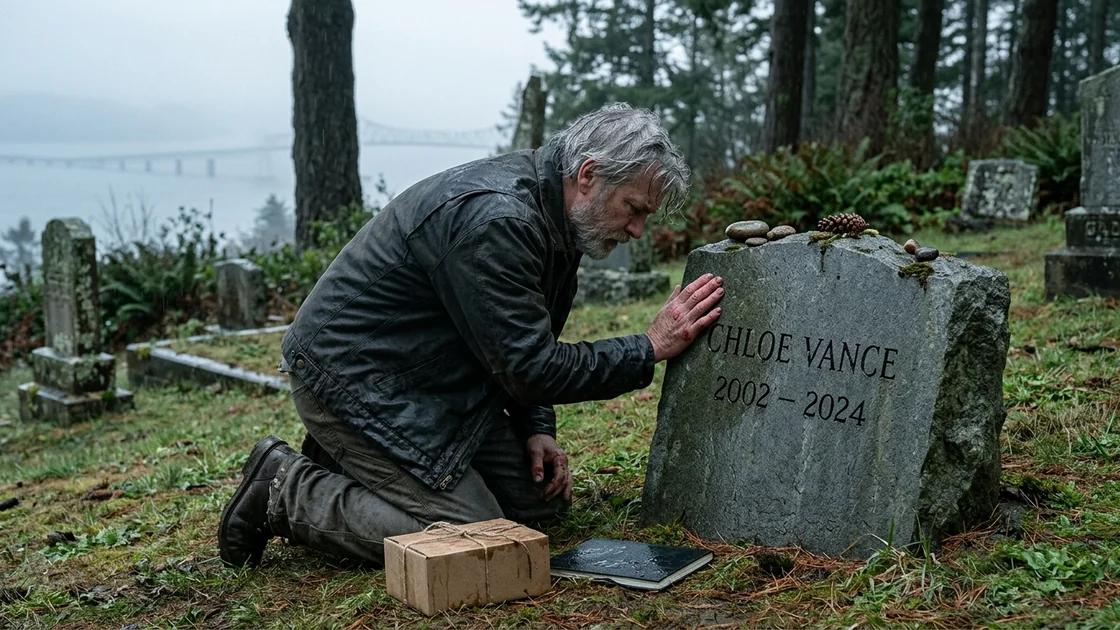
This is the story of Jesse Vance, an aging touring guitarist whose devotion to the road and the self-destructive romance of the stage led him to sever ties with his sixteen-year-old daughter, Chloe, after a venomous confrontation in a motel room years earlier. Blinding himself to his own cowardice under the guise of artistic devotion, Jesse spent half a decade drifting between club tours, cheap liquor, and empty applause until a box of uncollected mail and an urgent message forced him to confront the ghost he left behind. Returning to his coastal hometown with a hollow hope of forgiveness, he arrives only to discover that time did not wait for his vanity to soften, leaving him with nothing but the devastating silence of a reunion that can never take place.
I. The Feedback Loop
The amplifier had hummed in the key of B flat for twenty minutes before Jesse realized the sound was inside his skull.
It was four in the morning at the Green Mill Lounge in Des Moines, though it could just as easily have been Davenport, Lincoln, or Terre Haute. The room smelled of wet carpet, stale beer lines, and the ozone stench of overheating transformers. Jesse sat on the corner of an overturned road case, his hands trembling slightly around a chipped mug of diner-grade coffee he had laced with the dregs of a bourbon bottle found beneath the passenger seat of the van.
His fingers were gray with calluses, the skin split along the lateral edges of his index fingers from forty years of bending nickel-wound strings. At fifty-three, his body was a ledger of bad habits and stage posture: a curvature in the thoracic spine from supporting thirty-pound Les Pauls, an irregular fluttering in his chest that visited him between the third and fourth hours of sleep, and an unrelenting hiss in both ears that masqueraded as rain on asphalt.
"Jesse," said Caleb, the bass player, wiping down an old Precision Bass with an oily yellow rag. Caleb was twenty-four, half Jesse’s age, hired out of a trade school in Bloomington because he worked for sixty dollars a night and didn't complain when the exhaust fumes seeped through the floorboards. "Owner wants to know if you're taking the merchandise tubs out tonight, or if we're leaving them behind the bar until noon."
"Take them," Jesse croaked. His voice had the dry, rattling timbre of gravel churned in a riverbed. "Never leave the t-shirts. The help steals them. They wash their cars with them."
"Nobody's stealing three-year-old tour shirts with crooked screen prints, man," Caleb said softly, not unkindly, but with the casual cruelty of youth that has not yet learned how cheap its own future will be.
Jesse didn't answer. He looked at the instrument resting against his knee. It was a 1968 Gibson J-45, its finish checked like dried mud in an irrigation ditch, its mahogany body gouged and darkened by years of his own sweat. It was the only thing of consequence he had not hocked, pawned, or forfeited to a landlord. The guitar had outlasted two marriages, three booking agencies, a liver scare in 2011, and the daughter he hadn't spoken to in five years.
He reached into his breast pocket for his cigarettes, but his hand closed instead around an envelope Caleb had retrieved from the club’s post drop behind the cash register. Jesse’s mail followed him like a trailing line of flotsam: forwarded from bar to bar, from agency to venue, sometimes taking six months to travel two hundred miles. Most of it was garnishment notices, royalty statements showing three-dollar balances from streaming services, or promotional catalogs for gear he could no longer afford.
This envelope was different. It was heavy, cream-colored, and addressed in a rounded, careful hand that had once leaned back to the left before straightening out with adulthood. It bore a postmark from Astoria, Oregon—a town he had spent his entire adult life driving away from.
The postmark was dated nine months ago.
Jesse stared at the postmark. The rain outside hit the alley dumpster with a flat, metallic patter. His heart gave that strange, sick skip, the one he had been ignoring since Cleveland.
"Hey, Jesse," Caleb called from the back door, his silhouette framed against the wet, sulfur-colored sodium light of the alley. "Van's packed. You coming, or are you sleeping on that stool?"
Jesse didn't move. He ran his thumb over the edge of the paper. It smelled faintly of cedar and cold salt air—the damp, resinous breath of the mouth of the Columbia River, a smell he had spent three decades trying to wash out of his jackets with whiskey and cigarette smoke.
"Go to the hotel," Jesse said, not looking up. "Take the keys. Leave me the spare."
"We got three hundred miles to Fargo tomorrow, Jesse."
"Leave the damn keys, Caleb."
The younger man lingered for a second, then dropped the ring on the edge of the stage. The brass struck the pine boards with a dry, sharp clack that echoed in the empty room. The heavy fire door groaned shut, and Jesse was left alone with the hum of the B-flat transformer and the dead air of a closed saloon.
II. The Motel at Three Forks
He did not open the letter immediately. He could not. The mind has its own triage, its own cowardly mechanisms for keeping the pulse steady against the horror of its own handiwork.
Instead, Jesse closed his eyes and let the past arrive as it always did: uninvited, sharp-edged, and tuned to an open D.
It had been July. Five years back. He had been fifty, and Chloe had been sixteen—an age where children are essentially mirrors made of knives, reflecting everything a parent has failed to be with unbearable clarity.
She had come to find him. That was the thing he could not wash clean, no matter how many gin-and-tonics he drank in the basements of Ohio. She had taken two Greyhound buses, three hundred dollars stolen from her mother’s jewelry box, and a backpack containing three paperbacks and a change of clothes, tracking him down to a motel outside of Missoula, Montana, where his band had been stranded for a week with a blown head gasket.
Jesse remembered the heat of that room. It was ninety-six degrees outside, and the window unit in Room 14 hummed like an electric chair, spitting warm droplets of condensation onto the synthetic bedspread. The air smelled of burnt oil, carpet cleaner, and the cheap tequila Jesse had been drinking with a woman whose name he had forgotten by noon the next day.
Chloe had stood in the doorframe, her hair wet with sweat, her collarbones sharp beneath a faded thrift-store sundress. She had her mother’s eyes—wide, grey-green, the color of the river when the tide was turning—but the hard, straight line of her mouth belonged to him.
"You smell like an ashtray," she had said. That was her first sentence to him in eighteen months.
Jesse had been sitting on the edge of the unmade bed, his shirt unbuttoned, his bare feet resting on the sticky linoleum. He had felt that sudden, humiliating surge of defensive rage that always overtook him when his life was viewed from outside the myth he had constructed for it.
"Who told you where I was?" he had demanded.
"Mom’s bank statements. She leaves the support check receipts on the microwave. The agency has your routing." Chloe had walked past him, dropping her canvas pack on the dresser next to an empty carton of Camels and a clutter of plastic guitar picks. She looked around the room—at the dead flies on the sill, the guitar cases stacked like coffins against the wall, the brown ring where a wet bottle had softened the wood veneer of the nightstand. "Is this it? This is what you said you were doing that was so important?"
"You don't know what you're talking about, Chloe," he said, trying to make his voice sound low and resonant, the voice of an artist burdened by necessity. "We’re routing through the Northwest. We’ve got dates in Spokane and Seattle."
"You’re playing a bowling alley in Post Falls, Dad. I looked up the flyer."
The sentence was like a razor across the meat of his thumb. He stood up, his height still imposing enough to cast a shadow across her face, but she didn't flinch. She had stopped flinching when she was twelve.
"I am working," Jesse snarled. "I have worked my whole life to build something that isn't sitting in a cannery or cutting two-by-fours in the rain like your uncles. You think this is easy? You think I like driving eight hundred miles in a van that don't have heat to play for thirty people who don't give a damn?"
"Then stop," she said. It was so simple, the way she said it. Her voice didn't rise. It was flat, clear, and cold. "Just stop, Dad. Come home. Get a job at the dock. You could teach lessons at the high school. You could just... be there."
"Be there?" He laughed, a high, ugly bark. "And do what? Watch you grow up into some bank teller? Listen to your mother complain about the roof leaking every November until I die of a stroke at fifty-five? That ain't life, Chloe. That’s just waiting to be buried."
"And what’s this?" She gestured around the motel room. "This isn't life, Jesse. You're a ghost. You've been dead since I was nine. You just make a lot of noise so nobody notices."
The alcohol, the exhaustion of three weeks without a decent bed, the terror of his own dwindling bank balance, the knowledge that the young bands were faster, louder, and didn't have gray hair at their temples—it all coalesced into a black ball of venom behind his teeth.
"You’re an ungrateful little bitch," he whispered.
Chloe didn't blink. A muscle in her jaw twitched, once.
"You come here with your hand out," Jesse continued, his voice rising, filling the small room, vibrating the thin drywall until the neighbors banged on the other side. "You take your mother’s money to come down here and tell me how to live? You think because I gave you half your blood you have the right to stand in judgment of me? I gave you life, girl. I don't owe you my soul."
"You don't have a soul to owe," she said.
"Get out."
"Dad—"
"I said get the fuck out of my room!" He kicked the leg of the nightstand; the lamp wobbled and fell, the bulb shattering inside its paper shade. "You want a father who works at the lumber yard? Go find one! Go find some idiot who wants to spend forty years rotting in the rain! But don't you ever come into my space and tell me what my life is worth. As far as I'm concerned, I don't have a daughter. I have an audience, and you ain't even that. You’re just another heckler."
She stood very still in the dimmed room, the gray light from the courtyard cutting across her collarbones. Her eyes were wide, but there were no tears in them. That was what haunted him later—not that she had cried, but that she had simply gone still, like an animal realizing that the trap was not going to open, that the steel teeth were already through the bone.
She picked up her backpack. She didn't look at him again.
"You’re going to die in a place like this," she said quietly, her hand on the brass knob of the door. "And the worst part is, you’re going to think it means you were special."
The door clicked shut.
He had stayed in the room for an hour, drinking the warm tequila, telling himself he had won. He told himself that art demanded cruelty; that family was an anchor dragged through the weeds; that she would understand when she was thirty, when she had failed at something she loved and understood what it meant to refuse surrender.
He had never called her. He had changed his number two months later when the phone company disconnected his service for non-payment, and he never gave the new digits to Martha. He told himself it was Chloe’s move. She had walked out. She had spoken to him like that. She knew where the clubs were.
Five years had passed. Five winters of low-ceilinged bars, five springs of muddy interstates, five summers of festival side-stages where the monitors fed back and the young kids in baseball caps threw empty cans at his feet while they waited for the headliner.
III. The Cream Envelope
Jesse sat in the Green Mill Lounge, his fingers finally moving to the flap of the envelope.
The paper was stiff. Inside was a single sheet of heavy stock, folded in thirds, accompanied by a small, black-and-white print of a woodcut.
The woodcut was of a cedar tree growing out of the carcass of a fallen nurse log, its roots wrapping around the rotting wood like long, gray fingers searching for the dirt. The line work was intricate, fierce, and slightly jagged—the work of someone who understood both anatomy and wood grain.
He unfolded the paper.
Jesse,
I'm writing this to the agency address because Mom said they still forward your tax forms. I don't know if you'll get this in Des Moines or in some gutter in Texas, or if you'll just throw it out with the bar tabs.
I’m having a show at the Liberty Theater in Astoria on the fourteenth of October. It’s my first real exhibition. Woodcuts and block prints. A lot of them are about the river. A few of them are about you, though you probably wouldn't recognize yourself without your guitar.
I’m not writing to ask you for anything. I’m not sixteen anymore, and I don't need a father to tell me what the world looks like. But Dr. Henderson says that if there are things left unsaid, they have a way of growing legs and following you around like stray dogs, and I have enough to carry right now without your ghost on my back.
I don't expect you to come. In fact, it would probably ruin the evening if you did, because you’d find a way to make the light about you. But I wanted you to have the card. I wanted you to see that someone in this family learned how to finish something they started.
The show runs through November.
Chloe.
Jesse looked at the date on the letter.
September 12th. Of the previous year.
He checked the calendar on his cracked flip phone with a hand that had gone completely cold. It was May 3rd.
The exhibition had closed six months ago. The letter had spent nine months traveling through four booking offices, two former managers' garages, and a forwarding hub in Kansas City before landing behind the till of a dive bar in Iowa.
Jesse stood up so violently that the J-45 slid from his knee, the spruce top striking the edge of the road case with a hollow thump that sounded like a fist into a ribcage. He didn't check the wood for cracks. He grabbed his coat, stuffed the envelope into his inside pocket, and walked out into the Des Moines rain.
The van was parked three blocks away, outside the crumbling brick facade of the traveler’s hotel where the boys were sleeping. Jesse didn't go inside to get Caleb. He didn't leave a note. He put the spare key into the ignition, pumped the gas pedal three times to coax the worn carburetor into life, and turned the key.
The starter ground like teeth on bone, caught, died, and caught again. The engine roared—a loose lifter ticking wildly on the left bank—and Jesse put the transmission into reverse.
He turned the nose of the Ford Econoline west, toward the mountains, toward the ocean, toward the six-month-old silence he had built with his own two hands.
IV. The Long Crossing
The road between Iowa and the Pacific Northwest is an altar of distance. It does not allow for quick repentance. It demands seventy hours of tires groaning over expansion joints, the dead yellow grass of Nebraska, the gray sagebrush deserts of Wyoming, and the blue, suffocating passes of the Bitterroots.
Jesse drove without the radio. The radio was broken anyway—the antenna had been snapped off in a car wash outside of Boise three summers ago—but he didn't even try to whistle. His ears continued their dry, electric hiss, but the B-flat tone had shifted. It was lower now, like the draft beneath an attic door.
In Wyoming, the van began to overheat. He stopped at a truck stop near Rawlins where the wind blew so hard it peeled the dried bugs off the windshield. He sat on the curb with a gallon jug of distilled water, waiting for the radiator to stop vomiting brown steam, his knees pulled up to his chin.
A trucker, an old man with a beard the color of salt pork and eyes yellowed with liver trouble, stopped to watch him.
"You got a leak in the lower hose, friend," the driver said, pointing a grease-stained thumb at the puddle spreading beneath the bumper.
"I know," Jesse said.
"Won't make the pass that way. Not with the grade outside of Evanston."
"It'll make it," Jesse said.
The trucker shrugged and walked away, his boots crunching on the cinder gravel. "Your funeral, hoss."
Jesse watched the water drip. He thought about the word funeral. He thought about the way Chloe had looked when she was six years old, sitting on the front porch of the house on 8th Street in Astoria, wearing yellow rubber boots three sizes too big for her. She had been holding an empty mayonnaise jar, waiting for the rain to stop so she could catch the salamanders that crawled out of the blackberry brambles behind the yard.
He had been loading the trunk of his Buick that day, too. Always loading. Always the black vinyl bags, the milk crates full of patch cables, the guitar cases with the masking tape labels: VANCE - LEAD.
"Where you going, Daddy?" she had asked.
"Going to play some music, bug."
"Why?"
"Because people want to hear it."
She had looked down into the empty mayonnaise jar, where a single wet leaf was stuck to the glass. "I want to hear it," she had whispered.
He had laughed then. He had thought it was sweet. He had patted her on the hood of her yellow slicker, smelled the cold rubber and her hair—which always smelled like apple shampoo—and said, "I'll play it loud enough so you can hear it from Portland, kiddo."
He hadn't, of course. You can't hear a guitar from seventy miles away, no matter how big the speakers are. You can't even hear it from the next room if the person playing it doesn't want you there.
He topped off the radiator, poured the rest of the water over the engine block to clear the sludge, and climbed back behind the wheel.
By the time he hit the Blue Mountains in eastern Oregon, the lifter tick had become a permanent clatter, like a marble shaken in a tin can. The weather had turned from the high, dry sun of the plains to the low, bruised belly of the maritime front. The clouds were thick, gray, and heavy with moisture that hadn't yet decided whether to be fog or sleet.
He didn't sleep. He chewed ephedrine tablets bought from a display rack at a Sinclair station and drank black coffee until his teeth felt loose in his gums. His reflection in the rear-view mirror was horrifying: his eyes were sunken, circled by purple shadows that looked like thumbprints; his silver hair stood out in greasy tufts from under his wool cap; his beard was patchy and white around the mouth.
He looked like the men he used to avoid outside the bus stations—the ones who carried their belongings in plastic grocery sacks and muttered at the fire hydrants.
"Just let her be there," he whispered to the steering wheel. It was the first time he had spoken aloud in eight hundred miles. "Just let her be in that gallery. Or at Martha’s. Let her be mad. Let her spit in my face. Let her take the guitar and smash it on the curb. Just... let her be there to do it."
God did not answer. The Interstate simply offered another green sign with white reflective letters: HOOD RIVER - 14 MILES.
The Columbia River appeared on his right, vast, slate-gray, and moving with that deceptive, muscular slowness that had terrified him when he was a boy. The river did not care about songs. It didn't care about thirty-year careers or three-part harmonies. It just dragged the silt down from the mountains and dumped it into the salt where everything dissolved.
V. Astoria
Astoria is a town built on stilts and steep rock, tilted toward the water like an old man leaning over a basin to wash his face. The houses are Victorian, their paint scrubbed raw by ninety inches of rain a year, their foundations dug into the wet hillside among ferns as high as a man’s ribs.
The van rolled down Highway 30 at dusk on the third day. The engine was smoking now, an oily gray plume rising from the hood latches, but Jesse didn't stop until he reached the lower street near the docks.
The town hadn't changed, and that was its own kind of violence. The same rusted cannery pilings stood out of the gray water like rotten teeth. The same gulls sat on the ridgepoles of the net sheds, their heads tucked against the cold wind coming off the bar. The bridge to Washington stretched into the low fog like a great green ribcage that vanished halfway across, leading nowhere.
Jesse parked the van in the lot across from the Liberty Theater. The marquee was lit, but it didn't say Chloe Vance. It said: COMMUNITY CINEMA: THE GENERAL - FRIDAY 7 PM.
He sat in the idling van for ten minutes, his hands locked onto the steering wheel. His muscles were so stiff he wasn't sure he could stand. His lower back was a solid plate of fire.
"Come on," he muttered to himself. "Come on, you old bastard."
He got out. The salt air hit him like a wet towel across the mouth. It was forty-six degrees, the damp cold sinking instantly through his denim jacket and settling into the marrow of his collarbones. He walked across the wet street, his boots making no sound on the slick asphalt.
The theater doors were locked, but the lights were on in the adjoining gallery space—a high-ceilinged room with exposed brick that had once been an office for a shipping firm.
Jesse put his face to the glass.
The room was empty. The walls were white, clean, and entirely bare except for three small bronze plaques near the back entrance. There were no woodcuts. There were no cedar trees growing out of nurse logs. There was only a janitor with a mop bucket, pushing gray water across the polished maple floorboards.
Jesse tapped on the glass with the ring on his left hand. The sound was sharp—tink, tink, tink.
The janitor, an elderly man in a brown uniform with DICK stitched over his pocket, looked up, shook his head, and pointed to the small plastic sign in the corner: HOURS 10-5.
Jesse tapped again, harder this time.
The janitor scowled, set his mop against the wall, and shuffled to the door. He unlocked it and opened it three inches, keeping the safety chain engaged.
"We're closed, mister. Box office opens at noon tomorrow."
"The show," Jesse said, his voice cracking. He cleared his throat and tried again. "The woodcut show. Chloe Vance."
The janitor stared at him through thick, cataract-clouded lenses. His eyes moved from Jesse’s wild hair down to his salt-stained boots, then back to his face. Something shifted in the man’s expression—not recognition, but the cautious withdrawal of a small-town resident who has smelled something sour.
"The Vance girl?" the janitor asked.
"Yeah. Chloe. Her show was here."
"That was last fall, mister. That was November."
"Where are they?" Jesse’s fingers curled around the edge of the aluminum doorframe. "The prints. Where did they go? Did she take them home? Does she have a shop?"
The janitor didn't answer for a long time. The mop bucket behind him gave a small, gurgling sound as the heating vents clicked on.
"You kin to her?" the janitor asked.
"I’m her father."
The old man’s mouth went slack. He looked past Jesse, into the wet street, at the rattling Econoline with its plume of white exhaust dying in the rain.
"You're Jesse?"
The question wasn't angry. It was heavy. It had the terrible weight of something that had been discussed by other people in warm rooms while the coffee was being poured.
"Yeah," Jesse said, a small, desperate spark of pride flaring in his throat. "Yeah, I'm Jesse. Jesse Vance. Is she at her mother's?"
The janitor slowly reached up and slid the brass chain out of its slot. He pushed the door open, but he didn't step aside to let Jesse in. He just stood there in the draft, his hands tucked into his pockets.
"You better go up to Martha’s," the old man said softly. "You shouldn't be down here asking me. Go up to the house on 8th."
"Is she there?"
"Go up to the house, Jesse."
VI. The House on 8th Street
The house on 8th Street was built into the slope above the Catholic church. To reach it, you had to climb three sets of wooden public stairs that cut through the salal and the huckleberry bushes, their steps slick with green algae.
Jesse didn't drive the van; the transmission was slipping so badly it wouldn't take the twenty-percent grade. He walked. By the time he reached the third landing, his breath was coming in ragged, whistling sobs. His lungs felt as though they were lined with sand. Every joint in his left shoulder—the one that had carried the weight of the Gibson through three thousand sets—screamed with each swing of his arm.
The house was dark except for the kitchen window at the rear. The exterior was the same faded lead-gray it had been when he left, but the porch steps had been replaced with treated hemlock that hadn't yet weathered. A pair of small, green gardening clogs sat beside the mat.
Jesse stood on the walk. Five years.
He had rehearsed this. In the van, somewhere between North Platte and Cheyenne, he had found the words. He was going to say: I was wrong, Chloe. I was a small man who thought he was big because he had an amplifier. I was terrified of being nobody, and I made you pay for it. You don't have to love me, you don't even have to like me, but I am here, and I am done running.
He had practiced the cadence of it. He had tuned the performance. Even now, even at the edge of the pit, the old musician’s instinct to shape the moment, to find the melody that would make the listener weep, was working in his fingers.
He stepped onto the porch. The hemlock didn't creak.
He knocked. Three raps.
Inside, a chair scraped against linoleum. A silhouette passed across the amber glass of the kitchen door. The porch light flickered on—a single forty-watt bulb in a yellow glass globe that made Jesse’s skin look jaundiced.
The door opened.
Martha had aged twenty years. Her hair, which had been thick and dark as a wet cedar branch when they were young, was clipped short and completely white. She wore a heavy gray cardigan that belonged to a larger person, the sleeves rolled twice at the wrists. She was holding a blue ceramic mug with both hands, as if to keep them from shaking.
She looked at him through the screen door. She didn't gasp. She didn't curse. She just looked at him with the flat, dead gaze of a lighthouse keeper watching another log drift onto the spit.
"Jesse," she said.
"Martha."
The silence between them was not the silence of an argument. It was the silence that lives in an empty pantry, or an abandoned schoolhouse where the roof has fallen in.
"Your van is smoking down on Commercial," she said.
"The hose went in Rawlins."
"You always did have trouble with hoses."
Jesse shifted his weight. The water was dripping from the brim of his cap onto his nose. "Martha, I got the letter. From the agency. It took... they sent it to Des Moines. I was in Iowa."
Martha looked down at her mug. She blew on the tea, though no steam was rising from it.
"Des Moines," she repeated.
"I drove through. I didn't stop. I came straight from the club." He reached for the screen door handle, but his hand stopped an inch from the aluminum. "Is she here? Is she asleep?"
Martha raised her eyes. There was something so terrible in them that Jesse took a step back, his heel catching on the edge of the hemlock board.
"She’s not here, Jesse."
"Did she move to Portland? The letter said she had the show. The man at the Liberty said—"
"She’s at Ocean View," Martha said.
The name didn't register at first. Ocean View was a neighborhood. It was the development out by the golf course where the dentists lived. Then the word tilted, like a boat hitting a submerged pile, and the secondary meaning came up through the bottom of his stomach: the gray stones on the ridge overlooking the bar, where the spruce trees were stunted by the salt wind and the headstones faced the west so the dead could watch the fog roll in.
Jesse’s mouth opened. Nothing came out. His chest gave that violent, irregular spasm, three hard beats like a kick drum hit with a broken pedal, and then his breath simply stopped.
"No," he said. It wasn't a word. It was a grunt.
"January," Martha said. Her voice was thin, small, and perfectly level. "The twenty-second. It was a Tuesday. It rained all day. We had to put a canvas fly over the hole so the minister didn't get his prayer book wet."
"No," Jesse said again. He reached out and grabbed the screen door frame with both hands, his knuckles turning white as lard. "No. She was sixteen. She was just... she was in Montana, Martha. She came to the room."
"She was twenty-one, Jesse. You’ve been gone five years. People don't stay sixteen because you stopped looking at them."
"What was it?" The words were tearing out of his throat now, jagged and bloody. "The road? An accident? The car?"
"Lupus," Martha said. "The kidneys went first. Then the heart. She was sick for two years, Jesse. Two years she was in that room upstairs with the oxygen bottles humming like a refrigerator."
She took a sip from her cold mug. Her hands were perfectly steady now.
"She wrote you three times before that card," Martha said. "The first one was when they diagnosed her. She asked for your insurance. To see if there was any dependent coverage left from the union. The letter came back stamped NOT AT THIS ADDRESS from some bar in Louisville."
Jesse felt his knees touch the porch boards. He hadn't decided to kneel; his legs had simply uncoupled themselves from his hips. He was holding onto the wire mesh of the screen door with his fingers hooked through the aluminum squares, his forehead pressed against the cold metal.
"She didn't tell me," he wept. "The card didn't say. The card just said the show... it just said the show was in October..."
"She didn't want you here because she was dying," Martha said, her voice dropping into a register of cold, absolute disgust that made Jesse want to crawl under the porch into the hemlock needles. "She didn't want you coming back to play the tragic father at her bedside. She knew you, Jesse. She knew you’d bring that damn guitar into the hospital room and sing some song about how hard it was for you to watch her slip away."
"Martha, please—"
"She wanted you to come for her work," Martha whispered, leaning her face close to the screen. For the first time, Jesse saw the bright, hot tears leaking out of the corners of her eyes, running into the deep creases around her mouth. "She wanted you to see that she made something that was true. Something that didn't need a microphone. She waited three nights at the gallery, Jesse. Every night until nine o'clock. She sat on that wooden bench with her coat on, watching that door every time the bell rang."
She stopped. She wiped her face with the sleeve of the oversized sweater.
"By November, she couldn't walk down the stairs anymore. And you were in Des Moines."
"I didn't have the letter," Jesse howled, the sound echoing off the wet cedar siding of the neighbor’s garage. "I didn't have it! It was in a box! The manager didn't forward it!"
"You think that matters to the dirt, Jesse?" Martha asked. She unlocked the screen door, pushed it open until it hit his shoulder, and set a small, square cardboard box on the porch beside his knees. "Here. She told me to throw it in the river, but I wouldn't do it. I wouldn't dirty the water with your business."
The door clicked shut.
The deadbolt turned with the heavy, final sound of an iron gate falling into a stone socket. The yellow light went out.
Jesse was left in the dark on his knees, the rain falling straight down through the hemlock branches, beating against the cardboard box that sat between his hands.
VII. The Box on the Floorboards
He did not go to the cemetery that night. He could not have found it in the fog, and some ancient, residual sense of shame—the small ember of decency he had spent forty years smothering—told him that he had no right to stand over her in the dark when he had refused to sit with her in the light.
He crawled down the steps on his hands and knees, dragging the cardboard box by its twine handle. His knees were black with garden soil and hemlock needles.
He got back into the van. The interior smelled of old grease, wet wool, and the sour whiskey he had left in the cup holder. He pulled the side door shut, locked it from the inside, and sat down on the floor between the two wooden road cases.
He took out his pocketknife and cut the twine.
Inside the box were four things:
A sketchbook with a black linen cover, swollen and warped by the coastal humidity.
A set of Japanese wood-carving gouges in a canvas roll, their cherry-wood handles stained with blue ink and linseed oil.
A cassette tape with no label, only the number 4 written on the plastic shell in red grease pencil.
And an envelope, unsealed, with his name written on it in the same clear, upright hand from the exhibition card.
Jesse reached for the tape first, his musician’s fingers acting before his mind could intervene. He had an old battery-operated tape deck in the back of the van—a battered gray Panasonic he used to check rehearsal balances and record song ideas when he was driving through the night.
He found the deck beneath a pile of dirty stage shirts. The batteries were low—the little red LED glowed with a dull, dying orange—but when he pushed the cassette into the well and pressed PLAY, the capstan turned with a slow, rubbery groan.
There was five seconds of hiss. Not the hiss in his ears, but the warm, organic tape hiss of a cheap microphone in a small room.
Then someone cleared their throat.
It wasn't the sixteen-year-old in the motel room. It wasn't the child with the mayonnaise jar. It was the voice of a woman whose lungs were only working at half-capacity, the breath coming between the words like small pauses for water.
"It’s October tenth," she said.
A car passed outside on the street in the recording, the wet shhh of tires on rain-slick macadam clearly audible.
"I’m sitting in the studio at the high school. Mr. Geller let me use the key after hours so I could finish the printing for the Liberty."
There was the sound of a tool being set down on wood—the dry tock of a gouge handle against maple.
"I don't know why I’m recording this," she said. A small, dry laugh followed, ending in a short cough that she muffled with her hand. "Mom says I should write you a long letter and tell you how much you hurt us. But that’s what you want, isn't it? You love a scene. You love being the man who broke everything and has to sing about the pieces."
Jesse pressed his palms against his ears, but the voice came through the thin plastic speaker of the Panasonic, right into the meat of his brain.
"I used to think you were like the river," she continued. Her voice was very quiet now, almost conversational, the way people speak when they are alone in a room with a mirror. "You know how the old people down at the docks say the Columbia isn't really water? They say it’s just a great big muscle that wants to go out to sea, and anything that gets in the middle of it just gets ground up on the bar. I thought you had to be like that. Because of the songs."
A long silence. On the tape, you could hear the rain hitting the school skylight—the same rain that was hitting the roof of the Econoline right now.
"Then I grew up," she said. "And I realized you weren't the river at all, Jesse. You were just the driftwood. Just some piece of dead hemlock that floated out because it wasn't rooted to anything."
Another cough, longer this time, deeper, rattling in her small chest until she had to set the microphone down. The sound of her struggling for breath filled the back of the van, amplified by the metal panels, until Jesse was doubled over, his forehead against the floorboards, biting his own knuckles to keep from screaming.
The tape clicked. She had stopped it and started it again. When her voice returned, it was thinner, more distant.
"I finished the big block today," she said. "The one with the spruce tree. I called it The Nurse Log. You probably don't know what that is. When an old tree falls down in the woods, it rots from the inside out. It gets soft and black. And then the seeds from the other trees land on it, and they grow out of its back. They use the old wood to get up above the ferns so they can find the sun."
A dry, rattling breath.
"The old tree has to rot completely before the new ones can stand on their own roots," she whispered. "I thought you should know that. In case you ever come back to look."
The tape ended with a sharp, mechanical clack as the stop button popped up.
The orange LED flickered and died.
Jesse sat in the absolute silence of the van. The B-flat transformer in his skull had stopped. The hissing had stopped. There was only the sound of his own heart, laboring behind his ribs like an old engine that had been run without oil for too long, ticking toward its own stall.
VIII. Ocean View
The morning came without light. It was simply that the gray of the night softened into the gray of dishwater.
Jesse walked up the hill to Ocean View Cemetery. He did not carry the Gibson. He had left it in the back of the van, locked in its case, lying on the rusty floorboards like an empty suit of armor. He carried only the black linen sketchbook and his pocketknife.
The cemetery was terraced into the ridge above the river. The headstones near the road were old—nineteenth-century ship captains, Finnish gillnetters who had drowned in the Peacock Spit, lumbermen who had been crushed under hemlock turns in the 1890s. Their names were nearly worn away by the lichen and the salt: Olsen, Lindstrom, MacCallister.
Chloe was in the new section, where the sod was still lumpy and the earth had that raw, yellow look of clay that has been turned up from eight feet down.
Her stone was not marble. It was a block of rough-cut gray basalt from the quarry up at Nehalem, its face smoothed just enough to take the chisel.
CHLOE VANCE 2002 – 2024 The roots go down through the hemlock.
There were no flowers on the grave. Only three smooth river stones someone had placed along the top edge of the basalt, and a small spruce cone, green and tight with resin.
Jesse stood before the stone. The wind off the Columbia was coming from the northwest, cold and smelling of herring bait and open ocean. His clothes were soaked through now; the denim of his trousers was heavy and stiff, slapping against his shins with every step.
He looked at his hands. The calluses on his fingertips were white, swollen by the water, soft as wet cardboard.
He reached into his pocket, took out the pocketknife, and opened the small blade.
He didn't cut his wrists. That would have been a performance. That would have been the fifth act of a ballad he had already written twelve times in bars across the Midwest.
Instead, he took his left hand—the hand that had formed the chords, the hand that had held the neck of the guitar while he told a sixteen-year-old girl that she was just another heckler—and he laid his index finger flat against the rough basalt of her stone.
With the small, dull blade of the knife, he began to slice away the calluses.
He did it methodically, without haste. He cut through the thickened, dead yellow skin he had built up over forty years of bends and slides. He cut until the white flesh gave way to pink, and the pink gave way to dark, thick red that ran down the face of the stone, over the letter C, down through the V, and into the moss that was already trying to take root in the chisel marks.
He did the index finger. Then the middle finger. Then the ring.
He did not stop until the tips of his fingers were as smooth and raw as the fingers of a newborn child—skin that could not hold a string against a nickel fret without screaming; skin that could not play a three-part harmony; skin that could only feel the cold, wet reality of the stone it was touching.
He pressed his bleeding fingertips against the basalt.
"Chloe," he said.
The wind took the sound and carried it out over the gray river, toward the bar where the fresh water met the salt and broke into white foam that vanished as soon as it rose.
"Chloe, I'm here."
No one answered. The basalt stayed cold. The spruce cone did not move.
A mile below him, on the dock, a horn blew as an empty freighter turned its nose toward the Pacific, heading out into the dark, indifferent sea with its hold full of nothing.
IX. The Nurse Log
Jesse did not leave Astoria.
The Econoline finally died for good three days later, its block cracking with a sharp ping that sounded like an E-string snapping under a heavy thumb. He sold the carcass to an auto wrecking yard on the road to Warrenton for one hundred and twenty dollars and the cost of the tow.
He rented a room above an outboard motor repair shop near the commercial basin. It had one window that looked out at the bridge pilings, a sink that ran brown water for the first two minutes every morning, and a two-burner hot plate that smelled of kerosene.
He did not buy another amplifier. He did not buy another set of strings.
The 1968 Gibson J-45 remained under his cot, inside its case, with the latches closed. Sometimes, in the middle of the night, when the fog was so thick that the horn on the jetty blew every forty seconds, the sound would vibrate through the floorboards and the spruce top inside the case would hum in sympathy—a faint, ghostly chord that died almost before it began.
Jesse didn't open the case. He had taken a job at the net shed, working for an old Norwegian named Hrolf who didn't know who Jesse Vance was and didn't care.
Jesse’s job was to mend the gillnets. His fingers, now that the calluses were gone and had healed into thin, sensitive scar tissue, were clumsy with the wooden shuttles at first. The nylon twine cut into the new skin, making him bleed into the green mesh until Hrolf gave him a pair of wool mitts with the fingers cut out.
"You got musician’s hands," Hrolf said to him one afternoon as they sat on overturned fish boxes, watching the rain beat against the corrugated iron walls of the shed. "Soft. No good for rope."
"They're not musician's hands," Jesse said, his voice flat and quiet as the tide pool water. "They're just hands."
Every Saturday, Jesse walked up the wooden stairs to 8th Street, past the house where Martha lived behind her locked screen door, and up into the wet trees of Ocean View.
He carried the black sketchbook.
He would sit on the damp grass beside the basalt stone, his back against a stunted cedar, and he would open the book to the pages Chloe had drawn during those two years while the oxygen machine hummed in her bedroom.
There were forty drawings in the book.
The last one was not a woodcut. It was a simple pencil sketch, done with a very soft lead that had smudged slightly against the opposite page.
It was a drawing of a man from behind.
He was walking down an empty two-lane highway that stretched toward a flat horizon where the telephone poles dwindled into nothing. He was carrying a guitar case in his right hand, his shoulder hitched high to balance the weight. His coat was thin, and his head was down against a wind you couldn't see but could feel in the slant of the weeds along the ditch.
Underneath the drawing, written in her small, upright hand that had stopped shaking just long enough to finish the line, were three words:
Poor old thing.
Jesse sat in the rain and laid his scarred fingers over the pencil marks. He did not sing. He did not make a melody of it. He did not look for the rhyme that would turn the horror into beauty, or the chorus that would lift the listener out of the dirt.
He simply sat in the cold, wet salt air of the river mouth, feeling the rain go through his wool coat, through his shirt, down to the skin of his chest where his heart kept its slow, irregular, unrecorded time.
The river ran down to the bar. The dead wood floated out to sea. And behind him, deep in the dripping salal beneath the hemlocks, the green nurse logs lay in the black earth, rotting away in the silence so the young trees could stand.