The Ghostwriter's Margin
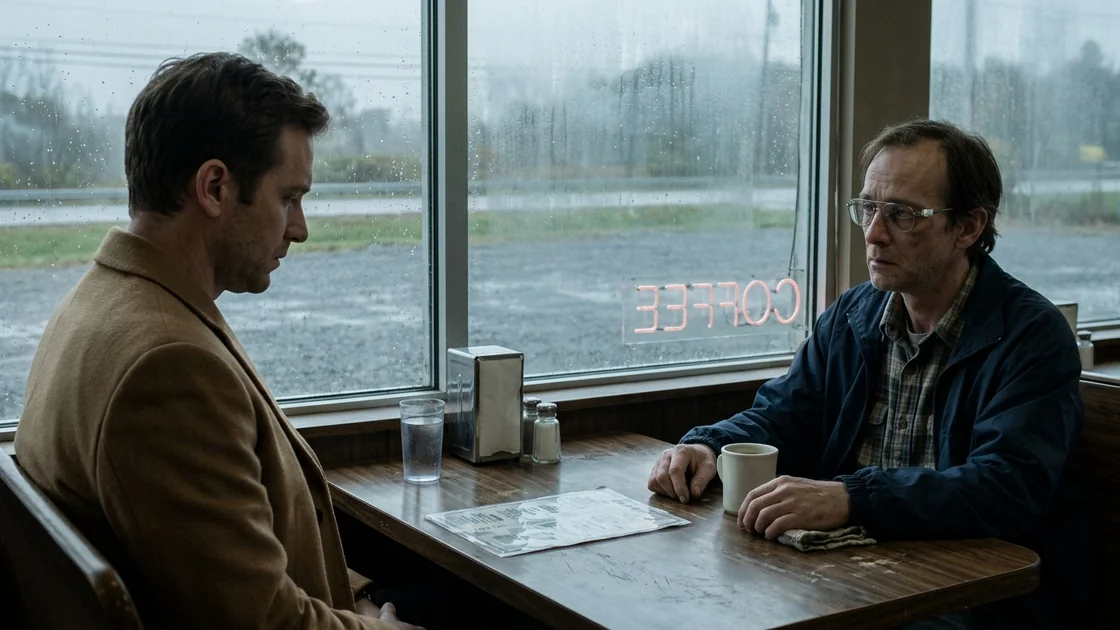
This story follows Arthur Finch, an ambitious literary ghostwriter who, desperate for financial security and prestige, fabricates a devastating accusation of sexual assault against an innocent former film archivist named Julian Mercer in the memoir of an aging actress. Propelled by the manufactured scandal, the book becomes an international bestseller, yielding massive advances and industry acclaim for Finch while instantly dismantling Mercer's marriage, career, and sanity. As Mercer’s life irreversibly disintegrates under the weight of global public condemnation, Finch is forced to confront the irrevocable machinery of modern outrage, finding that the truth, once rewritten for profit, cannot be redeemed.
Part I: The Voice for Hire
The business of disappearing into another person’s skin is, at its root, an act of orderly theft. To do it well, you must not merely mimic the rhythm of their speech; you must anticipate the contours of their vanity, hollow out your own instincts, and build an altar to their self-delusion. For twelve years, I was the premier architect of other people’s mythologies. My name never appeared on the dust jackets, save for a discreet line tucked into the acknowledgments of three dozen non-fiction bestsellers: Special thanks to Arthur Finch, whose editorial guidance was indispensable.
Editorial guidance. It was the industry’s favored euphemism for writing every single syllable between the copyright page and the index.
I had written the memoirs of disgraced senators seeking a path back to corporate boards, tech entrepreneurs who mistook venture capital infusions for spiritual enlightenment, and pop stars whose vocabularies were so parched they required a thesaurus to describe their own childhoods. I knew how to manufacture vulnerability. I knew how to take a petty slight in an airport lounge and stretch it across seven pages until it sounded like a dark night of the soul.
By the autumn of my thirty-eighth year, however, the rent on my apartment in Brooklyn had doubled, my own long-abandoned novel was mouldering in a storage unit in Queens, and my agent, Marcus Sterling, was losing patience with my fastidiousness.
"Nobody buys insight anymore, Arthur," Marcus told me over lunch at the Century Club, chewing through a dry piece of sea bass while his phone buzzed relentlessly against the damask tablecloth. "Insight is free on the internet. People buy confessionals that double as indictments. They want blood, they want a recognizable scalp, and they want to feel morally superior while reading it on the subway. If you can’t give them that, you’re just an expensive stenographer."
The assignment that was supposed to save my balance sheet arrived three days later: Silk & Cinders, the proposed tell-all of Nadia Vance.
Nadia had been an indie darling in the late nineties, celebrated for a brand of mournful, wide-eyed beauty that directors loved to photograph through rain-streaked windows. She had possessed a brief, incandescent moment—a breakout role in an independent film called Pale Meridian that garnered an Academy Award nomination, followed by five years of prestige period dramas—before fading into the middle-distance of television guest spots, ill-fated marriages, and luxury wellness branding.
Her publisher, Vantage Press, had initially offered a modest six-figure advance for a standard retrospective: childhood in Topanga Canyon, youthful rebellion, the glittering terror of Cannes, and the quiet serenity found in macrobiotic cooking. But early sales estimates were tepid. Pre-orders were non-existent. The retail buyers at the major chains were indifferent.
Then came the mandate from the top floor of Vantage. If Nadia Vance wanted the remaining half of her advance—and if I wanted my forty percent cut, which amounted to three hundred thousand dollars, an amount that would clear my debts and give me three clear years of uncompromised personal freedom—the book needed what the marketing department called an "anchor event." A cultural wedge. A transgression that recontextualized her entire withdrawal from cinema.
"She needs an injury," Marcus told me over the phone, his voice flat with pragmatic greed. "A wound that didn't heal. Find out who kept her from being Nicole Kidman, Arthur. Find out who broke the chain."
I met Nadia at her rented bungalow in the hills above West Hollywood. She was fifty-two then, her skin tightened by procedures that left her features in an expression of perpetual, mild surprise. She spent our first three recording sessions drifting through anodyne recollections: the smell of eucalyptus on her mother’s terrace, the rudeness of a French director who had denied her sugar on set, the time she almost shared an elevator with Warren Beatty.
It was useless. It was cotton wool.
"Nadia," I said on the fourth afternoon, clicking off the digital recorder on the low glass table between us. "The publisher is going to pull the plug."
She froze, a porcelain cup halfway to her lips. "Don't be absurd, Arthur. Marcus said—"
"Marcus isn't paying the printing bill," I cut in, adopting the calm, paternal authority that ghostwriters use to cow anxious celebrities. "The house feels the narrative lacks friction. You were the most sought-after young actress in North America in 2002. By 2005, you were doing straight-to-streaming thrillers in Vancouver. Readers will ask why. If the answer is merely that the scripts weren't interesting, they will close the book and forget you."
Her eyes flickered with that distinct, terrifying panic peculiar to performers who realize the spotlight has tracked to another corner of the stage. "It was the system," she murmured vaguely. "Men in suites. The atmosphere back then."
"Give me a name," I said. "Give me a specific circumstance."
She began rifling through the junk drawer of her memory, throwing out names of deceased studio heads, legendary monsters whose crimes had already been cataloged in five separate investigative exposés. There was no currency left in them; the carrion had been picked clean.
Then, almost as an afterthought, she mentioned the post-production of Pale Meridian.
"There was that awful boy," she said, tapping her chin with a manicured nail. "In the sound facility in Burbank. What was his name? Julian? Julian something. He was an assistant, or a restoration clerk. Very quiet. Awkward. He used to stare at me during the loop sessions. One night, when everyone went for Thai food, he cornered me in the machine room. He was… strange. He said something about my voice. He touched my shoulder. I remember feeling quite chilled by it."
"Did he do anything else?" I asked, my fingers hovering over the record button.
"No," she said, leaning back, already bored by the memory. "I told the director he made me uncomfortable, and I think they reassigned him to the night vault. I never saw him again. He was nobody, really."
I turned the recorder back on. "Let’s stay with Julian for a moment," I said softly.
That night, in the sterile guest suite of the Chateau Marmont, I opened my laptop and ran a search for the crew of Pale Meridian. It didn't take long to find him: Julian Mercer. In 2002, he had been twenty-six years old, an assistant sound preservationist with a master’s degree from USC. He hadn't remained in the industry. For the past fifteen years, he had lived in Ithaca, New York, working as the head archivist for an endowed regional film institute and teaching two undergraduate seminars a year on silent cinema preservation.
His digital footprint was small, clean, and utterly civilian. A photograph on the university faculty page showed a man with thinning brown hair, metal-rimmed spectacles, a gentle, asymmetrical smile, and a slightly rumpled tweed jacket. There was an announcement from a local paper seven years prior regarding his marriage to a woman named Clara, an architect who specialized in historical renovations. There was a photo of them at an apple orchard, laughing together, his hand resting tenderly on her pregnant stomach.
He was defenseless. He had no publicist, no crisis manager, no institutional shield. He was an obscure footnote in an industry that treated human lives as disposable paper cups.
The devil does not appear with horns and a contract in blood; he appears as an open Word document at two in the morning, accompanied by a calculation of how many years of rent twelve installments of twenty-five thousand dollars can pay.
In the original transcript, Nadia’s recollection of Julian Mercer occupied eighty-four words. Over the next forty-eight hours, I expanded those eighty-four words into an entire chapter.
I gave the incident a setting: the suffocating, foam-padded isolation of the foley studio at two in the morning. I transformed an awkward, possibly imagined stare into a systematic campaign of predatory stalking. I wrote that Mercer had used his access to the sound stems to isolate her voice, playing her own whispered lines back to her through the studio monitors when they were alone in the dark, murmuring vulgarities through the intercom while his hands were on the mixing desk.
Then I crossed the threshold from embellishment to absolute fiction.
I wrote that on the final night of post-production, Mercer had locked the heavy, soundproof door of the vault, forced her against the steel racks of negative cans, tore her silk camisole, and held a utility razor to her throat while telling her that if she screamed, he would ensure the master tapes of her performance were exposed to light and erased forever. I wrote that she had escaped only by driving a steel tape-spindle into his foot, fleeing into the rainy parking lot with her clothes in tatters, too terrified of the industry’s boy's club to ever go to the police. I wrote that the trauma of that night had shattered her nerve, rendering her incapable of entering an audition room without suffering debilitating panic attacks, thereby systematically dismantling her trajectory toward superstardom.
It was beautifully written. It possessed the taut, horrifying velocity of a literary thriller. It had the precise texture of authentic violation—the cold smell of ozone from the cooling racks, the rustle of magnetic ribbon, the bitter taste of metallic copper on the back of the tongue.
I sent the draft of Chapter Fourteen to Marcus with a note: Here is your anchor.
Twenty minutes later, my phone rang.
"Arthur," Marcus whispered, his voice trembling with an almost religious reverence. "Is this verified?"
"Nadia signed off on the pages," I lied smoothly.
In truth, Nadia had barely skimmed the manuscript. When I had brought the printed draft to her bungalow the following morning, she had been preoccupied with an impending colon cleanse and a real estate dispute with her neighbor over an overgrown bougainvillea. She had flipped through the pages, her eyes glazing over the dense paragraphs of prose, stopping only to admire the descriptions of her own youth—her "porcelain fragility," her "incandescent vulnerability."
"It's very dramatic, Arthur," she had murmured, turning a page without reading it. "You really captured how… toxic that entire era was for girls like me."
"You remember it that way, don't you?" I had asked, holding my breath, my pen poised over the signature block of the legal clearance rider. "The sound vault. The assault."
She had sighed, waving a hand through the scented air of the room, her gaze fixed on the pool outside. "Memory is such a strange, fluid thing, darling. If that’s how it felt to me emotionally, then that’s what happened. Sign whatever you need to sign. I trust you implicitly."
And so, she signed.
Vantage Press did not submit the manuscript to their legal department for anything more than a cursory libel check. Because Julian Mercer was an unknown figure who had worked on the film under an independent contractor agreement that had long since been purged from the studio archives, and because Nadia was an internationally known artist recounting her own lived experience, the corporate lawyers considered the risk negligible.
Three weeks later, the press release was drafted. The bidding war for the foreign rights exploded across Frankfurt and London. Vantage increased the initial print run from thirty thousand copies to four hundred and fifty thousand.
My cut was deposited into my checking account on a Tuesday morning in late March. I stood before the ATM screen on Seventh Avenue, staring at the six-figure balance with a strange, numb sensation in my chest. I had bought my life back. I was solvent. I had committed no crime under the penal code; I had merely provided editorial assistance to a woman recounting her past.
The book, titled Silk & Cinders: A Memoir of Survival, was scheduled for release on the first Tuesday of May.
Part II: The Velocity of the Lie
The promotional campaign did not begin as a slow burn; it was an instantaneous cultural detonation.
The publisher had leaked Chapter Fourteen to a prominent entertainment website seventy-two hours prior to publication. The headline was designed with industrial precision to bypass the rational faculties and strike directly at the outrage centers of the modern brain: OSCAR NOMINEE NADIA VANCE REVEALS HORRIFIC ATTACK BY SOUND TECH THAT DERAILED HER CAREER.
Within six hours, the excerpt had been shared two hundred thousand times. By evening, it was the lead item on every syndicated entertainment news broadcast in the English-speaking world. The narrative was irresistibly neat: a brilliant, vulnerable young woman at the apex of her artistic power, crushed beneath the heel of a predatory industry coward who had hidden in the margins of the production credits for twenty years while she suffered in dignified silence.
I sat in my newly renovated brownstone apartment, surrounded by mid-century Scandinavian furniture I had purchased with the advance, watching the morning television interviews on a sixty-five-inch screen that felt like an open furnace.
Nadia sat on the sofa opposite a morning show host whose face was twisted into a mask of solemn, professional empathy. Nadia was dressed in a high-necked cashmere sweater of slate gray, her hair pulled back into an austere chignon. She looked fragile, brave, and extraordinarily expensive.
"When you were in that room, Nadia," the host asked, leaning forward, her voice dropping an octave into the register reserved for national tragedies, "when Julian Mercer had you against those shelves… where did you find the strength to survive?"
Nadia looked down at her hands, which rested in her lap like wounded birds. I watched her closely. There was a micro-second of hesitation, a flicker of pure, blank panic behind her eyes as she tried to recall what I had written for her. Then, the muscle memory of forty years of acting took over.
A tear—single, pristine, perfectly timed—welled in her left eye and tracked down her cheek, catching the studio lighting.
"I thought of every girl who didn't have a voice," she whispered. "I thought of the girls who couldn't fight back. And I knew that even if he destroyed my career—even if he stole my future—he couldn't have my soul."
The host reached out and took her hand. The audience gasped in synchronized catharsis. In the commercial break that followed, the book’s Amazon rank hit number one globally.
I turned off the television. The silence of the apartment was vast and cold.
On my phone, the Google Alert I had set for "Julian Mercer" was updating every four seconds.
The internet had found him within forty-five minutes of the excerpt’s publication. Because he had retained his real name and worked in an academic setting, the digital mob had converged upon him with the speed and coordination of a military strike.
His university’s social media accounts were immediately besieged by thousands of comments demanding his immediate termination, his public exposure, and his imprisonment. Commenters posted aerial photographs of his house in Ithaca. They posted the name of the boutique architectural firm where his wife, Clara, was a partner. They posted the name of the elementary school attended by his eight-year-old daughter, Beatrice.
A petition on a civic activism website demanding the Tompkins County District Attorney bring immediate, retroactive felony charges against him gathered eighty thousand signatures before noon, despite the fact that the statute of limitations on the alleged misdemeanor battery had expired fifteen years earlier, and the alleged felony assault existed only on the hard drive of my laptop.
By three o'clock that afternoon, the president of the college issued a public statement:
The College has been made aware of the deeply disturbing and credible allegations of sexual violence made against Julian Mercer in the memoir of Nadia Vance. The College condemns all acts of gender-based violence and harassment in the strongest possible terms. Effective immediately, Mr. Mercer has been placed on indefinite, unpaid administrative leave pending a full investigation, and has been barred from entering campus grounds.
I watched the machinery grind him down from behind my desk, sipping an espresso from an artisanal porcelain cup. I told myself that this was simply the way the world worked now. It was an ecosystem of friction and response. Julian Mercer was not a man; he was an abstraction, a name that happened to fit the structural requirements of a publishing narrative. If it hadn't been him, it would have been someone else. Men like him—quiet, administrative men who inhabited the basements of institutions—were statistical noise in the cultural ledger.
Then, at six in the evening, I received an email at my private address.
The subject line was blank. The body of the message was two sentences long:
Arthur Finch: I don't know who you are, but the publisher's legal disclosure says you assisted Nadia with this text. Please tell me what this is. Please, I am begging you to tell them the truth.
It was signed: Julian Mercer.
I did not reply. I dragged the message into the trash folder, emptied the trash, closed my laptop, and went out to dinner at a restaurant where a reservation required four months of advance notice. I drank three martinis, ate oysters that tasted of salt and iron, and listened to an editor from a major house tell me that I had pulled off the most successful literary resurrection of the decade.
"You're a magician, Arthur," she said, raising her glass to mine. "You made people care about a woman who hasn't made a decent movie since the Bush administration."
"It was all Nadia," I said, reciting the catechism of the trade with an easy, untroubled smile. "I was just the pencil."
Part III: The Decomposition
A reputation does not die neatly; it decomposes in public, releasing a foul, pervasive gas that poisons everything within its radius.
Over the next six weeks, I monitored Julian Mercer’s destruction with a morbid, compulsive fascination that bordered on ritual. I could not stop looking. Every morning, before I read the papers or checked my bank balances, I opened an incognito window and searched his name, charting the progressive liquidation of a human life.
The local newspaper in Ithaca, The Ithaca Journal, covered the story with the breathless, provincial fervor of a small-town press handed an international scandal.
The first week: The architectural firm where Clara Mercer worked was picketed by local college students carrying signs that read PARTNERS IN SILENCE and FIRE THE APOLOGIST. Two commercial clients—a local winery and a veterinary clinic—cancelled their contracts with the firm, citing "brand alignment concerns." By the end of the second week, the firm announced that Clara Mercer had "decided to step away from her partnership to focus on personal matters."
The second week: Red paint was thrown across the front porch of their Victorian home on a tree-lined street near Cascadilla Gorge. The word MONSTER was spray-painted in four-foot capital letters across the garage door. The family’s golden retriever was poisoned with antifreeze left in a bowl of meat by the driveway; the dog survived after four days in an intensive veterinary unit, a detail that was celebrated by several anonymous accounts on Twitter who commented that the animal was "the only innocent thing in that house."
The third week: Julian Mercer attempted to release a statement.
He did not hire a Manhattan crisis PR firm; he could not afford one. Instead, he wrote a statement himself and posted it on a rudimentary personal blog he had set up through a free hosting service. I read it within minutes of its posting.
It was disastrously, fatally civil.
To the public and the community of Ithaca:
I categorically deny the allegations made against me by Nadia Vance in her recent memoir. The events described in Chapter Fourteen did not happen. I was twenty-six years old during the post-production of Pale Meridian. I was an assistant sound technician. My interactions with Ms. Vance were limited to three brief, professional exchanges regarding ADR scheduling in the presence of the lead sound supervisor, Mr. Ronald Hayes (now deceased).
I never touched Ms. Vance. I never locked her in a room. I have never held a weapon in my life. I am a husband, a father, and an archivist who has dedicated his life to the preservation of our cultural history. I ask that the public withhold judgment until the full facts can be examined by appropriate legal channels.
My family is being terrorized. My daughter cannot attend school. Please, leave my wife and child alone.
It was the statement of a rational man appealing to an irrational world, which is the equivalent of reciting the Magna Carta to a pack of hyenas.
The response was merciless. Commentators picked the statement apart, finding guilt in its very tone. Notice how he doesn't say he's sorry for her pain, one viral tweet noted, garnering ninety thousand likes. He centers himself. Classic abuser tactics. Blaming the victim. He mentions the deceased supervisor because he knows a dead man can't contradict him.
An investigative blogger subsequently discovered that Julian Mercer’s father had been an executive at an insurance firm that had once been sued for workplace discrimination in 1988. This was presented as definitive evidence of "generational impunity."
By the fourth week, Clara Mercer had packed two suitcases, placed their eight-year-old daughter in the back of a station wagon, and driven to her parents’ home outside of Burlington, Vermont. A neighbor photographed the departure from behind a curtain and sold the image to a British tabloid. The headline read: FLEEING THE BEAST: WIFE ABANDONS DISGRACED ARCHIVIST AFTER VANCE REVELATIONS.
In the photograph, Julian Mercer was standing on the curb in a gray hooded sweatshirt, his arms hanging limply at his sides, watching the car pull away. His posture was that of a man who had been hit by an artillery shell and had not yet realized that his limbs were missing.
I closed my laptop and walked out onto my terrace.
It was a brilliant June morning. Central Park was a carpet of lush, untroubled green. Below me, the traffic on the avenue moved with rhythmic, indifferent precision. The city was full of people who were succeeding, who were buying apartments, who were having their accomplishments noted in glossy magazines.
I had been nominated for a National Book Award for a biography I had ghostwritten two years prior for an elderly civil rights icon. The publishing world was treating me with a new, deferential respect; Marcus had secured me a three-book contract with Vantage to write under my own name—a series of historical profiles of forgotten American figures. The irony was so thick it felt like bile in the back of my throat: I was to be rewarded for my narrative sensitivity by being given the mandate to excavate the lives of the dead, having successfully pulverized the life of the living.
My phone rang. It was Nadia.
She was calling from a resort in Cabo San Lucas, where she was resting after her six-city arena tour with a famous media personality. Her voice was breathy, buoyant, saturated with the cheap euphoria of public redemption.
"Arthur, darling!" she trilled. "Did you see the Times bestseller list for this Sunday? We're still at number one! Marcus says the paperback rights just went for seven figures in the UK!"
"I saw, Nadia," I said, leaning against the cold iron railing of the balcony. "Congratulations."
"It's just so healing," she sighed. "The letters I'm getting from women all over the world. They tell me I've given them permission to speak their truth. It’s so much bigger than a book, Arthur. It’s a movement."
"Nadia," I said, the words slipping out of my mouth before I could censor them, "have you heard anything about Julian Mercer?"
There was a silence on the line. For three seconds, the ocean breeze of Baja California hissed through the receiver.
"Who?" she asked.
"Julian Mercer," I repeated, my voice dropping. "The man from the sound vault."
"Oh," she said, her tone instantly cooling, flattening into that mild, dismissive irritation she reserved for bad service at hotels. "That creature. No. Why would I? My lawyers said he sent some pathetic legal letter to Vantage, but they sent back a formal response saying we would countersue him for defamation and intentional infliction of emotional distress if he pursued it. Marcus said we shouldn't even acknowledge his existence. It just gives him oxygen, you know?"
"His wife left him," I said.
Nadia made a small, tutting sound with her tongue. "Well, Arthur, actions have consequences. If she stayed with a man like that, she’s complicit, isn't she? Honestly, darling, you shouldn't pollute your mind with that negativity. You're an artist. Look what we created. We took something ugly and we made it into art."
"Yes," I said. "We made it into art."
"I have to go, sweetie," she said. "My lymphatic drainage therapist is here. Let's do lunch when I'm back in New York! You're an angel, Arthur. A total angel."
She hung up.
I looked down at the street below. A yellow taxicab was turning the corner, its indicator blinking with robotic persistence. I went inside, walked to the bathroom, and vomited into the porcelain bowl until my stomach was completely empty.
Part IV: The Summons
The collapse of Julian Mercer’s life entered its terminal phase in late August.
The film institute in Ithaca, facing threats from its primary donors—two wealthy widows whose late husbands had endowed the preservation suites—formally terminated his employment for "conduct unbecoming of the institution and gross breach of community standards." Because he had been dismissed for cause, his pension was frozen pending litigation, and his health insurance was cancelled.
He was fifty-one years old, unhirable, broke, and universally despised.
Then came the civil suit.
Clara Mercer filed for divorce in the Chittenden County Superior Court in Vermont. She requested sole legal and physical custody of Beatrice, citing "the severe psychological trauma inflicted upon the family by the defendant's past actions and the resulting public hostility." She also requested an emergency protective order, barring Julian from coming within one thousand feet of his daughter until a full forensic psychiatric evaluation could be performed.
The court granted the order.
I found all of this because Julian Mercer had stopped updating his blog, but the local Vermont press had picked up the divorce filings from the public docket. The narrative was now self-sustaining; every legal defeat was cited as further proof of his original guilt. The legal system was simply ratifying the verdict that the culture had already delivered.
In September, I received another communication.
It was not an email. It was a manila envelope, eight inches by eleven, delivered to my apartment building by a courier service. It was addressed to me in precise, slightly archaic cursive script, written with a fountain pen that used dark sepia ink.
Inside was a single cassette tape, a modern USB flash drive, and a three-page letter on yellow legal paper.
I sat at my mahogany writing desk, the afternoon sun cutting through the sheer curtains, and unfolded the letter.
Mr. Finch:
I know you wrote Chapter Fourteen. Nadia Vance could not have written it. I remember how she spoke in 2002; she did not have the vocabulary for the technical descriptions of the equipment, nor did she possess the literary capacity to construct that specific architecture of dread. You have a very distinct style, Mr. Finch. I have spent the last three months reading the books you ghostwrote for others—the cadence of your sentences, your use of sensory metaphors involving metal and cold, your rhythm. You are a very gifted prose stylist. You are an exceptional dramatist.
The cassette enclosed in this envelope is a copy of the original 1/4-inch production log tape from the sound transfer room at Soundelux Burbank, dated November 14, 2002. It was recorded automatically by the machine room logging system, which was calibrated to run whenever the master console was powered on. It was never part of the studio archive; it was my personal reference copy, which I kept because it contained the technical test tones I used for my graduate thesis on azimuth alignment.
On that tape, at the timestamp 02:14:22—the precise hour and minute your book claims I held Ms. Vance against a negative rack—you will hear the following:
You will hear the lead sound supervisor, Ronald Hayes, discussing a coffee run with the night facility manager, Peter Geller. You will hear Ms. Vance laughing in the background. You will hear her ask if anyone has a cigarette. You will hear me—my voice is quite recognizable, if anyone cared to listen—informing Mr. Hayes that the high-frequency bias on the three-track recorder was drifting by two decibels. You will hear Ms. Vance say, 'Thanks, Julian,' as I handed her a bottle of mineral water.
She left the facility at 02:26 AM in a studio town car driven by a driver named Frank DeLuca (who passed away in 2011, though his log sheet remains in the payroll archives of the teamsters local).
I did not assault her. I never spoke a harsh word to her. I never touched her clothes.
The digital drive contains the digitized high-resolution WAV file of this recording, along with the certified equipment logs, the facility timecards, and the signed security sign-out sheets for the night of November 14, 2002.
I sent these materials to Vantage Press three weeks ago. Their legal department returned them with a letter stating that they do not accept unsolicited evidentiary submissions, and that any further contact would be treated as unlawful harassment of their author.
I sent them to the Ithaca Journal. They told me that because the tape had been in my sole possession for twenty-two years, its chain of custody was compromised and they could not verify its authenticity without an independent forensic audit that would cost twelve thousand dollars—money I do not have.
I sent them to my wife’s lawyer. She informed me that whether the book was true or false was now irrelevant to the family court; the notoriety alone constituted an 'intolerable hazard' to my daughter’s well-being, and my insistence on pursuing the matter was evidence of 'narcissistic fixation.'
You are the only person who knows that you invented it.
I do not want money from you. I have no interest in suing you; I have no resources left to hire counsel, and my name is already cinder. But you must retract it. You must tell the publisher that you fabricated the event. You must issue a public statement under your own name.
If you have any shred of humanity left in that room where you sit and turn lives into paper, you will clear my name before I am forced to leave my daughter with nothing but this shadow.
I will wait for you at the Dryden Diner on Route 13 outside of Ithaca on Saturday, September 28th, at two in the afternoon.
Please, Mr. Finch.
Julian Mercer.
I did not move for an hour.
The tape sat on my desk, a small, dark plastic rectangle with a handwritten label in faded blue ballpoint: Soundelux - Nov 14, 2002 - Stem Alignment / Room Ambient.
I did not plug in the flash drive. I did not need to listen to the tape. I had known from the moment my fingers struck the keyboard in the Chateau Marmont that it was a lie. I had known it when I described the razor blade, when I described the torn silk, when I described the sound of her breath against the steel cabinets. I had known it with the cold, absolute clarity of an engineer calculating the load-bearing capacity of a bridge he intended to destroy.
I picked up the cassette. It was remarkably light. It weighed less than two ounces.
Two ounces of magnetic ribbon, thirty-five years of an archivist's quiet life, and a check for three hundred thousand dollars.
I walked to the kitchen, opened the cabinet under the sink, and looked at the trash bin. Then, with a feeling of slow, sickening vertigo, I set the tape and the drive back on my desk, walked into my bedroom, and packed a small leather overnight bag.
Part V: The Gray Country
The drive from Manhattan to upstate New York takes five hours, moving through a landscape that gradually empties itself of ambition. You leave the vertical arrogance of the city, cross the industrial marshes of New Jersey, and climb into the rolling, melancholic plateaus of the Catskills and the Southern Tier.
By the time I reached Route 13 on Saturday afternoon, the sky had turned the color of wet zinc. It was that specific upstate autumn where the leaves do not turn vibrant gold or scarlet; they turn a damp, bruised brown and stick to the asphalt like wet leather.
The Dryden Diner was a low, single-story box of corrugated steel and grease-filmed glass, sitting on an expanse of cracked gravel between an agricultural supply depot and an abandoned auto body shop. A neon sign in the window flickered with a faint, dying hum: COFFEE - HOME COOKING.
I sat in my rented BMW in the parking lot for ten minutes, the engine idling, the climate control murmuring softly against my face. My hands were sweating against the leather steering wheel. I could have turned the car around. I could have driven back to Seventh Avenue, attended the cocktail party Marcus was hosting on Tuesday for the British Booker nominee, and lived out the remainder of my days in comfortable, civilized silence. Julian Mercer had no power over me. He had no legal standing that could survive a motion to dismiss from Vantage Press’s white-shoe defense firm. He was a drowning man throwing paper airplanes from the middle of the Atlantic.
I turned off the ignition. The silence of the countryside descended on the car, heavy and cold.
I walked into the diner.
The bell above the door gave a thin, rusted chime. The restaurant was nearly empty. In a corner booth by the kitchen, an elderly trucker was working through a plate of fried eggs; behind the laminate counter, a woman with graying hair gathered into a hairnet was wiping a milkshake spindle with a gray rag.
Julian Mercer was sitting in the last booth against the far wall, beneath a window that looked out onto a rusted drainage culvert.
He was smaller than I had imagined from his photographs. His shoulders were narrow, pulled inward as if he were trying to occupy the minimum possible volume of air. He wore an old navy-blue windbreaker over a faded flannel shirt, and his spectacles were held together at the left hinge by a tiny, meticulously wrapped strip of clear tape. In front of him sat an untouched mug of black coffee, a ring of brown skin already forming on its surface.
I walked down the aisle between the vinyl booths. My shoes made a soft, squeaking sound against the linoleum.
He looked up as I approached. His eyes were not angry. That was the first thing that struck me—there was no fury in them, no righteous, biblical heat. They were the eyes of a horse that had been beaten until it had simply ceased to understand why the whip was falling. They were pale gray, watery, surrounded by dark, violet hollows that spoke of months of sleepless, circling terror.
"Mr. Finch?" he asked. His voice was quiet, thin, and slightly hoarse, like an instrument that hadn't been played in years.
"Yes," I said.
I slid into the booth opposite him. The vinyl seat gave a long, wheezing sigh as it compressed beneath my weight.
For two full minutes, neither of us spoke. The waitress came over, set down a laminated menu, looked at my camel-hair coat with a faint flicker of suspicion, and asked if I wanted anything.
"Just water," I said.
She grunted and walked away.
Julian Mercer reached into his jacket pocket, took out a small, worn handkerchief, and wiped his nose. His hands were long and thin, the nails trimmed neatly down to the quick—the hands of a man who handled delicate thirty-five-millimeter nitrate stock that could turn to dust if touched with too much force.
"You came," he said.
"I came," I replied.
"Did you listen to the tape?"
"No," I said. "I didn't need to."
He blinked, his hand pausing with the handkerchief halfway to his pocket. "You didn't need to? Why?"
"Because I know what happened, Mr. Mercer," I said, looking down at theFormica table, where someone had carved the initials T.R. + K.S. into the faux-wood grain with a pocketknife thirty years ago. "I know nothing happened."
A strange, terrible sound came out of his throat—a half-gasp, half-sob that he immediately choked off with his fist. He leaned forward, his spectacles slipping down the bridge of his nose.
"Then why?" he whispered. The question was not an accusation; it was an authentic, desperate plea for comprehension. "Why did you put my name in that book? I never hurt anyone in my life, Mr. Finch. I have never been in a fight. I have never stolen anything. I have spent twenty-four years in dark rooms fixing scratches on other people’s films. Why me?"
I looked at him then, forcing myself to hold his gaze. I felt an instinct to lie—to blame the publisher, to blame Nadia, to blame Marcus, to tell him that there had been a mix-up of names, an administrative error by a junior researcher. The human mind will construct cathedral-sized labyrinths of justification to avoid looking at its own naked depravity.
"Because your name was on the crew list," I said, my voice dead and level. "Because you were an assistant. Because you were nobody."
He stared at me, his mouth slightly open. "Because I was nobody?"
"Nadia needed an assault," I said. "The book wasn't selling. The publisher was going to cut the advance. They told me they needed an incident that explained why her career collapsed in 2004. She remembered that you had stared at her in the machine room. That was all she remembered. I took that stare and I built the room around it. I wrote the razor. I wrote the locked door. I wrote the assault."
"You wrote it," he repeated. He said the words slowly, as if he were trying to translate them from a dead language. "You just... sat in a room and typed it."
"Yes."
"For money?"
"Yes."
"How much?"
"Three hundred thousand dollars," I said.
He let out a short, dry laugh that sounded like dry leaves scraping over concrete. He took off his spectacles, set them on the table, and pressed the heels of his hands into his eye sockets. When he pulled his hands away, his face was mottled red.
"Three hundred thousand dollars," he said to his cold coffee. "My wife... Clara... she won't look at me, Mr. Finch. Do you know what it’s like to have the person you’ve slept beside for twelve years look at you and see a rapist? She doesn't believe me. She wants to, but she can't. She told me: 'Nadia Vance has no reason to lie about you, Julian. Why would she pick you out of thin air? Why would she make it up about an archivist in Ithaca if it didn't happen?'"
He leaned across the table, his voice rising slightly, the first edge of panic breaking through the exhaustion.
"And I had no answer! I didn't know why! I told her it was a mistake, I told her it was a fantasy, and she looked at me with pity. That was the worst part—the pity. She thought I was in denial. She thought I was a monster who had buried what he did so deep that I couldn't even see it anymore. She took Beatrice to Vermont because she was afraid of what kind of man I might be when she wasn't looking."
"I will talk to her," I said, the words spilling out in a rush of desperate, useless benevolence. "I will write an affidavit. I will sign a confession, Mr. Mercer. I will admit to the entire fabrication. I will go to Vantage. We will force them to issue a retraction."
Julian looked at me. His eyes were wide, clear, and utterly hopeless.
"You think that will work?" he asked softly.
"It has to," I said. "The truth is the truth."
"The truth?" He shook his head, a slow, pitying motion. "Mr. Finch, you are a professional writer, and you still don't understand the world you've made? You think the people who bought six hundred thousand copies of that book are going to buy a retraction? You think the college is going to say, 'Oh, our mistake, Julian, come back and teach the freshmen'? You think the parents in Vermont are going to let me sit in the bleachers at Beatrice’s soccer games because of a legal affidavit signed by a ghostwriter?"
He reached out and picked up his spectacles, sliding them carefully over his ears.
"If you confess," he said, "they won't believe you. They will say I paid you. They will say I threatened you. They will say you are a sleazy mercenary who is covering for a predator to save your own skin. Nadia Vance will go on television and cry again, and they will love her more for it. They will say this is just another example of how powerful men protect each other."
"I am not powerful," I said.
"You have a voice," he said. "I am just the shape you drew in the margin."
He reached into his pocket and pulled out an old leather coin purse. He extracted two one-dollar bills, smoothed them out with his thumb, and placed them neatly beside his untouched coffee mug.
"I wanted to see you," he said, rising slowly from the booth. His knees made a dull clicking sound. "I wanted to see the kind of man who could do that to someone he had never met. I thought you would be... different. I thought you would look like a monster."
He looked down at me, his expression settling into a look of profound, devastating indifference.
"You're just a clerk," he said. "Just a clerk who found a better way to steal."
He turned and walked toward the door.
"Mr. Mercer," I called out, rising from the seat.
He did not turn around. The bell above the door gave its thin, rusted chime, and he stepped out into the gray, drizzling afternoon. I stood by the table, the two dollar bills sitting between our plates, watching through the grease-stained window as he walked across the gravel lot, his windbreaker zipped up to his chin, his head down against the rain, disappearing toward the highway where the logging trucks thundered past into the mist.
Part VI: The Paper Wall
I returned to New York that night, driving through a blinding rainstorm that turned the highway into a river of black glass. I did not go to bed. I sat at my desk in my clothes, wet and smelling of diner grease, and began to write.
I did not write a legal memo. I did not write an apology. I wrote a complete, unsparing confession of my work on Silk & Cinders.
I documented the entire process: the conversations with Marcus Sterling regarding the necessity of an "anchor event"; the transcript of my interview with Nadia Vance in which she barely recalled Julian Mercer’s name; my research into the crew lists; the specific drafting of Chapter Fourteen; my deliberate invention of the utility razor, the locked door, and the torn camisole; and the legal clearance rider I had pushed Nadia to sign while she was distracted by her landscaping dispute.
I worked for fourteen hours without stopping. When it was finished, it was twelve thousand words long. It was the best, most precise piece of non-fiction I had ever produced in my life. Every sentence was backed by dates, times, draft versions extracted from my automated cloud backups, and the metadata of the Word documents.
At nine o'clock on Monday morning, I walked into the offices of Vantage Press on Broadway.
I did not have an appointment. I bypassed the reception desk on the forty-second floor, walked down the carpeted hallway lined with framed bestseller posters, and pushed open the heavy glass door of Marcus Sterling’s corner office.
Marcus was on a conference call, his feet propped up on his walnut desk, an expensive titanium pen spinning between his fingers. He looked up, his eyebrows knitting in annoyance, and held up a single finger to signal that I should wait.
I did not wait. I reached out, hit the speaker button on his desk phone, ending the call, and dropped the four-inch stack of printed pages onto his desk blotter.
"Arthur?" he said, his voice dropping into that warning, corporate register that agents use when their clients exhibit signs of instability. "What the hell is that?"
"It’s the retraction," I said. "For Silk & Cinders."
He looked at the title page: STATEMENT OF FABRICATION: THE CASE OF JULIAN MERCER.
The color drained from his face, not with horror, but with an instant, cold calculation. He did not touch the pages. He looked at them as if they were a biological sample from an infected clinic.
"Did you show this to anyone?" he asked softly.
"Not yet," I said. "I’m giving Vantage the opportunity to issue the statement jointly with me. We retract Chapter Fourteen. We pulp the remaining copies of the hardcover. We issue a public apology to Julian Mercer, and we set up an escrow account using the book’s profits to settle with him for damages."
Marcus stared at me for five long seconds. Then, he let out a short, pitying sigh, reached into his desk drawer, and took out a pair of gold-rimmed reading glasses. He didn't put them on; he just held them in his hand, tapping the temple against his thumbnail.
"Sit down, Arthur," he said.
"I don't want to sit down, Marcus."
"Sit down," he repeated, his voice hardening into steel. "Or I call security and have you escorted down to the street like a common lunatic."
I sat.
Marcus leaned forward, resting his elbows on the manuscript. "Arthur, let me explain something to you about the economics of international publishing. Vantage Press is owned by a multinational media conglomerate with a market cap of eighteen billion dollars. Silk & Cinders is currently the anchor title for their entire third-quarter earnings report. It has been sold into thirty-eight foreign territories. There is an eight-part limited series in development at a major streaming network, starring an Oscar winner, based on that specific chapter."
"It's a lie," I said. "I made it up. I have the production logs. I have the machine room tapes."
"You have nothing," Marcus said, his voice dropping to a harsh, flat whisper. "You have a legal contract, signed by you, which warrants that all material delivered by you to the author and the publisher was original, vetted, and non-defamatory, or represented the authentic recollections of the author as told to you. If you go to the press with this, do you know what Vantage will do?"
"They will sue me," I said. "Let them."
"They won't just sue you, Arthur," Marcus leaned closer, his eyes cold and dead behind his manicured brows. "They will annihilate you. They will sue you for breach of contract, fraud, intentional interference with contractual relations, and every dollar of profit the company has realized or projected to realize from the book. They will tie you up in the Southern District of New York until you are seventy years old. You will lose this apartment. You will lose your future contracts. You will be blacklisted from every publishing imprint, magazine, and literary agency in the Western hemisphere."
"And what about Julian Mercer?" I asked, my voice shaking. "He’s a human being, Marcus. He has a daughter. His life is gone."
"Julian Mercer is collateral," Marcus said without a second of hesitation. "He was in the wrong place at the wrong time. If Nadia had remembered a different sound assistant, it would be that guy. That’s life, Arthur. It’s a butcher’s shop. You took the money. You spent the money. You bought a lovely apartment with the money. You don't get to come in here now, smelling like a Sunday school teacher, and demand a refund on your soul."
"I’m sending it to the Times," I said, rising from the chair.
Marcus didn't move. He didn't even look up as I reached for the pages.
"Send it," he said coolly. "Go ahead. Send it to the Times. Send it to the Post. Send it to the internet. Do you know what they’ll write? They’ll write that Nadia Vance’s disgruntled, unstable ghostwriter is trying to extort the author because he didn't get his name on the cover. Nadia’s publicist will release a statement saying you were erratic during the interviews. Vantage’s legal team will produce an affidavit from Nadia stating that she stands by every word in the book. And the public? The public will call you a misogynist creep who is trying to silence a survivor to get ten minutes of fame on Twitter."
He pointed a finger at the door.
"Get out of my office, Arthur. Go home. Take a Xanax. Start working on that biography of the railroad baron we sold last month. If I ever see this pile of garbage again, I will personally see to it that you never publish a word in this city again, even under a pseudonym. Do you understand me?"
I stood there, the manuscript in my hands, the paper heavy and cold against my chest.
The air in the office was filtered, conditioned, perfectly temperate. Through the floor-to-ceiling windows, the city of New York sprawled out toward the harbor, vast, magnificent, and entirely impenetrable. It was a fortress made of paper, contracts, and public relations algorithms. There was no crack in the wall. There was no space for a correction. A lie, once capitalized and distributed at scale, acquires the structural density of concrete; you cannot chip it away with the truth; you can only break your own hands against it.
I turned and walked out of the office.
No one stopped me. The junior editors in their glass cubicles did not look up from their monitors. The receptionists smiled their professional, symmetrical smiles as I passed through the lobby. I walked out into the midday heat of Broadway, the manuscript tucked beneath my arm, and felt the immense, indifferent weight of eight million people pressing against me, none of whom cared, none of whom would ever care, and all of whom had already moved on to the next headline.
Part VII: The Redaction
I did not go to the Times.
I knew Marcus was right. That was the most terrifying realization of all: he was not being cynical; he was being descriptive. The system would protect the book because the book was an asset, and Julian Mercer was a liability. The public did not want to be told that their righteous indignation had been purchased by a hack writer in a hotel room for twenty-five thousand dollars a month. They would defend their outrage with more ferocity than they had ever defended the truth, because their outrage was a mirror in which they admired their own virtue.
I sent the twelve-thousand-word dossier to twelve different investigative journalists.
Only one replied: a junior reporter for an independent media collective who told me that while the story was "fascinating," their editorial board had determined that "running a piece that aggressively undermines a high-profile survivor’s narrative without definitive judicial findings would create unacceptable reputational risk for the outlet."
No one else even acknowledged receipt.
In November, I received a notice from the Tompkins County Sheriff’s Office in New York.
Julian Mercer had been found in his car at six o'clock on a Tuesday morning, parked at the edge of the Robert H. Treman State Park, six miles outside of Ithaca. The car’s engine had been left running. A garden hose had been connected from the exhaust pipe through the rear vent window, sealed with duct tape.
There was no suicide note. There was only a folder on the passenger seat containing sixty-two printouts of his daughter Beatrice’s school report cards, her drawings of horses, and a copy of the Soundelux production log from November 14, 2002.
The sheriff's department had contacted me because my name and phone number had been found written on the back of a receipt from the Dryden Diner, tucked into his wallet beside a photograph of his wife.
The local paper ran a three-inch obituary on page six:
Julian Mercer, 51, of Ithaca, passed away on November 12. Formerly an archivist with the Finger Lakes Film Institute, Mr. Mercer had recently been the subject of national media attention following allegations published in a celebrity memoir. He is survived by his daughter, Beatrice, and his former wife, Clara. Services will be private.
On the morning the obituary ran, Silk & Cinders slipped to number four on the New York Times bestseller list, replaced at number one by the autobiography of a professional basketball player who had found God after a nightclub shooting.
Nadia Vance did not attend the funeral. She did not issue a statement. Her publicist, when contacted by a reporter from a digital lifestyle site, stated that "Ms. Vance is focused on her advocacy work and wishes Mr. Mercer's family peace during this difficult time."
I did not go to the funeral either. I had no right to stand in the same county as Clara Mercer.
Instead, I took the three hundred thousand dollars from my savings account. I purchased a cashier's check for the full amount, minus the taxes I had already paid, made out to the Beatrice Mercer Educational Trust, and sent it by registered mail to the office of her mother’s attorney in Burlington.
Three days later, the envelope was returned to me.
The check had not been cashed. It had been torn in half, precisely down the center, and pinned to a piece of plain white cardstock. On the cardstock, written in black ink with a hand that had pressed so hard into the paper it had nearly torn through the fibers, were four words:
We do not want it.
I sat in my apartment on Seventh Avenue, the two halves of the three-hundred-thousand-dollar check lying on the desk before me like a pair of severed wings.
The room was completely quiet. Outside, the first snow of December was falling over Central Park, dusting the bare branches of the elms with a fine, immaculate white, covering the paths, covering the benches, covering the stone walls, making everything look clean, silent, and new.
I stood up, walked to my bookshelf, and took down my author’s copy of Silk & Cinders.
It was a beautiful volume. The paper was acid-free, deckle-edged, bound in deep charcoal cloth with gold foil stamping on the spine. I turned to Chapter Fourteen: "The Shadow in the Cutting Room."
I read the opening sentence: There are moments when the darkness of a room ceases to be an absence of light and becomes an active presence, a hand reaching out from the corners to remind you that you are alone.
It was a magnificent sentence. Balanced, rhythmic, haunting.
I took a black marker from the cup on my desk. I uncapped it.
I drew a thick, black line through the first word. Then the second. Then the third.
I worked through the night, crossing out every word, every line, every paragraph, page by page, until the entire chapter was nothing but a solid block of oily, purple-black ink. But when I held the pages up to the morning light coming through the window, the paper was translucent; beneath the heavy black strokes of the marker, the letters were still there, permanent, indestructible, legible to anyone who held them close enough to the glass.
You can redact the page, but the impression remains. You can burn the paper, but the soot stays on your fingers.
I sat down at my machine, opened a blank document, and typed Julian Mercer’s name at the top of the screen. I began to write his story—not the lie I had sold to the millions, but the small, quiet, true life of the man who had fixed the scratches on the film in the dark room in Burbank, who had loved his wife, who had saved his daughter’s drawings, and who had been erased by a clerk for thirty pieces of silver.
I knew that no one would publish it. I knew that Marcus would not read it. I knew that the world would never buy it.
I wrote it anyway. It was the only thing left to do in the ruins of the language.