The Architecture of a Stolen Shadow
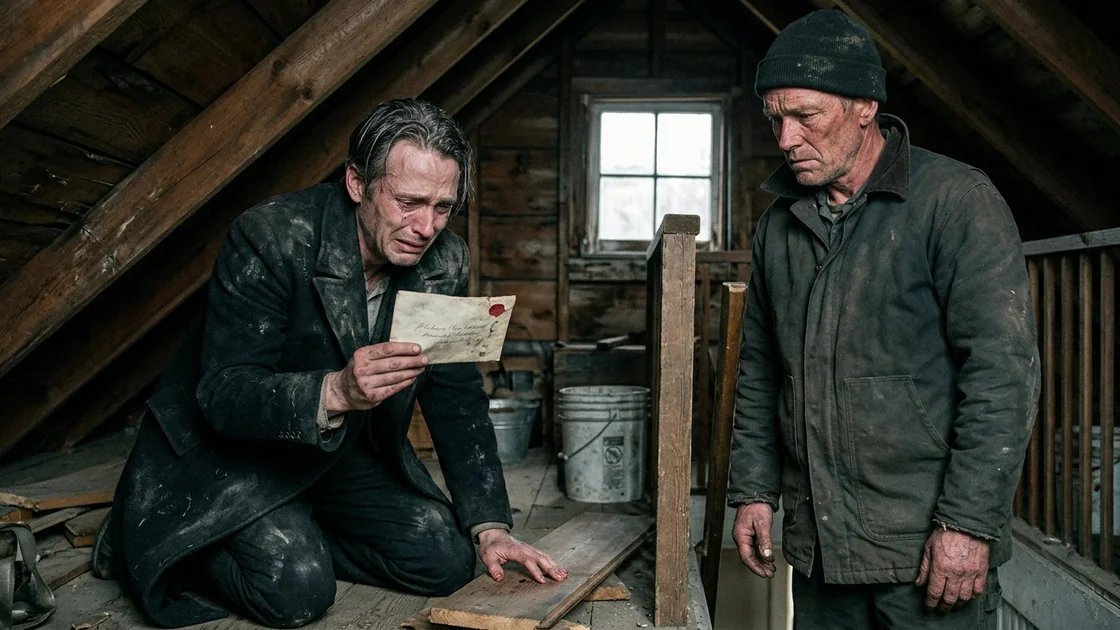
This is the story of Julian Vance, an identical twin who intercepted his brother Lucian's scholarship letter fifteen years ago, condemning his brother to a lifetime of manual labor while Julian took the prestigious place at the Blackwood Architectural Institute. Now a renowned designer in Edinburgh, Julian is hollowed out by the crushing guilt of an unearned life and an inescapable creative sterility. Returning to the decaying coastal town of their youth to confront the brother whose soul he plundered, Julian must reckon with the irreparable ruin left in the wake of his supreme envy.
Part I: The Stress-Bearing Wall
The stone in the courtyard of the Blackwood Institute was always damp, slick with a fine film of Scottish moss that tasted of coal dust when the wind rose off the Firth of Forth. For fourteen years, Julian Vance had walked those flags with the hurried, deliberate stride of a man who believed that if he stopped moving, the stones would open their mouths and demand his credentials.
Tonight, the high gallery of the Institute was ablaze with amber light. The reception was for him—for the unveiling of the Vance Pavilion, a sweep of cantilevered glass and blackened timber designed to house the university’s rare manuscript collection. Critics called it an austere masterpiece. They spoke of its tension, the way its primary beams seemed to shudder under an intolerable, invisible weight, as though the building were holding its breath against a catastrophic collapse that never came.
"A portrait of modern anxiety," a reviewer from the Architectural Review had murmured into Julian’s ear twenty minutes prior, smelling faintly of gin and salted almonds. "Only a man who understands structural trauma could have drafted those load paths, Julian."
Julian had smiled, his glass of sparkling water trembling imperceptibly against his thumb. "Trauma is an efficient engineer," he had replied, quoting an aphorism he had stolen from his brother’s sketchbook two decades ago.
He stood now beside the southern wall of the gallery, retreating toward the gloom of an archway where the light died against damp ashlar. Through the tall lancet windows, Edinburgh lay tumbled across its volcanic crags like a scattered box of charcoal blocks. Down on the floor, patrons in black velvet and structured wool circulated around his brass scale models. They looked at the clean, cold lines, the severe geometry, the mathematical perfection of his floor plans.
They did not know that every line was an exercise in terror.
Julian reached into the breast pocket of his bespoke evening jacket. His fingers brushed against the small, leather-bound notebook he carried everywhere. Tucked into the rear gusset of that notebook was not a sketch, nor a business card, nor a passport. It was a single sheet of heavy, vellum-weave paper, folded four times, its edges frayed into soft gray whiskers from years of secret handling.
The paper was thirty-four years old; the ink was thirty-four years old; the crime was fifteen.
He did not need to unfold it. He had memorized every stroke of the serif type, every flourish of the chancellor’s fountain pen, every grain of the crimson wax seal that had once fastened the envelope.
We are pleased to inform you that upon the unanimous recommendation of the Selection Jury, the St. Jude Endowment for Civic Architecture has been awarded to Lucian Vance...
Lucian.
Julian took a slow breath, tasting the warm, dry air of the radiator and the cloying perfume of the university provost’s wife drifting past.
In the high glass of the window, his reflection stared back at him. It was a handsome face, well-maintained by expensive barbers and clean linen, forty-one years old, graying gracefully at the temples. But it was not his face. It had never been his face. It was the face of the boy who had stayed behind in the salt-rot of Point Jude, Maine; the face of the boy who had smelled of diesel fuel, red lead primer, and cold mackerel; the face that had possessed the eyes, the hands, and the spark that Julian had merely traced.
Across the room, Marcus Gable, the director of the Institute and Julian’s former tutor, was waving him over. Gable was an ancient Scotsman with brows like gorse bushes and an eye that could spot a three-millimeter deflection in a truss from twenty paces.
"Julian!" Gable’s voice boomed over the chamber quintet playing Hindemith in the corner. "Come here, man. Lord Elgin is asking about the south-facing joists. Tell him about the deflection calculations you ran in Zurich."
Julian stepped out of the shadow. His shoes made no sound on the parquet. He arranged his mouth into the modest, authoritative half-smile that had carried him through boardrooms, city council hearings, and university lectures for a decade and a half.
"Of course, Marcus," Julian said, his voice quiet, cultivated, stripped of every trace of the jagged Down East cadence he had spent four years scrubbing from his tongue with a phonetics coach in London. "It’s simply a matter of redistribution. If you force the foundation to bear the torque early, the upper timber doesn't need to fight the wind. It simply yields."
"Yields," Lord Elgin echoed, nodding sagely, pretending he understood the physics. "Brilliant. Truly brilliant."
Julian looked down at his own right hand—the fingernails clipped square, clean of grit, smooth as river stones. He felt a sudden, violent spasm in his chest, a sensation like a thin wire snapping deep inside a partition wall. He had not slept in three days. For three weeks, since the telegram had arrived from the bank in Portland, he had lived with the sensation that the ceiling above his head was dropping by an eighth of an inch every hour.
His brother had lost the yard. The boat slips were to be auctioned on the twentieth.
And Lucian—who should have been standing in this hall, who should have worn this jacket, whose mind had conceived the fluid, breathing timber spaces that Julian had spent fifteen years reducing to sterile, joyless geometry—was sleeping on a cot in the back of an oil shed, coughing up Maine damp and salt spray.
Julian excused himself. He did not go to the lavatory, nor to the bar. He walked out of the gallery, down the stone spiral of the north tower, through the great oak doors of the quadrangle, and out into the biting mist of the royal mile.
He did not take his coat. The cold hit his shirt like a damp sheet of tin, and for the first time that evening, his skin felt real.
Part II: The Cedar Shingle House
The Vance twins had been born six minutes apart during the Great October Gale of 1983. Their father, an uncommunicative man who mended dragging gear and rebuilt diesel manifolds in an iron-roofed shop on the harbor wharf, had named them from an old leather-bound volume of Latin poets he had purchased for twenty cents at a church salvage sale in Machias.
"Lucian and Julian," their mother had said, before her heart failed her when the boys were seven. "One to see the light, one to keep the gate."
They had grown up in an environment that smelled perpetually of low tide, drying pitch, wet dog, and woodstove ash. Point Jude was not the picturesque Maine of lobster shacks and summer yachts; it was the working rim of the state, a place where people lived in gray-weathered houses with plastic sheeting stapled over the windows by November, where the harbor water was the color of lead shot and cold enough to stop a heart in four minutes.
From the beginning, they were indistinguishable to everyone except their mother while she lived, and later, the town boatbuilder, an old Finn named Paavo who had looked at their ears.
"Lucian has the left ear lower," Paavo had grunted, squinting through tobacco smoke. "Julian’s ears are set like plumb lines. The square one is Julian. The one with the wandering head is Lucian."
They were mirrors. When Lucian cut his knuckle on an oyster shell, Julian held his own thumb against his palm, expecting blood. They shared the same dark, wiry hair, the same pale gray irises that seemed to take on the color of whatever weather was rolling in off the Atlantic, the same thin, sharp bridge of the nose.
Yet by the time they turned sixteen, an invisible seam had split between them.
It was not a matter of intellect. Julian was the scholar; he sat under the kerosene lamp at the kitchen table until his eyes were red-rimmed, diagramming sentences, memorizing the historical dates of the Italian Renaissance, working through Euclidean proofs with a compass he kept oiled with lard. He was methodical, disciplined, desperate. He understood that beyond the granite headlands of Point Jude lay an enormous, elegant world built of stone, paper, and money, and he meant to reach it by sheer force of will.
Lucian did not study. Lucian sat on the stringer of the town pier with a carpenter’s pencil he had stolen from his father’s bench, drawing on the gray backs of scrap cardboard.
He drew things that did not exist, yet should have.
He drew a dory whose frames curved like the ribs of a diving gannet, so light that a boy could lift it with one hand, yet so shaped that no sea could roll it. He drew a fish-house that sat upon stilts over the mudflats, designed with louvers that used the rising sea fog to cool the salt tubs inside without the use of an ice block. He did not know the word cantilever; he did not know the term tensile strength. He simply looked at the world, saw where the wind was angry, and gave it an shape that turned its fury into rest.
Julian watched him with a feeling that began as admiration, curdled into awe, and finally hardened into a cold, black sediment at the bottom of his stomach.
"Look at this, Jules," Lucian would say, tossing a sheet of wrapping paper across their shared iron bedstead. "If you set the rafters this way, the snow won't lie on the north pitch. It'll slide off into the gully before it can pack into ice. The weight of the house stays centered."
Julian would examine the drawing. His eye, trained on the diagrams of textbooks he had ordered from the state library in Augusta, would immediately spot the technical errors—the lack of scale markers, the improper allowance for the ridge board. But beneath the crude pencil marks lay a proportion so absolute, so natural, that it made Julian’s teeth ache.
"It’s wrong," Julian would say, his voice flat. "You haven't left enough meat on the wall plates. The roof will push the walls out."
Lucian would frown, rub his ear with the sleeve of a red flannel shirt smelling of bait, and stare at the paper. "No," he’d mutter softly. "No, it won't. Look at the tie, Jules. The floor pulls them back. It’s like a bowstring. You don't need meat if the tension is true."
And Julian would look, and Julian would see that Lucian was right.
It was infuriating. Julian labored for eight hours to construct a perspective drawing that was technically flawless and completely dead; Lucian would spit into the sawdust, make twelve strokes with a dull lead, and create a space that smelled of sunlight and pine needles.
In the winter of their eighteenth year, their father died. He did not die grandly; he slipped between an icy piling and the iron fender of a scalloper, crushed his pelvis, lingered three days in the hospital in Ellsworth without speaking, and expired while the nurse was changing the saline bag.
He left them the house, an eighteen-foot lobster boat with a cracked cylinder head, a mortgage they could not understand, and a mountain of unpaid parts bills from the iron foundry in Bath.
"One of us has to stay," Lucian had said that night, sitting by the dying woodstove, drinking tea made from water that tasted of iron pipe. "The slips need dredging before the spring run, Jules. If we don't have the cradle repaired, Paavo won't be able to haul his boat, and then the town will take the wharf."
Julian had sat with his hands clenched between his knees. His applications to five architectural schools sat in manila envelopes on the sideboard. Lucian had applied to only one—the St. Jude Academy in Edinburgh, an international institution that offered a single full fellowship every three years to an applicant from the North American seaboard who showed "exceptional native genius in structural invention."
Lucian had only applied because Julian had badgered him into it, filling out the forms for him, typing the biographical statement on their father’s rusted Remington, while Lucian had merely rolled up six drawings on butcher paper and tied them with a piece of tarred cod line.
"We wait for the letters," Julian had whispered, his fingernails digging into his palms until the crescents went white. "We see who gets what."
"I don't care about the letter, Jules," Lucian had said, scratching the dog behind its tattered ear. "You go. You’re the one who wants the high collars and the books. I can work the timber here. If you make it, you send for me. We'll build things together."
We'll build things together.
The words had tasted like bile in Julian’s mouth. Lucian did not even want it. The gift had been dropped into his lap by an indifferent God who had bypassed Julian—Julian who had fasted, who had read, who had prayed, who had bled over every page of Vitruvius and Ruskin. Lucian carried the spark like an old coin in a holey pocket, not even caring if he dropped it in the mud.
Part III: The Tuesday in July
The mail carrier for Point Jude was an old man named Elwin who drove a rusted station wagon with two different-sized tires. He did not come down the rutted lane to the Vance house unless there was a package or an envelope that required a signature.
On a Tuesday in mid-July, the fog was so dense that the spruce trees at the edge of the clearing looked like the drowned masts of schooners. Lucian had gone out at dawn on Paavo’s boat to help haul pots in the outer bay; the engine’s dull thud-thud-thud had faded into the gray silence before six.
Julian was sitting on the back stoop, scraping the paint from an old pine sash with a dull putty knife.
The sound of Elwin’s gravel-grinding tires had made him stop. The knife hung three inches above the wood. His heart, an unsteady and envious thing, gave a single, violent kick against his ribs.
Elwin didn't get out of the car. He wound down the window, which shrieked like a gull, and held out a long, stiff envelope of thick cream paper.
"From overseas," Elwin shouted through the drizzle. "Cost enough postage to buy a side of bacon. One of you boys going across the water?"
Julian stood up. His legs felt like wet birch logs. He walked to the car window, his bare feet sinking into the cold clover.
"It’s for the house," Julian said quietly.
"Says Vance," Elwin said, handing it over. "L. Vance. That’s your brother, ain't it? Or are you L?"
"I'm Julian."
"Well, give it to him. Looks important. Tell him Paavo says the mackerel are running thin off the bell buoy."
Julian stood in the lane with the envelope in his hand until the red taillights of the station wagon dissolved into the spruce fog.
The paper was heavy, impervious to the light drizzle that was already beading on its surface. It was addressed in dark sepia ink, written with an italic nib: Mr. Lucian Vance, The Slip House, Point Jude, Maine.
Julian walked not into the kitchen, but around the house and up the narrow, enclosed staircase that led to the attic—the long, low room beneath the cedar shakes where the twins had slept side by side since infancy.
He sat on his bed. The silence of the house was absolute, save for the steady, rhythmic drip-drip-drip of the eaves into the rain barrel below.
With a thumb that shook so hard he nearly tore the parchment, Julian slid his finger beneath the flap. The wax seal—a crest showing a compass and an anchor—cracked with a sound like a dry twig snapping underfoot.
He pulled out the document.
There were two pages. The first was the formal appointment: the St. Jude Endowment for Civic Architecture. It carried a stipend of twelve hundred pounds a year—a fortune—tuition, board, and travel expenses for three years of study in Scotland and Italy.
The second page was an informal note from the chairman of the jury, written in the same precise hand:
Dear Mr. Vance,
The portfolio of sketches you submitted—particularly the study for the tide-gate chapel and the timber-framed drift-house—exhibits a quality our committee has not encountered in a young man in thirty years: an instinct for the poetry of resistance. You do not impose your will upon the wood and stone; you listen to where the gravity wishes to go. We await your arrival on the fifteenth of September with the highest expectations.
Julian dropped the letter onto the patchwork quilt.
His own letter had arrived three weeks earlier. A small, square slip of cheap rag-content paper from the regional polytechnic in Orono, informing him that while his marks were exemplary, their department had no scholarship funding available for the coming academic year. He could enroll if he could deposit six hundred dollars for the first semester’s fees by August first.
Six hundred dollars. They did not have sixty dollars.
Julian looked at his own sketches piled on the table: clean, hard lines, every right angle checked with a steel square, every shadow cross-hatched with mechanical uniformity. Dead. A clerk’s work. The work of a boy who would spend forty years in an office under green lampshades, drafting sanitary sewer connections for the town of Bangor.
He looked at Lucian’s letter.
If Lucian saw this, Lucian would go. Lucian had said he wouldn't, but no one could read those words—poetry of resistance, exceptional native genius—and stay to grease winches in Maine. Lucian would cross the sea. He would enter those stone quads. He would be celebrated, loved, elevated into that clean, high atmosphere of art and light.
And Julian would stay here. Julian would wear their father’s oilskins. Julian would smell of dead bait. He would watch his own hands grow thick, yellow-nailed, and bent with rheumatism, until he couldn't even hold a pencil.
A sudden, hot, greasy sensation flooded his mouth. It was not anger; it was the pure, distilled terror of erasure. If Lucian left, Julian would cease to exist. He would be only the dumb, failed shadow left behind in the salt grass.
Julian took the letter, the acceptance form, and the wax-spotted envelope.
He walked to the far corner of the attic, where the roof descended so low that one had to crawl on belly and knees. There, beneath a loose cedar board where their grandfather had once hidden a bottle of Jamaica rum during the dry years, Julian laid the papers flat against the dry, fragrant joist.
He replaced the board. He tapped the rusted wire nails back into their old holes using the heel of his boot.
Then he went downstairs, washed his face in the basin with cold well water, and went back to scraping the pine sash.
When Lucian came home at four o'clock, his yellow bib overalls stiff with fish scales and his hair smelling of salt, he dropped a cod liver onto the oilcloth and smiled at Julian with that slow, effortless warmth that Julian had always hated more than any insult.
"Fog’s clearing," Lucian said, pumping water to wash his forearms. "Elwin come by?"
Julian did not look up from the sash. He scraped a long curl of lead paint away from the grain.
"No," Julian said. "Nothing today."
Lucian dried his arms on the roller towel. He stood for a moment, looking out through the dirty pane toward the sea, then sighed—a small, quiet breath that sounded like a leaf hitting the ground.
"Well," he said softly. "Old Paavo says he’ll give me forty cents an hour on the cradle rebuild if I bring my own adze. We'll make the taxes, Jules. Don't worry none about that. We'll make the taxes."
Julian pressed the putty knife down until the steel blade bent double against the pine.
"Yes," Julian whispered. "We'll make the taxes."
Part IV: The Transposition
The forgery had not been planned; it had happened in three stages, each one as smooth and inevitable as an ebb tide.
The Blackwood Institute did not know what Lucian Vance looked like. There were no photographs attached to the application in those days—only the work, the birth certificate, and the recommendation of the local high school master, who had simply written: The boy is an identical twin, son of an iron-smith, of sober habits and extraordinary draftsmanship.
Julian waited two weeks.
On the third of August, he walked four miles to the neighboring village of West Harbor, where no one knew him by sight, and used a public payphone outside the Western Union office. He called the Registrar of the Blackwood Institute in Edinburgh, his heart knocking against his teeth so violently he could scarcely breathe.
"This is Vance," he said into the black mouthpiece, mimicking the clipped, tight-lipped reserve he had heard in the voice of a British summer resident whose boat his father had once serviced. "Lucian Vance. I am writing to confirm that I have sent my formal acceptance by the post. But there was an error in my Christian name on the primary register. My baptismal name is Julian Lucian. I prefer to be styled Julian."
The voice on the other end—a dry, bored Scotswoman shuffling papers three thousand miles away—had not hesitated for two seconds.
"Aye, Vance. We have the docket here. Julian L. Vance. We shall amend the matriculation card, lad. Have you your passage booked for Glasgow?"
"Yes," Julian lied.
"Mind the draft on your arrival. September the twelfth at nine o'clock. Do not be late for the bursar."
That was all. A thirty-second call from a coin-box beside a kerosene pump, and the universe shifted on its axis.
To get the passage money, Julian sold the one thing their father had left that had real value: the brass-geared English sextant that had belonged to their great-grandfather, a piece of Liverpool craft that had survived three wrecks. He took it to a pawn shop on Commercial Street in Portland while Lucian was on a three-day drift-net trip off Mount Desert. He told Lucian the shop had burned; he told Lucian he had found a private patron in Boston who had agreed to pay for his tuition at a technical drafting school in Montreal.
"You’re going?" Lucian had asked.
They were standing on the wharf. The morning was clear, the sky washed clean by a northwest blow that had turned the bay into a hard, sparkling sapphire. Lucian was holding a splicing fid, his fingers blackened with Stockholm tar.
"I have to, Luke," Julian said, his eyes fixed on the horizon, unable to meet the gray eyes that were identical to his own. "There’s nothing here for me. You know that."
Lucian looked at his hands, then at the harbor, then at his brother. He didn't ask about the money. He didn't ask how Julian had found a patron when his own work had brought no answer from Edinburgh. He simply laid his tar-stained hand on Julian’s shoulder—a touch that burned through Julian’s coat like an iron branding tool.
"I know, Jules," Lucian said quietly. "You were always the one meant for the books. Don't you worry about the slips. I'll keep the grease on the ways. You go build those towers."
Julian had left that night on the nine o'clock bus.
He did not look back as the red lights swung around the corner by the fish-freezer. In his cardboard suitcase, packed between two pairs of gray wool socks and three white shirts, lay the stolen acceptance letter, the wax seal broken, the paper smooth and dead against his ribs.
He arrived in Edinburgh on a rainy Tuesday, wearing a suit he had purchased off the rack in a basement store in Boston. When he walked through the great gates of the Blackwood Institute, he gave his name as Julian Vance.
The clerk checked the ledger. "Ah, the Maine boy," she said, handing him an envelope of ivory cards and a brass key to his rooms in the quad. "Mr. Gable is very keen to see you. He says your perspective studies of the tide-gate are the most original things he’s seen since Mackintosh."
Julian took the key. His fingers were so cold he could not feel the metal.
"Thank you," he said.
He walked up the three flights of stone stairs to his room. It had a high window looking toward the castle, a narrow bed, a coal grate, and a drafting table made of polished sycamore with brass tensioning screws.
Julian laid his hands on the sycamore.
He picked up a piece of charcoal that lay in the groove. He tried to draw. He tried to draw the way Lucian drew—from the shoulder, letting the lead find the breath of the curve, feeling the way the timber would fight the wind.
He drew a line. It was straight. It was three inches long. It was dead.
He sat down on the narrow bed, buried his face in his hands, and wept until the coal smoke from the chimney drifted down and filled the room with the smell of an open grave.
Part V: The Great Imposture
The next five years were a long, methodical campaign of counterfeiting.
Julian was not stupid. He had an iron memory, an immense capacity for labor, and an eye that could imitate any style once it had been laid down before him. He could not invent, but he could translate.
He took the six drawings Lucian had sent to Edinburgh—drawings the Institute had preserved in its permanent student archive—and he analyzed them as an anatomist might dissect a cadaver. He measured the angles of the joints; he calculated the eccentric ratios Lucian had used without knowing they were ratios; he formulated a mathematical theory based on his brother’s unthinking instincts.
Whenever a project was assigned—a design for a library in Perth, a competition for a church in the Borders—Julian would ask himself: How would Luke break this?
He would sit in his room until three in the morning, drinking black coffee that had gone cold, trying to de-educate his own hand. He would force himself to draw with his left hand, or with his eyes half-closed, trying to introduce that wild, biological asymmetry that had made Lucian’s work breathe. Then, once he had captured an accidental curve that had some life in it, he would spend forty hours refining it with his compasses and scales, clothing his brother’s ghost in the respectable armor of Victorian engineering.
The professors were fascinated.
"Vance is a peculiar bird," he overheard Marcus Gable say in the common room one evening. "His native concepts are savage—almost primitive in their understanding of material forces. But his execution is as dry and precise as an actuary’s ledger. It’s an extraordinary synthesis. A modern mind wrestling with an archaic soul."
Julian stood behind the oak screen, his fingernails digging into the palm of his hand.
An archaic soul.
He had no soul. He was a mechanical drafting machine that had swallowed a living boy’s heart.
He won the silver medal in his third year. He won the Rome Prize in his fifth.
When he traveled to Italy, he spent his days in the Roman Forum, not looking at the grandeur of the marble, but looking at the cracks—the places where the brick had given way under the weight of fifteen centuries, where the soil had settled, where the mortar had turned back into sand. He understood failure. He understood it with a precision that bordered on the holy.
Every month, he sent fifty dollars home to Point Jude.
He never went back. Not for Christmas; not for the summer vacations. He told Lucian he had received research grants that required his presence in Munich, in Genoa, in Rotterdam.
Lucian wrote back once every three or four months. The letters were written on grease-spotted ruled paper from the harbor store, the handwriting large, unpracticed, and sloping:
Dear Jules,
Got the fifty dollars. It paid for the new cable on the winch. The mackerel was good this August, but the price is down to four cents. Paavo died in his bed last week, took with the chest-choke. Left me his broadaxe and the two adzes. They are good steel, Swedish. I keep them oiled. Sometimes I walk down to the south point and think about you over there in the stone towns. Must be something to see a wall that’s been standing since before the King was born. Don't work too hard, Jules. You always had that headache behind your eyes. The slips are holding.
Your brother, Luke.
Julian would read the letters three times, sitting in his room overlooking the Piazza del Popolo or the canal in Amsterdam. Then he would take a box of matches, hold the paper by the corner over an iron saucer, and watch it burn until only a curled, black crust remained.
He could not bear the smell of the grease. It smelled like the attic; it smelled like the loose cedar board; it smelled like the crime that had given him his name.
Part VI: The Empty Temple
By his thirty-fifth year, Julian was one of the most sought-after institutional architects in northern Britain.
He had founded his own practice in Edinburgh: Vance & Associates. He lived in a Georgian townhouse in the New Town, with high ceilings, plaster cornices depicting acanthus leaves, and tall sash windows that rattled when the winter gales drove the sleet down George Street.
He had never married. He could not permit anyone to share his life; he lived in constant, waking terror of talking in his sleep. His lovers were few, brief, and invariably women who were content with dinner at eight, a dry, intellectual conversation about music or archaeology, and an early taxi home.
"You are too fastidious, Julian," a woman had told him once—a painter with intelligent, dark eyes who had tried for six months to penetrate the gray stone of his reserve. "You behave as though you are a burglar who has broken into someone else’s house and is afraid to leave a fingerprint on the wine glass."
She had left him three days later. He had felt only an immense, cooling relief.
His work, as the years marched on, had changed.
The "primitive poetry" that the Blackwood jury had found so arresting in his early student work had slowly died away. Try as he might, Julian could no longer summon Lucian’s ghost. He had used up the sketches; he had exhausted the six drawings he had stolen from the archive; he had refined the tide-gate concept until there was nothing left of it but dust.
His buildings became more severe, more technical, more frozen.
He turned toward concrete, to steel, to dark, heavy timber that had been treated with creosote and pressure until its native grain was crushed into uniform blackness. He won prizes for his "rigorous minimalism," but he knew the truth: he was running out of gas.
His designs were becoming tombs.
He sat in his office on the top floor of his townhouse, staring at the white emptiness of an architectural vellum pinned to the board. He had been commissioned to design the new maritime library at St. Andrews—a four-million-pound project that was meant to be the capstone of his mid-career.
The submission was due in three weeks.
On the board was nothing but three horizontal lines and a section marker.
Every time he closed his eyes to imagine the space, he did not see the sea at St. Andrews; he saw the mudflats of Point Jude. He saw the black pilings of the town pier, greasy with bladderwrack; he saw his father’s grease-gun hanging from an iron nail; he saw Lucian standing in the cold November rain, his hands bare and cracked with salt-crust, hauling a four-inch hemp hawser through the icy chocks of the cradle.
Then, three weeks ago, the letter had come from the Maine bank.
It had not been sent to Julian Vance; it had been forwarded from an old postal address he had kept for forty years in Ellsworth.
Re: Vance Marine Slipway, Point Jude. Notice of Foreclosure and Judicial Sale.
The loan was eleven thousand dollars. Eleven thousand dollars—less than Julian spent on his office stationery and the annual maintenance of his Jaguar.
Lucian had not written to him about it. Lucian had not asked for a penny.
Julian had picked up the telephone to call the bank; he had his fountain pen in hand to write the draft that would clear the debt in three seconds. But as the nib touched the check, his hand had frozen.
Why hadn't Lucian asked?
Because Lucian was tired. Because Lucian had spent thirty-four years carrying the dead weight of their father’s slipway, working fourteen hours a day in the gray mud, while the brother who had promised to build things together had vanished into the high world of European stone and never once come home.
Julian had set the pen down.
A sudden, sharp terror—worse than the terror of exposure—had seized him by the throat.
If Lucian lost the slips, what would become of him? He would leave Point Jude. He would wander down to Portland, or Boston, looking for work on the dry docks. He would be an old man with ruined hands, sleeping in rooming houses that smelled of cabbage and cabbage-water.
Or worse: he might go up to the attic to clear out the old trunks before the bailiffs arrived.
He might lift the loose cedar board.
The thought hit Julian with the force of a timber falling from a crane.
The board.
The letter was still there.
In his haste fifteen years ago, Julian had taken only the letter itself—the second page, the chairman's note, and the formal diploma of the fellowship had been carried to Scotland. But the original heavy vellum envelope—the one with the broken red seal, the one stamped with the postmark of Edinburgh and the address: Mr. Lucian Vance—had been too stiff to fit easily into his cardboard grip.
He had left the envelope under the floor.
He had meant to go back for it. He had meant to destroy it twenty times. But year after year had passed, and the idea of returning to Point Jude had been so terrifying that he had allowed the envelope to remain where it lay, like an unexploded shell buried in the silt of an old battlefield.
If Lucian found it now...
Julian stood up from his desk. He walked to the window. Outside, the Edinburgh sleet was turning to wet snow, sticking to the black iron railings of the square.
"Miss Campbell," he said into the intercom on his desk.
"Yes, Mr. Vance?"
"Cancel my appointments for the next two weeks. Tell the St. Andrews committee that I am taking a brief leave for site research."
"Are you going to the Fife coast, sir?"
"No," Julian said, his voice dropping into that low, flat register he had not used since he was eighteen years old. "I am going to the States."
Part VII: The Scent of Pine and Sleet
The car he rented in Boston was a nondescript gray sedan with windshield wipers that made a rhythmic, sucking sound against the wet glass.
Julian drove north on Route 1, through the strip developments of New Hampshire, past the brick textile mills of Biddeford, until the four-lane highway shrank to two lanes of cracked blacktop running through the spruce barrens of Hancock County.
The air had changed. The dampness here was not the soft, coal-tinged mist of Scotland; it was the raw, mineral cold of North America in late November—a cold that came down from Labrador across the gray water, smelling of hemlock needles, frozen granite, and iron.
He wore an old woolen overcoat he had bought in an army surplus store in Bangor so as not to look like an Englishman in Point Jude. But his boots were Italian leather, thin-soled and flexible; every time he stepped onto the gravel to pump gas, the cold went through the soles like an electric shock.
He reached Point Jude at four in the afternoon.
The town had not grown; it had shrunk.
Two of the three sardine canneries had burned down, leaving only blackened pilings that jutted from the mud like the teeth of an old skull. The town wharf was missing half its decking; oil drums rusted in the ditch beside the road; the houses, with their cedar shingles turned the color of lead, looked smaller than he remembered, hunched against the wind like sheep in a barren pasture.
He drove past the schoolhouse where he had diagrammed sentences under the kerosene lamp. The chimney had collapsed; the sash frames were gone, replaced by sheets of corrugated iron that shrieked as the north wind shook them.
He turned down the lane to the Slip House.
The spruces had grown up on either side of the ruts, their lower branches dead and brittle, clawing at the paint of the rented sedan with the sound of fingernails.
At the end of the spit, the house stood where it had always stood, leaning slightly toward the southwest, its cedar shakes black with moss. The workshop—the iron-roofed building where their father had welded manifolds—had a great patch of blue plastic tarp lashed over the ridge, the grommets tearing in the gusting wind with a sound like pistol shots.
On the marine railway, an old wooden dragger sat high in the cradle. Her bottom was covered in dried barnacles and green slime; her seams were gaping, the oakum hanging out in long, hairy threads.
Julian stopped the car. He sat with his hands on the plastic steering wheel, his engine idling with a faint, smooth hum that sounded obscenely soft in the vast, roaring silence of the cove.
Through the salt-filmed glass, he saw a man come out of the shop.
The man was wearing a brown canvas coat with the wool collar turned up, a grease-stained knit watch cap, and rubber boots that had been patched with tire vulcanizing tape at the ankle. He was carrying an iron bar and a block of tallow.
He walked with a heavy, hitching limp, his left shoulder dropping three inches with every step—the gait of a man who had spent twenty years jumping down from deck beams onto stone docks.
He stopped beside the cradle. He laid the iron bar across his knee, blew into his cupped hands, and looked out across the harbor toward the gray spit of the light-house.
Julian felt his heart turn over in his chest.
It was like looking through an optic glass that showed not the future, but the ruin of the present.
The man’s face was his own—the same high, narrow forehead, the same thin nose, the same gray eyes. But where Julian’s skin was smooth, pale, and dry, preserved in the warm, filtered air of lecture halls and drawing offices, this man’s skin was the color of a salted flounder, scored with deep, white lines around the eyes from fifty thousand hours of squinting into the glare of water and snow. His hands, as he rubbed them together, were enormous, the knuckles swollen like walnut shells, the skin across the back of the fingers purple with the dead cold that never quite leaves a fisherman’s flesh.
It was Lucian.
Lucian, who should have been standing in the high hall of the Blackwood Institute; Lucian, who should have designed the libraries and the galleries; Lucian, whose soul Julian had stolen and worn like an oversized coat until it was threadbare.
Julian turned off the ignition.
The engine died. The sound of the wind took its place—a long, low, organ-note whistling through the rusted rigging of the dragger on the ways.
Julian opened the door and stepped out into the mud.
Part VIII: The Shadow on the Threshold
The mud was deep, cold, and rich with the smell of rotten clam necks and sulfur. Julian’s thin Italian shoes sank three inches into the mire with the first step.
The man by the cradle did not turn around immediately. In Point Jude, you did not turn to look at every car; you waited to see if the visitor had business or was merely turning around because he had missed the road to the sardine plant.
"Luke," Julian said.
His voice was too thin. It was carried away by the north blow, swallowed up in the clatter of the blue plastic tarp on the workshop roof.
He cleared his throat. He forced the sound up from his belly, using the old, harsh, flat vowels he had spent thirty years trying to forget.
"Lucian."
The man with the iron bar turned.
His eyes were small in the shadow of the watch cap, surrounded by nests of wrinkles that were white against the weathered red of his cheeks. He looked at Julian—at the army surplus coat, at the gray sedan, at the thin shoes covered in salt mud.
Then his eyes came up to the face.
The iron bar did not fall from his hand; he was too used to holding things to drop them. But his fingers shifted on the rust, a small, involuntary twitch of the tendon.
"Julian," he said.
He did not shout. His voice was lower than Julian’s, rougher, thick with the phlegm of a winter cold that had settled into the tubes of his chest.
They stood twelve feet apart in the gray November drizzle, the two men with the same face, looking at each other across the distance between a palace and a ditch.
"You got old, Jules," Lucian said.
A dry, terrible laugh tore itself from Julian’s throat before he could stop it. "So did you, Luke."
Lucian looked down at his own patched boots, then back at his brother. He didn't come forward to take Julian’s hand; his hands were covered in tallow and iron scale, and Julian’s coat, even if bought from a surplus bin, was clean.
"Heard you was in Scotland," Lucian said. "A fellow from Rockland who had a yacht in Glasgow said he seen your name on a brass plate by the river. Said you was a big man over there."
"Not that big," Julian said.
"Big enough to buy three of this place, I reckon."
"I got the notice from the bank, Luke."
Lucian’s face did not change. He had lived with the bank’s notices for ten years; they had ceased to be disasters and had become simply part of the weather, like the easterly gales that took the shingles off the kitchen every March.
"Didn't ask you to come," Lucian said softly. "Told the bank man to stop sending them papers across the water. Said you had your own row to hoe."
"It’s eleven thousand dollars, Luke," Julian said, his voice rising against the wind. "Why didn't you write to me? I could have sent a draft six months ago. I could have cleared the mortgage before they filed the papers."
Lucian turned the iron bar over in his palms. His thumbs, thick as sail-needles, rubbed along the squared edge of the metal.
"Because it ain't your debt, Jules," he said. "The old man left it to me. He didn't leave it to you. You went and made your way with your books. I stayed with the ways. If the ways don't pay their keep, they ought to go down. That’s all there is to it."
"It’s our house," Julian said.
"No," Lucian said, looking up, his gray eyes clear and cold as well water. "It ain't. It’s my house. You left it thirty-four years ago, Jules. You ain't slept in that attic since the week before the mackerel run of eighty-three. You don't know what this house is no more."
Julian flinched as though he had been struck across the mouth with a wet cod line.
"I have the money," Julian said, reaching inside his coat for his checkbook. "I can go into Ellsworth tomorrow morning. The sheriff’s sale isn't until Tuesday."
"Keep your money, Julian."
"Don't be a fool, Luke!" Julian shouted, the anger breaking through his fear like grease through paint. "You’re fifty-two years old! Your hip is gone! What are you going to do if they sell the cradle? Go down to the fish pier and lump herring for five dollars an hour? You won't last two winters!"
Lucian did not move. He stood with the iron bar resting against his thigh, his watch cap pulled down to his eyebrows, watching Julian with a steady, terrible curiosity.
"You always was scared of the cold, Jules," he said softly. "You was scared of it when we was seven, and you’re scared of it now. Look at your feet. You’re standing there in three inches of salt muck with them paper slippers on, shaking like a dog passing peach stones. Come inside before you get the lung-rot. I got some tea on the stove."
Part IX: The Tea in the Tin Mug
The kitchen was cold.
The old woodstove—the cast-iron Clarion with the nickel-plated warming closets that their mother had kept polished with stove black—was gone. In its place stood an ugly, square steel box with an oil burner that clicked and hissed with an irregular, asthmatic rhythm, smelling of kerosene and sulfur.
The walls had not been painted since their father’s death. The plaster had cracked in long, branching lines like river systems on a map, the lath showing through in the corners like the ribs of a starved horse.
On the table lay a loaf of white store-bread in a plastic bag, a jar of peanut butter with an iron knife stuck into the mouth, and an open ledger with gray pages covered in Lucian’s slow, awkward sums.
Lucian filled an aluminum kettle from the iron hand-pump at the sink. The pump groaned, sucked air with a wet, gravelly rattle, and finally vomited a dark stream of water that smelled of iron pipe and bog water.
"Power was cut on Friday," Lucian said, without turning around. "They don't wait none around here when the bill gets past thirty days. Have to use the gravity line from the well."
Julian sat on the edge of the wood-bottom chair. He had not taken off his coat. The cold was coming up through the floorboards—the cold of the ocean mud that lay only four feet beneath the joists.
Lucian set two tin mugs on the oilcloth. He dropped a single tea bag into each one and poured the water before it had even come to a full boil; it was lukewarm, gray, and had a film of grease floating on the surface from the kettle spout.
He sat down opposite Julian.
For five minutes, neither of them spoke. The oil burner clicked. The wind rattled the loose window sash with a sound like someone knocking with a wooden mallet.
"Why didn't you ever come back, Jules?" Lucian asked.
The question was not angry. It was simply there, like the cracked tea mug or the smell of kerosene.
Julian looked down at the gray surface of his tea. He could see his own reflection—distorted, trembling in the tin circle.
"I was busy," he said. "The work... there was always another project. A competition. A building to finish."
"Aye," Lucian said. "The buildings."
He reached out his hand. His knuckles were gray with engine dirt that had been ground into the pores so long it had become part of the meat. He tapped the open ledger on the table.
"I seen a picture of that thing you built in London," Lucian said. "A fellow who came up to buy the old dory had an illustrated paper. Had a picture of that hall you put up with the glass walls and the black posts."
Julian’s chest tightened. "The Westminster Pavilion."
"Aye. That was it." Lucian took a sip of his tea, his throat making a clicking sound as he swallowed. "I looked at that picture for a long time, Jules. Sat right here by this window and looked at it until the light went."
Julian could not look up. He felt as though he were six inches tall, sitting under the eye of an inquisitor who had all the time in the world.
"What did you think of it?" Julian whispered.
Lucian set his mug down on the tin circle. He wiped his mouth with the back of his canvas sleeve.
"It looked like a cage, Jules," he said.
"It won the Royal Gold Medal," Julian said, the defensive instinct firing automatically, like a dry muscle twitching in a dead limb.
"I don't doubt it," Lucian said. "People in the cities like cages. Keeps the weather out. But you forgot the way the wind works, Jules. You put the main purlin right across the line of the blow. That roof’s fighting the sky every hour of the day. It’s got no ease in it. A building ought to breathe with the storm, not just grit its teeth until the bolts shear."
Julian stared at his brother.
He had spent five months calculating the wind-load on that Westminster roof. He had used three different computer models at the university in Glasgow; he had consulted two specialists in aeronautical stress; he had added eighty tons of structural steel to the secondary braces to prevent the high-velocity flutter that had threatened to shatter the glass walls.
And this man—this man who had not left Point Jude in thirty years, who had never seen a building higher than the three-story grain elevator in Belfast—had looked at a three-inch photograph in a torn magazine and seen the fundamental flaw in the design in ten seconds.
"You could have fixed it," Julian said, his voice breaking.
"Fixed what?"
"The roof. The building. All of it."
Lucian gave that low, short laugh again. "I ain't an architect, Jules. I'm a yard man. I patch bottoms and I pour babbit into bearings. That was your lay. You had the books."
"You had the hand, Luke!" Julian shouted, half-rising from his chair, the tin mug slopping lukewarm, iron-tasting water onto the table. "You had the hand and you know it! You could draw circles around me before we was ten! You could see the lines in the air!"
Lucian looked at him with an expression that was not surprise, nor pity, but a terrible, ancient sadness.
"The hand don't mean nothing without the heart, Jules," he said quietly. "I had the hand for drawing dories because I loved the dories. I knew what the sea did to them when you was three miles off the shoals in an easterly with two tubs of trawl in the well. You didn't love the wood. You loved the idea of being the man who drew the wood. That’s why you had to go, and that’s why I had to stay."
"That isn't why I went," Julian whispered, the words slipping out between his lips before his will could catch them.
Lucian stopped with his mug halfway to his mouth. His gray eyes narrowed slightly.
"What’s that mean?"
Julian’s tongue felt thick, dry, like it had been rubbed with salt. The silence in the kitchen was suddenly louder than the wind outside. The oil burner hissed—a long, dying sigh as the fuel dropped low in the tank.
"Nothing," Julian said. "It means... I had to make my living."
Lucian stared at him for three seconds, then set his mug down with a small, definite click.
"You’re lying, Jules," he said. "You always had that look about your nose when you was stealing the eggs from the south coop. You had it when you took the sextant, and you have it now."
"I paid for the sextant, Luke! I sent ten times what it was worth!"
"I didn't care about the sextant," Lucian said, his voice dropping into a register that made the tin mugs on the table vibrate. "The sextant was just brass. What did you take, Julian?"
Julian stood up. His knees hit the edge of the kitchen table, rattling the spoons.
"I'm going up to the room," he said, his breath coming in short, ragged gasps. "I need to get my things. I'm going to the hotel in Ellsworth."
"There ain't no things of yours up there," Lucian said, remaining seated, his large, scarred hands lying flat on the oilcloth. "I cleared the beds out when the roof started leaking four years back. Nothing up there but dry rot and old gear."
"I'm going up," Julian repeated.
He turned toward the narrow, enclosed staircase that led from the kitchen to the attic—the door with the thumb-latch that their grandfather had whittled out of a piece of white oak.
"Julian," Lucian said behind him.
Julian did not answer. He lifted the latch. The door opened with a groan of iron hinges, and the smell of thirty years of trapped dry cedar, dead squirrels, and winter damp came down the dark stairs to meet him like a blow to the face.
Part X: The Floorboard
The stairs were narrower than he remembered. His shoulders brushed the rough hemlock boards on either side. The third tread gave way under his weight with a sharp, dry crack that sounded like a pistol shot in the enclosed well.
He reached the attic.
The light was dying. The small gable window at the north end was covered in gray salt-film, but enough of the November twilight filtered through to show the room.
It was empty.
The two iron beds where they had slept were gone; only the rust-rings remained on the floorboards where the casters had stood for fifty years. In the center of the floor, three plastic buckets sat under the roof valleys, filled with scummy, dead water from the last rain.
Julian did not look at the view. He did not look at the spruces or the gray harbor through the dirty glass.
He fell to his knees in the far corner, where the roof descended until the cedar rafters were only eighteen inches from the floor.
The dust was thick, gray as wood ash, smelling of dry rot and spider webs. His expensive overcoat dragged in the dirt; his hands, soft and white, plunged into the accumulated debris of thirty years—dead flies, bits of dry moss that had blown under the shingles, mouse droppings that turned to powder under his palms.
He found the board.
It was a wide pine plank, twelve inches across, running between two hemlock joists. The nail holes were still there—the two rusted wire nails he had tapped back in with the heel of his boot in 1983.
He didn't have a hammer. He didn't have a chisel.
He jammed the tips of his fingers into the crack between the planks. The dry wood bit into his flesh, driving long, needle-sharp splinters of old pine under his fingernails.
"God," he hissed, the pain shooting up his wrists into his elbows. "God damn it."
He pulled.
The wood didn't move. The old nails had rusted into the hemlock joists, their teeth locked into the grain by three decades of salt damp.
He shifted his weight, digging his heels into the dust, and wrenched at the board with both hands, ignoring the blood that was already welling out from under his thumbnails.
Crack.
The hemlock gave. The rusted head of the north nail snapped off with a dull ping, and the board swung upward on the pivot of the remaining spike.
Julian dropped to his elbows, his face four inches from the dry dust of the joist.
He reached into the darkness between the beams.
His fingers touched something. It was not wood; it was not dirt. It was stiff, dry, and brittle—like the wing of a dead bat.
He pulled it out into the gray twilight.
It was the envelope.
The mouse-teeth had chewed away the lower corner, and the paper was mottled with gray mildew spots that smelled of cellar-mold. But the heavy, vellum-weave stock had survived. The ink was still dark, almost black against the cream paper:
Mr. Lucian Vance
The Slip House, Point Jude, Maine
On the back, the crimson wax seal was still there, cracked into three pieces, the impression of the compass and the anchor still visible in the hard, dark shellac.
Julian sat back on his heels.
He held the envelope between his bloody fingers. A single drop of his own blood—bright, fresh, scarlet—fell onto the dry parchment, right beside the name Lucian.
It sank in immediately, spreading in a small, fuzzy circle like an island of red ink on an old map.
"So that’s what it was," a voice said.
Julian did not jump. He did not drop the paper. He had known, from the moment he had stepped out of the car into the mud, that this was where the path ended.
Lucian was standing at the head of the stairs.
His head was bent to clear the low collar-beams of the roof. He had taken off his watch cap; his gray, wiry hair was wild, standing up like gorse, and his face was almost lost in the gloom of the rafters.
He didn't come forward. He stayed by the opening, his heavy shoulders filling the narrow well.
"That’s from Scotland, ain't it?" Lucian said.
His voice was terrifyingly calm. It had the same flat, unhurried cadence he used when he told someone that the planking on a keel was too rotten to hold a screw—not angry, not accusing, simply stating a condition that could not be amended.
Julian did not look up. He looked at the red spot on the vellum.
"Yes," Julian said.
"That was the letter that didn't come."
"Yes."
Lucian leaned his hand against a rafter. The dry timber creaked under his weight. Outside, the wind hit the north gable with a heavy, shuddering blow, and a fine shower of dry moss sifted down from the shingles onto Julian’s hair.
"They wanted me," Lucian said. It was not a question.
"They gave you the fellowship," Julian said, the words coming out in a flat, monotone whisper, like a clerk reading an inventory of bankrupt stock. "The St. Jude Endowment. Twelve hundred pounds a year. Three years in Edinburgh and Italy. Tuition. Board. Travel expenses."
Lucian was silent for a long time.
The darkness was filling the attic now, pooling in the corners, turning the two men into gray shapes that had no faces, only outlines against the pale square of the north window.
"Why didn't you give it to me, Jules?"
The question had no bottom to it. It was forty years deep, cold as the sea off the shelf where the water dropped to two hundred fathoms.
Julian closed his eyes.
He could have lied. Even now, with his bloody fingers on the paper, he could have invented a story: that he had found it later; that he had meant to tell him; that he had been trying to protect him from a world he wasn't fit for.
He had spent thirty-four years lying to dukes, to provosts, to critics, to women, to himself.
He had no lies left. The machinery had broken down. The gears had stripped; the load paths had failed; the building had collapsed into its own cellar.
"Because you didn't care," Julian wept.
The tears came now—hot, salt, burning the raw skin of his cheeks.
"You didn't care about the stone," Julian cried, holding the moldy envelope against his chest with both hands like an infant. "You didn't care about the books! You didn't care about the history! You didn't even want it! You would have stayed here and let it rot! And I... I wanted it more than my own life! I wanted to be clean! I wanted to be someone who didn't smell like dead fish and kerosene!"
"I loved you, Jules," Lucian said.
The words did not fall like a blow; they fell like a stone into an empty well.
"I loved you," Lucian repeated, his voice barely louder than the dry moss falling from the rafters. "I would have given it to you. If you’d come to me and said, Luke, let me have the name; let me have the letter; I need it more than you, I would have signed the paper. You know I would have."
Julian’s breath stopped in his throat.
The horror of that statement—the absolute, blinding truth of it—hit him like a wave that washed him off the ledge into deep water.
Lucian would have given it to him.
If he had asked, Lucian would have laughed, wiped his hands on his overalls, and said: Take it, Jules. Go on across the water. I'll stay with the boats.
He hadn't needed to steal it.
He hadn't needed to hide the letter under the cedar board; he hadn't needed to live thirty-four years in terror of the postman; he hadn't needed to turn his own soul into an engine of forgery and frost.
He had committed the crime not to get the scholarship, but to satisfy the black, poisonous envy that could not bear the thought that the gift had belonged to his brother in the first place.
He had wanted Lucian to be rejected.
He had wanted Lucian to feel small.
And instead, he had made himself into a monster who had spent half a century living inside a dead man’s clothes.
Julian bowed his head until his forehead touched the dusty pine of the floorboard. He did not speak. He could not speak. The sound that came from his mouth was the dry, strangled rattle of an animal that has been caught in a steel spring under the ice.
Lucian walked across the attic.
His heavy, patched boots made the old floorboards groan with every step. He stopped beside Julian.
He didn't kick him. He didn't take the letter.
He reached down with his great, scarred, grease-blackened hand—the hand that had held the broadaxe and the adze, the hand that had hauled the icy hawsers while Julian had dined with lords—and he laid his palm on the back of Julian’s neck.
The hand was warm.
It was impossibly, miraculously warm—the only warm thing in the whole dead, frozen house.
"Get up, Jules," Lucian said softly. "The tide’s turned. We got to go down and make fast the cradle before the night sea comes in."
Part XI: The Architecture of Salt
They worked until midnight in the freezing drizzle, by the light of a single kerosene pressure lamp hung from the dragger’s bobstay.
They did not speak of the letter. They did not speak of Edinburgh, or the St. Jude Endowment, or the thirty-four years that had run out like bilge water through a cracked plank.
They worked together as they had when they were fourteen years old, their movements silent, coordinated by the shared rhythm of their blood.
Julian did not think of his Italian shoes, which were ruined, split at the welt and filled with freezing salt mud. He did not think of his bespoke coat, which was smeared with red lead primer and fish grease. He held the timber-jack while Lucian drove the wedges; he hauled on the cold, greasy hemp hawser until his palms were stripped of skin and his muscles burned with an agony that felt cleaner than anything he had known since his youth.
When the cradle was secure—lashed to the iron railway with four turns of half-inch chain—they walked back up to the house.
The wind had died. The northwest blow had pushed the clouds out to sea, and the sky had cleared into that immense, terrifying dome of Maine stars—millions of them, hard, cold, diamond-sharp, glittering over the black spruce trees and the gray water of the bay.
In the kitchen, the oil burner had finally run dry. The stove was cold.
Lucian laid the moldy, chewed envelope on the kitchen table, beside the jar of peanut butter and the ledger.
He looked at it for a moment, then reached into his pocket and pulled out his horn-handled jackknife. He opened the blade with his thumbnail.
"Luke," Julian said, his voice trembling.
Lucian did not look up. He slid the blade beneath the remaining wax seal, lifted the three red fragments, and unfolded the paper.
He held it under the light of the kerosene lamp.
He read it slowly, his lips moving over the words he had not seen when he was eighteen: exceptional native genius... poetry of resistance... listen to where the gravity wishes to go.
A small, strange smile touched the corners of his mouth—not a smile of triumph, nor of bitterness, but the quiet, private smile of a man who has found an old compass he thought he had dropped over the side twenty years ago.
"He wrote a good hand, that Scotch fellow," Lucian murmured.
"He’s dead," Julian said. "He died twelve years ago."
"Aye," Lucian said. "Most everyone’s dead."
He folded the paper back into its creases. He did not put it back in the envelope. He held it out to Julian.
"What do I do with it?" Julian asked, his hands shaking so violently he could not reach out to take it.
"Whatever you want, Jules," Lucian said. "It’s your paper now. You paid thirty-four years for it. Ought to be worth something to you."
"It isn't worth anything," Julian sobbed. "It never was."
Lucian looked at him, his gray eyes catching the yellow light of the lamp wick.
"Then throw it in the stove, Jules," he said. "And let’s get some sleep. We got to haul Paavo’s nephew’s boat at first light, and the winch needs grease."
Part XII: The Load Path
Julian Vance did not return to Edinburgh.
He sent a three-line letter to Marcus Gable and the trustees of the Blackwood Institute, resigning his fellowship, his professorship, and his membership in the Royal Institute of British Architects. He gave no reason; he offered no apologies; he gave instructions that his practice should be liquidated and the proceeds, after all debts were cleared, should be transferred to an endowment for apprentice shipwrights in Portland, Maine.
There was a minor scandal in the architectural journals for six months. There were rumors of a nervous collapse; rumors of an incurable illness; rumors of a financial irregularity that had been quietly settled behind closed doors.
Then, as the world does, they forgot him. Another young man with thin shoes and cold eyes won the Rome Prize; another austere pavilion was built of blackened glass and steel; the river ran on under the bridges of the Forth, indifferent to the names on the brass plates.
In Point Jude, the Slip House did not become grand.
The eleven thousand dollars was paid to the bank by a wire transfer from a private account in Glasgow, but no other money followed it. The house remained gray, weathered, its shingles moss-grown, its roof patched with tin and tar.
The only difference was that there were two men in the workshop instead of one.
They were indistinguishable now. Both wore canvas coats with sheepskin collars; both wore knit watch caps pulled low over their foreheads; both had hands that were scarred, thick-knuckled, and permanently stained with the gray grease of diesel manifolds and pine tar.
Sometimes, in the long summer twilights when the tide was low and the mackerel were jumping in the outer bay, the two old men would sit on the stringer of the town wharf, sharing an apple or a plug of tobacco.
The tourists who came up on the mail boat from Rockland would look at them—two old fellows with the same sharp, thin noses and the same pale gray eyes—and wonder which one was which.
"That’s the Vance twins," the captain of the mail boat would tell them, pointing with his pipe. "One of them went off to Europe years ago, they say. Tried to be an architect. But he couldn't take the cities. Came back to the mud where he belonged."
"Which one is the one who left?" a passenger might ask.
The captain would squint through the tobacco smoke at the two figures on the pier.
One of them would be holding a scrap of shingle, drawing a line with a piece of chalk—a curve so light, so true, that it seemed to float on the wood like a gull on the swell. The other would be watching him, his hands clasped between his knees, his face turned toward the sea, his eyes filled with that quiet, infinite emptiness that comes to a man who has finally learned the weight of his own shadow.
"Don't know," the captain would say, ringing the engine bell for the reverse turn. "Don't matter none, neither. They both pull the same chain."