The Altitude of Grief
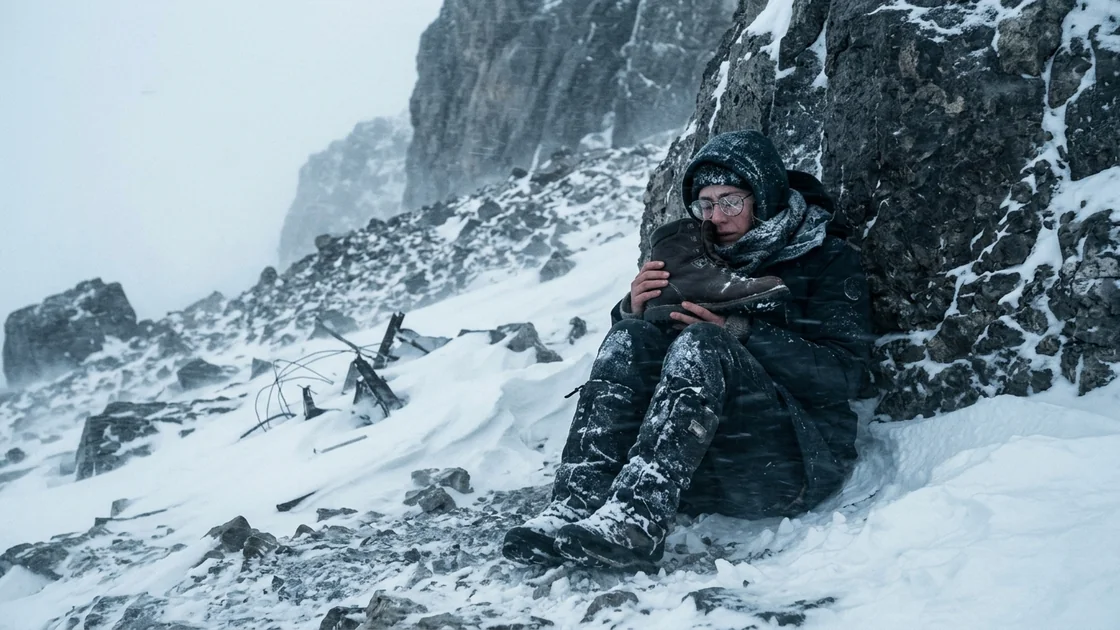
This is the story of Elena Vance, an ambitious gallery director whose relentless insistence coerced her partner, Julian Reid, into boarding a late-night commuter flight over the snowbound Wasatch Range so he would not miss her career-defining exhibition. When the twin-engine turboprop vanished into the blizzard and shattered against the granite ribs of Mount Timpanogos, Elena was left unharmed in Denver, surrounded by the triumphant applause of an art world she suddenly despised. In the months that followed, her professional life dissolved as she retreated into the high-altitude silence of Julian's absence, haunted by the final voicemail she forced him to leave, navigating the unbearable anatomy of regret, and searching the frozen topography of the mountain for an impossible absolution.
I. The Architecture of Urgency
The apartment on Pine Street smelled of wet wool and cedar shavings, an odor Elena had spent five years trying to neutralize with diffuser oils imported from Grasse. Julian had never understood the hostility she felt toward cedar. To him, cedar was not a scent; it was an artifact of preservation, a taxonomic barrier erected between fragile pressed specimens and the carpet beetles that sought to reduce thirty years of subalpine meadow grasses into fine gray dust.
"It smells like a lumberyard, Julian," she had told him, three weeks before the exhibition, standing by the French doors with a clipboard resting against her sternum.
"It smells like drying timber," he had replied without looking up from his dissecting microscope. His thumbs were stained with aniline blue. He was mounting epidermal peels of Carex nova, a high-elevation sede that grew only above eleven thousand feet, clinging to cracks where the snowmelt ran thinnest. "There’s a distinction. A lumberyard smells of kerosene and severed resin. This is just drought-resistant tissue giving up its moisture."
That was his cadence: measured, obstinately unhurried, infuriatingly immune to the acceleration that dictated every hour of her life. Elena lived in the imperative mood. Her calendar was a mosaic of color-coded emergencies, each cell representing a donor who needed flattering, an artist who needed restraining, or a shipping crate currently detained in customs at Long Beach. For eight months, her world had narrowed to a single room at the Museum of Contemporary Art in Denver—a three-thousand-square-foot white box where she had orchestrated the retrospective of a reclusive Basque sculptor who worked exclusively in basalt and lead.
The opening was scheduled for a Saturday in early December. The patron preview was Friday evening at seven.
On Thursday morning, Julian was still in Logan, Utah, where he had been called to give an emergency deposition in a land-use dispute involving a private developer and the watershed of the Bear River. He was supposed to have finished by noon, collected his rental car, driven the eighty miles south to Salt Lake International, and boarded the four o'clock flight into Denver.
At two in the afternoon, while Elena was watching three art handlers struggle to suspend an eight-hundred-pound slab of volcanic rock from an overhead gantry, her phone buzzed against her hip.
"The county attorney asked for a continuance on the cross-examination," Julian said. His voice was tinny through the speaker, competing with the thrum of an idling diesel generator in the background. "They’re bringing in an engineer from the Bureau of Reclamation tomorrow morning. I won't be able to leave until one or two tomorrow afternoon, Elena."
The art handlers let out a collective grunt; the steel cable shivered.
"Elena?" Julian said.
She stepped out into the loading bay, where the cold Denver air bit at the thin silk of her blouse. "You promised you’d be here for the dinner tonight, Julian. The catalog essay is dedicated to the alpine survey work you did with the foundation. The chairman of the acquisitions committee is sitting at my table. He asked about you twice this week."
"I have an obligation to the district," he said gently, with that terrible, calm reason that made her teeth ache. "If I walk out of this deposition, the developer gets the riparian buffer by default. The willow stands are gone by spring."
"It’s willow, Julian. It’s six hundred feet of ditch water."
The line went silent for three seconds. When he spoke again, the coolness in his voice had dropped by several degrees. "It’s the nesting site for fifty pairs of flycatchers. It matters."
"And this doesn’t?" Her voice rose, bouncing off the corrugated steel of the loading dock. A passing delivery driver glanced at her and looked away. "You think my work is just hanging rocks on wire for people with too much money. You’ve thought that since we left New Haven."
"That isn't fair."
"Then get in the car. Tell the county attorney your flight leaves at eight. There’s a red-eye on Great Basin Air. Flight 418. It leaves Salt Lake at eleven-fifteen. It lands in Denver at twelve-forty. You sleep in our bed. You wake up, you put on the charcoal suit, and you walk into that hall at nine for the trustee breakfast."
"Elena, look at the weather radar," he said. He sounded tired now, the stubbornness leaking out of him, replaced by the dull exhaustion he always wore after eight hours under fluorescent courtroom lights. "There’s an atmospheric river coming off the Pacific. It hit the Sierras yesterday; it’s over the Great Basin right now. The Wasatch is under a blizzard warning through Saturday afternoon. They’re closing the canyon roads."
"Salt Lake International doesn't close for snow. They have six million plows. They’re Mormons, Julian, they prepare for the apocalypse every Tuesday."
"It’s not the runway. It’s the crest. They route the commuter hops right through the notch south of Kings Peak. The winds are gusting seventy knots out of the northwest."
"Commercial pilots fly in wind every single day," she snapped. She could see the chief preparator waving at her through the glass door, holding a level against the basalt block. "I need you here. I have stood in the rain at your field stations for four summers, Julian. I have eaten canned beans out of the back of a Subaru while you counted sedges. I have listened to you explain the difference between eleven subspecies of willow until my ears bled. For once, I want you to walk into a room where people are looking at what I made."
The silence on the other end was different this time. It wasn't the silence of calculation; it was the silence of someone who has weighed the cost of an argument against the cost of his own dignity and found that he has no currency left for either.
"Eleven-fifteen?" he asked quietly.
"Great Basin Air," she said, her tone softening instantly, the victory already sweetening her throat. "I’ll book it from my laptop right now. I’ll send the boarding pass to your phone. You don't even have to pack your bag properly—just throw the clothes in the back of the rental, drop the keys at the depot, and go to Gate B4. I’ll leave the deadbolt off. There’s soup in the fridge."
"Elena—"
"I love you," she said, the words coming fast, efficient, prophylactic. "I’ll see you at one in the morning."
She ended the call before he could answer.
II. The Last Coordinates
The gale had hit the valley before Julian reached the airport.
He had left Logan at eight o’clock, driving a rented gray sedan with balding all-season tires through the Wellsville Mountains while the ground blizzards swept across Highway 89 like sheets of torn gauze. He had sent her a text message at nine-forty: Road was treacherous. In the rental lot. Terminal is half empty. Boarding boards are yellow with delays.
She had not seen it until eleven. She was sitting in the back of an Italian bistro on Larimer Street, surrounded by four members of the gallery's executive board and a donor who owned three zinc mines in Idaho. The wine was an Amarone that tasted of dried cherries and old leather. Her phone had vibrated in her evening clutch, nestled between her lip pencil and her hotel room key card. She had merely slipped it out under the edge of the white tablecloth, checked the time on the lock screen, and slid it back.
He’s at the gate, she had thought. He’s safe. The rest is just air travel.
Later, during the investigation, the National Transportation Safety Board would compile the meteorological history of that night into a seventy-page ring-bound document labeled AAR-24/03. Elena would memorize the third section on page twelve:
At 23:08 Mountain Standard Time, a cold frontal boundary of exceptional intensity intercepted an eastbound plume of subtropical moisture over the central Wasatch Range. Orographic lifting resulted in localized vertical wind shear exceeding forty knots per thousand feet between twelve thousand and sixteen thousand feet Mean Sea Level. Severe clear-air icing was reported by three mainline aircraft between 22:45 and 23:15. At 23:22, Flight 418, a de Havilland DHC-8-300 operated by Great Basin Air, was cleared for the ROCKY-FOUR departure from Runway 34R at Salt Lake City International Airport, with an assigned cruising altitude of seventeen thousand feet.
There were eighteen people on board: twelve passengers, two pilots, one flight attendant, two ski instructors returning to Steamboat, and a fourteen-year-old boy traveling on an unaccompanied minor pass to visit his grandmother in Fort Collins.
Julian had been seated in 4C, an aisle seat just aft of the port-side propeller arc.
At eleven-forty-seven, the phone in Elena’s hotel room rang. She was brushing her teeth, wearing the oversized waffle-knit robe the hotel provided, her hair pinned up in clips to preserve the blowout for morning.
She picked it up on the third ring, expecting Julian to say he was delayed on the tarmac, that the de-icing trucks were out of glycol, that he had told her so.
"Elena?"
It was not Julian. It was his younger sister, Clara, calling from a kitchen in Missoula where it was ten-forty-seven.
"Have you looked at the news?" Clara asked. Her voice was too high, thin as greaseproof paper.
"Clara? What are you talking about? I’m in bed. I have the breakfast in seven hours."
"Julian’s flight."
Elena’s toothbrush remained in her hand, the foam drying at the corner of her mouth. "What about it? He’s in the air. He lands in forty minutes."
"They lost the transponder," Clara said. "Over the mountains. Near Heber."
Elena walked out into the carpeted bedroom. The television on the dresser was off, a dead black square reflecting the brass floor lamp behind her. Through the eighth-floor window, the streetlights along 16th Street Mall blurred through a thick, lazy snowfall that was just beginning to settle on the Denver asphalt. It was not the ferocious, sideways blizzard of the high passes; it was the soft, decorative snow of cities, the kind that muffled the sound of taxis and made the storefronts look like greeting cards.
"Transponders turn off all the time," Elena said. Her voice was flat, practical, entirely devoid of air. "There’s a dead zone in the canyons. He told me that once. He said the radar from Salt Lake drops off behind the ridge."
"Elena, the news says there was a Mayday. They said the crew reported structural icing and an uncommanded roll."
"Who is 'they'?" Elena walked toward the television, found the remote on the nightstand, and pressed the power button. The screen flared to life on a local news broadcast. A young woman with immaculate copper hair was standing before a map of northern Utah. A bright red chevron marked the eastern slope of Mount Timpanogos.
Beneath her ran a scrolling yellow ribbon: BREAKING NEWS: SEARCH AND RESCUE CREWS DISPATCHED TO WASATCH MOUNTAINS FOLLOWING REPORT OF MISSING COMMUTER AIRCRAFT.
"They have transponders," Elena whispered, her thumb pressing down so hard on the remote's plastic casing that the battery cover clicked loose. "They have beacons. It’s a commercial flight. It’s not an experimental plane, Clara. It’s an airline."
"He didn't want to go," Clara said.
The sentence was not spoken with malice; it was blurted out, the unvarnished truth of a sister who had spoken to her brother while he was standing in line at the coffee kiosk in Terminal 2. But to Elena, it landed like a heavy brass rod dropped across her collarbones.
"He was tired," Clara continued, weeping now, the sound jagged and wet. "He called me while he was waiting for the gate agent. He said you were going to kill him if he didn't show up. He said he had to be there."
"Stop," Elena said.
"Elena, he was so tired."
"Stop it, Clara. I’m calling the airline."
She disconnected the call with a jab of her thumb. She dialed the customer service number on the digital boarding pass she had saved to her wallet app. The line rang twice, clicked, and then an automated voice, cheerfully synthetic, informed her that all representatives were currently assisting other callers due to severe weather delays across the Intermountain West.
She stayed on hold for forty-two minutes. She stood in the center of the hotel room, the white robe dragging on the carpet, watching the silent television cycle through the same three photographs: a stock image of a twin-engine turboprop with its blue-and-orange livery, a blurry satellite shot of a cloud deck swirling like curdled milk over the Utah-Wyoming border, and a photograph of the county sheriff in a sheepskin coat speaking into a forest of microphones outside a fire station in Heber City.
At twelve-thirty, her phone buzzed in her palm. It was not the airline.
It was a voicemail notification. The carrier had finally routed a message that had been recorded seventy minutes earlier, while the plane was still holding on the taxiway at Salt Lake.
Elena pressed the screen with a finger that had gone entirely cold.
Julian’s voice came through the earpiece, accompanied by the muffled, rhythmic shudder of turboprop engines idling outside an aluminum fuselage:
"Elena. It’s eleven-ten. We’re number four for departure behind a Delta triple-seven. They’re spraying down the flaps again. Listen... I’m sorry about what I said about the exhibition. I know how much this one means to you. You’ve worked two years without taking three days together, and I shouldn't have made it sound like... like it was an imposition. I’m proud of you, El. Truly. It’s going to be a magnificent room. I’ll see you when you wake up. I love you. Don't wait up with the lamp on."
There was a faint click, then the stewardess’s voice in the background, sharp and professional: "...ensure your tray tables and seatbacks are in their full upright and locked..."
Then the tone.
III. The Salt Lake Ledger
The investigation lasted sixteen months, but for Elena, time ceased to be an aggregate of hours and became a series of physical rooms she was required to inhabit while other people discussed Julian as if he were an engineering failure.
The first room was the family briefing center at an airport hotel in Salt Lake City.
They had driven her there from Denver because she had refused to board an airplane, and the passenger train was blocked by drifts in the Moffat Tunnel. Her brother-in-law, a quiet man who sold architectural software in Fort Collins, had driven his four-wheel-drive truck over the ice of Interstate 80 while Elena sat in the passenger seat with her knees pulled up to her chin, Julian’s field notebook clutched in her mittens.
The briefing center was a conference room named the Wasatch Ballroom B. It had low acoustic-tile ceilings and patterned carpet designed to disguise coffee stains. In the corners, large silver urns of decaffeinated coffee hissed gently on tables draped in white vinyl. There were boxes of store-bought Danish pastries that nobody touched, their sugar glazes turning translucent and gray under the fluorescent tubes.
A woman from the airline’s crisis management team had been assigned to her. Her name was Brenda, and she wore a navy blue wool blazer with an enameled pin shaped like a stylized bird. Brenda spoke in the passive voice, an administrative dialect that seemed engineered to remove human agency from the universe.
"The aircraft was observed to have diverged from the standard instrument departure," Brenda told her, sitting on a folding chair three feet away, holding a small paper cup of water she did not drink. "A descent was initiated. Contact was lost at nine thousand four hundred feet."
"Where is the plane?" Elena asked. Her voice was cracked, dry as an old reed.
"The terrain in that sector is extremely complex," Brenda said, her eyes fixed somewhere near Elena’s collarbone. "The avalanche danger is currently rated as Category Five. The search units have been unable to insert ground teams due to thirty-foot drifts on the ridgeline."
"Is there an ELT?" Elena demanded. "An emergency transmitter. He told me they have them in the tail."
"The signal was received intermittently for eleven minutes," Brenda said. "Then it ceased."
"Why did it cease?"
Brenda did not answer immediately. She shifted her paper cup from her right hand to her left. "The cold affects battery performance in high-altitude environments, Elena."
"He was in 4C," Elena said. She took the printed manifest from her pocket. She had folded it until the paper had split along the creases into four ragged squares. "That’s over the wing. If the wing broke off—"
"You shouldn't speculate," Brenda said softly. "The recovery team is using helicopters with forward-looking infrared. As soon as the visibility clears to two miles, they’ll have spotters on the ridge."
Elena stood up and walked out of the Wasatch Ballroom.
She walked through the lobby, past the groups of weeping relatives who had formed their own small, miserable archipelagos among the faux-leather sofas, and went out through the revolving doors into the parking lot.
The storm had passed, leaving behind a sky of terrifying, clinical blue. To the east, the Wasatch wall stood up against the morning light like a row of salt wedges. They were not picturesque; they were indifferent, dazzling, calcified. Somewhere up there, forty miles south, buried beneath twelve feet of dry powder on a forty-degree slope called the West Wall of Cascade Mountain, was a two-ton section of Pratt & Whitney engine, nine rows of aluminum seating, and Julian.
She stood on the asphalt until the cold passed through the soles of her boots, through her wool trousers, through the marrow of her shins. A shuttle bus dropped its air brakes behind her with a violent hiss.
She took out her phone. She held it to her ear and dialed his number.
The subscriber you are trying to reach is out of the coverage area or has been turned off.
"Julian," she said to the automated voice. "Julian, the sky is clear. Why aren't you here?"
The recorded woman did not answer. She merely repeated the instruction to try again later.
IV. The Archive of Dead Matter
By spring, they had found eighty-four percent of the airframe and eleven of the eighteen passengers.
Julian was not among the eleven.
In June, a young lieutenant from the Utah Department of Public Safety had called her in Denver. The snow had retreated to the gullies, and a team of alpine volunteers, accompanied by two cadaver dogs, had spent four days combing the scrub oak and the boulder fields below the cirque.
"We found personal effects," the officer said. He was trying to be delicate, which made him sound clumsy. "A leather satchel. Some books. A pair of spectacles with tortoiseshell frames."
"The lenses?" she asked.
"Ma'am?"
"Were the lenses broken?"
"Yes, ma'am. One was missing."
"Send them," she said.
The box arrived via an insured courier three days later. It was a cardboard shipping carton sealed with brown reinforced tape. Elena did not open it in the entryway. She carried it into Julian’s study, placed it on his blotter between his brass balance scale and his herbarium press, and left it there for a week without touching it.
The study had become a museum of her guilt. She had refused to let the cleaning service enter the room. A fine, pale silt of urban dust had settled over everything: over his notebooks, over his three pairs of field binoculars, over the rows of glass jars containing soil samples from the Uinta Basin labeled in his precise, cramped draftsman’s hand: HORIZON B - SILT LOAM - ELEV. 8,200 FT.
When she finally cut the tape with his penknife, the box released a strange, sour smell. It was not the cedar of their home, nor the paper smell of his books. It smelled of pulverized rock, kerosene, damp cotton, and something else—a thin, metallic taint that she recognized, with a sick heave of her diaphragm, as the smell of lightning.
Inside was his satchel. The leather was gouged, scored as if it had been dragged across an emery wheel. One of the brass buckles had been sheared off cleanly, leaving a jagged stump of metal.
She reached inside.
Her fingers touched his notebook first. It was a standard surveyor’s book with waterproof yellow pages. The cover was stained with hydraulic fluid, a translucent purple smudge that obliterated his name. She opened it at random:
August 14. East fork of the Duchesne. Dry bulb 68F, wet bulb 52F. Salix drummondiana showing early senescence along the gravel bar. Elena thinks we can leave by Friday if the light holds for the catalog plates. I told her the light doesn't hold for anyone; the mountain turns away from the sun at three o’clock regardless of what the printer needs in New York.
Elena dropped the book onto the blotter. Her hands were shaking so severely she had to grip the edge of the mahogany desk to keep from falling.
The light doesn't hold for anyone.
She could remember that afternoon. They had camped on a gravel spit near the river. She had been furious with him because the courier service wouldn't pick up packages from the ranger station fifty miles away, and her color proofs were sitting in a manila envelope while the humidity crept up toward eighty percent. She had accused him of hiding from his colleagues, of using the willow survey as an excuse to avoid the academic department meetings where his tenure case was being decided.
"You have no ambition," she had shouted at him over the sound of the water. "You’re thirty-eight years old, Julian, and you’re still counting leaves for seventy dollars a day."
He had looked at her from across the gas stove, his eyes clear and infuriatingly level behind those tortoiseshell frames.
"Elena," he had said, stirring the lentils with a titanium spoon that had lost its handle. "What do you think is going to happen when you get to the top of that museum? Do you think they give you more air?"
Now she stood alone in his study. The air was thick, stale, dead.
She reached back into the box and pulled out his spectacles. The wire frame was bent at a ninety-degree angle near the right hinge. The left lens was intact, though webbed with thousands of microscopic stress fractures that made the glass look cloudy, like ice that had been walked on before it was thick enough.
She put them on.
The world went instantly, violently out of focus. Her left eye saw a distorted, fractured version of the study—the desk appeared to tilt upward at thirty degrees, the bookshelves curved like the ribs of a foundered galleon, and the light from the window exploded into eight distinct spokes of gray glare. Her right eye saw only a grey blur.
She stood there, wearing the broken glasses of the man she had killed with three sentences on a loading dock, until her temples throbbed with a headache so acute she fell to her knees on the floorboards, her face pressed against the rough, cold leather of his ruined bag.
V. The Exhibition of Basalt
The museum had held the retrospective without her.
They had postponed it by three weeks out of respect for her "unimaginable loss," as the board president had phrased it in an email drafted by three public relations attorneys. Then they had opened it.
The reviews had been extraordinary. The Times had called it "a watershed moment in the curation of land-based sculpture," praising the "austere, uncompromising confrontation between geological time and human vanity." Elena had not read the review, but her assistant had printed it and left it on her kitchen counter alongside five unopened casserole dishes from the women’s auxiliary.
In August, eight months after the crash, she returned to the museum for the first time.
She chose a Tuesday morning at six, before the cleaning crews had finished vacuuming the galleries. She used her executive keycard at the service entrance. The security guard, an older man named Hector who had worked there since the building opened, looked at her with that wide, soft, terrified expression people reserve for those who have survived a house fire that killed their children.
"Good morning, Miss Vance," he whispered, as if speaking at a normal volume might shatter her.
"Good morning, Hector."
"It’s good to see you back."
"Thank you."
She walked into the central gallery. The Basque sculptor’s work was still there; the run had been extended through the autumn due to attendance records.
In the center of the hall sat the piece she had fought Julian over: Stele IV. It was an eleven-foot monolith of gray basalt, quarried from a volcanic plug near the Spanish border. Its surface had been cut with diamond saws into hundreds of narrow, vertical grooves, each no wider than a pencil lead. When you stood close to it, your breath caught in the slots, creating a faint, ghostly whistle, like wind blowing across the mouth of an empty cartridge casing.
She stood before it in the gray light coming through the clerestory windows.
This was what she had needed him to see.
This was the object that had required his presence at nine in the morning. This block of dense, dead silicate, mined from the earth with diesel machinery, hauled across an ocean on a container ship, and hung from steel girders with turnbuckles so five hundred people in linen shirts could drink prosecco and talk about spatial tension.
She reached out and touched the stone. It was freezing cold. The museum maintained the galleries at sixty-eight degrees and fifty percent relative humidity to preserve the oil canvases in the adjacent wing. The basalt felt like the headstones in the cemetery near Logan where Julian’s parents were buried.
"Look at it," she said to the empty room.
The stone whistled faintly in the HVAC draft.
"Look at what I made," she said.
Her voice sounded thin, grotesque, like the croak of an old crow in an orchard.
She leaned her forehead against the grooved surface. The stone did not yield; it did not warm against her skin. It smelled of wet masonry and mineral oil. She stayed there until she heard the wheels of the mop buckets rattling down the corridor, then she turned, walked out through the fire exit into the alley, and dropped her master keycard into a storm drain between two parked dumpsters.
VI. The Valley of the Heber
She did not tell Clara when she left Denver.
She sold her car—a European sedan that Julian had always hated because the electronic sensors chimed whenever a tire dropped two pounds of pressure—and bought an eight-year-old pickup with high ground clearance and four-wheel drive. She packed two suitcases of his wool shirts, his binoculars, his field guides, and four five-gallon jugs of drinking water.
She drove west on Highway 40, through the sagebrush flats of northwestern Colorado, past the red sandstone bluffs of Dinosaur, and into the eastern flank of the Uintas.
It was October. The aspens were already bare at nine thousand feet, their white trunks standing against the dark spruce like rows of picked bones. The high country was waiting for the first real snow; the sky was that peculiar, leaden shade of gray that precedes an Arctic front, heavy with moisture that has not yet found its ice.
She rented a small, square cabin four miles north of Charleston, on the floor of the Heber Valley.
The cabin had an iron woodstove, two mismatched chairs, and a window that faced directly toward the eastern wall of Mount Timpanogos. The mountain dominated the entire western horizon—a massive, blocky massif of Pennsylvanian limestone that rose five thousand feet above the valley floor in a series of giant, stepped terraces known to the geologists as the Great Western Formations.
The local gas station attendant, an old man with milky cataracts and a jacket that said Cenex on the pocket, looked at her license plates while he pumped her fuel.
"You up here for the hunting?" he asked.
"No," she said.
"Bow season’s over anyway. Rifle starts Saturday. You don't want to be up in the oak scrub without orange on. The boys from Provo get excited."
"I’m not hunting," she said.
He hung up the nozzle. "They’re predicting three feet on the crest by Thursday night. Winter’s coming in hard this year. Early."
"Yes," she said. "I know."
She spent the first three days sitting on the porch of the cabin with Julian’s field glasses propped on the wooden rail.
Through the seven-power lenses, the upper reaches of the mountain were brought so close she could see the individual strata of the cliffs—bands of chert and limestone three hundred million years old, alternating like the layers of an ancient, petrified cake. She scanned the drainage called Emerald Lake. She scanned the jagged saddle between the main peak and the South Peak.
She knew the flight path now. She had studied the NTSB radar plot until the line was burned into the back of her retinas like a flashbulb afterimage.
Flight 418 had come from the north-northwest, crossing the ridge near the notch at thirteen thousand feet before losing its left engine to ice. The pilot had attempted to bank south toward the Heber valley, looking for the lights of the municipal airfield, but the aircraft had stalled in the vertical shear, rotating twice before striking the upper lip of the cirque at one hundred and eighty knots.
The impact point was marked on the official maps as Point 10,480.
It was three miles from the trailhead at Aspen Grove, two thousand feet above the road, past the second waterfall, where the trail turned into a series of switchbacks blasted into the blue limestone.
On Wednesday morning, she woke at four.
The air in the cabin was twenty-eight degrees; the water in the teakettle had frozen into a solid plug. She did not light the stove. She dressed in three layers of wool, put on Julian’s heavy mountaineering boots—she had stuffed the toes with tissue paper to make them fit her smaller feet—and put his notebook, his broken glasses, and a bottle of kerosene into his satchel.
She did not take food. She took one metal flask of water that she carried inside her coat against her ribs to keep it from turning to slush.
VII. The Ascent to the Debris Field
The trailhead was empty.
A wooden sign, weathered to the color of wet driftwood, stood by the gate: ASPEN GROVE TRAIL - MT. TIMPANOGOS - 7.5 MILES TO SUMMIT - TRAIL NOT MAINTAINED AFTER OCTOBER 1.
She began to walk.
The first mile followed the stream through a dense tunnel of box elder and river birch. The leaves were gone, lying on the path in a black, slippery mulch that smelled of fermentation. The stream was low, choked with anchor ice that formed weird, crystalline shelves over the black pools. Her feet felt heavy in Julian’s boots; the stiff leather pressed against her ankle bones with every step, a dull, bruising ache that she welcomed.
One foot, she thought. Then the other. That’s how he walked. He never ran. He never checked his watch.
"You walk like a city clerk," he had told her once on a trail in the Adirondacks. "You’re trying to get to the end of the path so you can say you did it. Look at the ground, Elena. The path is the only thing that’s actually happening."
She looked at the ground.
Between the rocks, where the frost had lifted the soil into delicate, miniature colonnades, she saw the rosettes of alpine plants that had already pulled their chlorophyll down into their roots for the nine-month freeze. Small, hairy leaves pressed flat against the gravel. Saxifraga. Draba. He had known every one of them by their Latin binomials, names that sounded like prayers or legal indictments.
By eight o’clock, she had climbed out of the trees into the first hanging valley.
The wind hit her immediately. It was blowing from the west, coming over the crest like water over a weir, cold and clean and smelling of nothing at all. The clouds were dropping. The summit was already gone, swallowed by a dark, descending belly of vapor that moved with a heavy, deliberate speed.
She reached the base of the cliffs where the trail was notched into the rock.
Here, the snow had already begun to accumulate from the previous week’s squalls. It was hard, wind-scoured into sharp ridges called sastrugi that sounded like hollow porcelain under the vibram soles of her boots.
She stopped at the ninth switchback.
She took out the map. The search-and-rescue team had drawn a red circle with a grease pencil around a shallow amphitheater three hundred yards north of the trail, beneath a wall of gray limestone that rose vertically for six hundred feet. They had labeled it SECTOR C-2 (WRECKAGE REMOVED JUNE 14).
She left the trail.
The talus was loose, blocks of limestone the size of milk crates that shifted and clattered under her weight like broken plates. Twice she fell, her hands striking the sharp edges through her wool gloves, tearing the fabric and grazing the skin of her palms. She did not look at her hands; she wiped the blood on her trousers and kept climbing.
At nine-fifteen, she found the first piece.
It was not metal. It was a fragment of a plastic meal tray, about the size of a playing card, wedged into a crack between two rocks. It was blue—that specific, institutional turquoise that airlines had used in the late nineties. The plastic had been crazed by the sun and the frost, its surface covered in a network of tiny white lines like the skin of an old woman’s wrist.
She picked it up. It weighed nothing. It was brittle as an eggshell.
Ten yards higher, she found the wire.
It was a harness of aviation wiring, sixteen or twenty strands of thin, silver-plated copper coated in white Teflon insulation, bound together with black nylon ties that had been sliced through by a sharp edge. The wires trailed out of the scree like the exposed roots of an uprooted pine tree.
She dropped to her knees.
"Julian?" she whispered.
The wind took the word and sheared it off instantly.
She began to dig into the scree with her bare hands. The rocks were freezing, their undersides coated with hoarfrost that stuck to her skin like glue. She pulled away the chunks of limestone, her fingernails splitting, her knuckles scraping against the gray grit.
She found a seat-track fitting: an eight-inch strip of extruded aluminum with circular holes bored at one-inch intervals.
She found a piece of green fiberglass insulation, its edges singed black, smelling faintly of sulfur.
She found a rubber gasket that had belonged to an emergency oxygen system, stiff and yellowed, like an old dried mushroom.
She dug until her hands were numb, until she could no longer feel whether she was grasping a rock or a piece of the machine that had carried him down through the dark.
And then, under a slab of shale that took all her strength to lever aside, she found the boot.
It was a right boot. A brown leather hiking boot, size eleven, with red nylon laces that had been tied in a double knot that had never been undone. The leather of the heel had been torn away from the welt, and the steel shank was exposed, bright and silver where the friction had polished it, unrusted by the summer melt.
She did not scream. She did not weep.
She took the boot and held it against her stomach, curling her body around it on the frozen talus like an animal over its dead young.
The double knot. He had always tied his boots with a double knot because he hated having to bend down with a heavy pack on to fix a loose lace. "Do it once," he had told her, five hundred times, six hundred times, standing by the screen door at the cabin in Logan while she waited with the engine running. "Do it right, Elena, and then you don't have to think about it again."
She had done it once.
She had booked the seat. She had entered the credit card number. She had clicked the blue button that said CONFIRM PURCHASE.
VIII. The White Equation
The snow began at eleven o'clock.
It did not begin with individual flakes; it began as a wall of white dust that swept across the amphitheater, obliterating the valley below in less than three minutes. The temperature dropped twelve degrees in ten minutes. The wind, which had been gusting intermittently, settled into a steady, screaming roar that drove the graupel into the seams of her jacket and under the collar of her wool shirt.
She did not move from the scree.
She sat with her back against the limestone wall, Julian’s right boot clutched against her chest, her knees drawn up under her chin. She opened his satchel.
She took out his broken spectacles.
With stiff, wooden fingers, she forced the bent wire arms over her ears. The fractured glass settled before her eyes.
Through the cloudy, spider-webbed lens, the blizzard looked like an architectural drawing—hundreds of thousands of white lines converging on an invisible vanishing point in the center of the cirque. The mountain disappeared. The rocks disappeared. There was only the roar, the white grid, and the cold that was no longer an external sensation, but a liquid weight that had entered her blood and was moving slowly toward her heart.
She took out his yellow notebook.
She tried to hold his pen, but her fingers could not close around the plastic cylinder. She dropped it. It rolled into a crack in the shale and was gone.
She did not need the pen.
She knew the text. She had recited it every night for three hundred nights while the ceiling fan turned in the Denver apartment:
Flight 418. Gate B4. Eleven-fifteen.
I need you here.
I have stood in the rain for you.
What do you think is going to happen when you get to the top?
Do you think they give you more air?
"No," she said into the wool of his boot. "There isn't any air."
The snow was drifting over her now. It gathered on her shoulders like a heavy white shawl; it filled the folds of her trousers; it banked against her ribs.
It was not cold anymore.
That was the secret Julian had known, the thing he had tried to tell her about the willow stands and the high meadows. The cold was only painful when you fought it, when you ran toward the heated lobby, when you scheduled the flight to avoid the delay, when you demanded that the season conform to the calendar on your desk.
When you stopped moving, the cold was merely an anesthetic. It was a gentle, mineral reduction. It turned the blood into crystal; it stopped the frantic, clicking machine in your chest that insisted tomorrow was more important than today.
She closed her eyes behind his broken lenses.
In the dark, she could hear the turboprop engines. They were not screaming; they were idling on the taxiway at Salt Lake, their big four-bladed props turning slowly through the wet snow, throwing off rings of blue light where the de-icing fluid struck the exhaust.
She could hear his voice in her ear, tinny and clear, preserved forever in the small silicon chip that lived in her nightstand:
I love you. Don't wait up with the lamp on.
Elena let her head fall forward against the leather of his boot.
The snow, which did not care about exhibitions, or basements, or the acquisition committees of major museums, continued to fall on the Great Western Formations. It covered the blue plastic tray; it covered the white wires; it covered the seven-inch strip of aluminum seat track.
It covered her hands, which had ceased their trembling, filling the hollows between her knuckles until her fingers looked like the small, pale roots of Carex nova, bedded down for the long season, sixty miles from the road, twelve thousand feet above the town, perfectly and permanently still.